
South Korea raises breach worries that North Korean border activity may violate 1953 armistice
The DMZ alarm is more than rhetoric. It puts legal and operational pressure on Seoul and tests crisis readiness across the region.
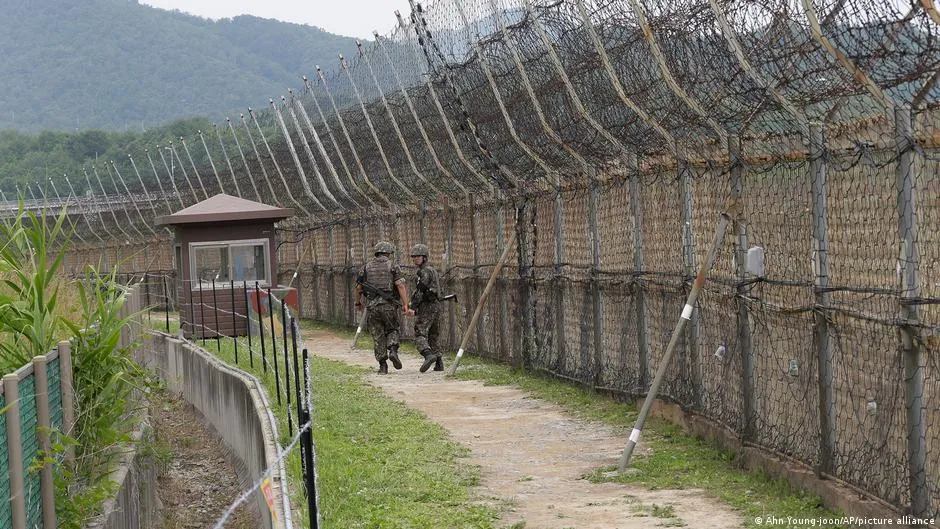
South Korea voiced concern that North Korean actions along the demilitarized zone between the two countries may breach the 1953 armistice agreement. For decision-makers, the immediate consequence is heightened legal and security sensitivity, with potential knock-on effects for diplomacy, force postures, and risk management.
South Korea has raised concerns that North Korean border activity along the demilitarized zone may be in breach of the 1953 armistice agreement. This is not a vague complaint. It is a direct claim that specific actions near the DMZ could violate a specific, long-standing legal framework that both sides are expected to respect.
That matters because the DMZ is not just a line on a map. It is the central friction point between North and South Korea, created to manage military risk after the 1950-1953 conflict and stabilized by the 1953 armistice. When one side says another may be violating that agreement, it signals more than disapproval. It signals an argument about legitimacy and control, the kind that can drive urgent diplomatic steps and, in worse cases, harder security measures.
For context, the armistice agreement functions as the baseline for what is allowed in the demilitarized zone and how military incidents should be understood and addressed. That means South Korea is effectively saying: the behavior we are seeing does not fit the operating rules we rely on to keep escalation in check. In crisis management terms, that is an escalation in the escalation ladder. It takes an incident that could have stayed operational or tactical and reframes it as a legal breach.
Second-order implications show up fast. When claims of armistice violations enter the record, they can constrain how officials communicate, negotiate, and justify future actions. Diplomacy often becomes more rigid because the narrative has already been set. Officials have to decide whether to seek clarification through established channels, press for international support, or signal deterrence through readiness and posture.
That operational calculus also intersects with regional and global risk. Even though the immediate dispute is between the two Koreas, the DMZ is watched by multiple stakeholders because it sits near critical shipping and supply routes and because military instability can spill into broader security thinking. For businesses and investors, that translates into higher perceived tail risk. Not because a breach claim guarantees escalation, but because it increases the probability of misunderstandings, retaliatory moves, or accelerated decision cycles under uncertainty.
There is also a governance angle. For South Korean decision-makers, aligning the legal framing with the right level of response is a balancing act. Move too softly and you risk looking like you are accepting unacceptable behavior. Move too hard and you risk being blamed for pushing conditions toward escalation. The fact pattern is sensitive because the source of the concern is South Korea, and the alleged issue is North Korean border activity. That shifts the burden of explanation onto the side being accused, but it also puts pressure on Seoul to provide a clear rationale for any additional measures.
For peers in similar leadership roles across government and major institutions, the lesson is how quickly a security claim becomes a whole system problem. An armistice allegation is not only about what happens at the DMZ. It can become a template for how other actors interpret incidents, how quickly alerts propagate, and how hard it is to walk back positions once a legal dispute is public. In corporate terms, it is like turning a one-off operational issue into a compliance question. The response needs to match the standard, not just the situation.
Ultimately, the core stakes are the same: preventing escalation where misreading intentions can turn a limited incident into something bigger. By voicing concerns that North Korean border activity may breach the 1953 armistice agreement, South Korea is signaling that the current situation is being treated as a potential breach of the rules designed to prevent exactly that outcome.
This story's Key Insights and Take-aways are locked.
Create a free account to unlock Executive Actions for one credit.
Register to UnlockAlways free for Executives Club members. Join the Club
More in Politics

Glacial collapse, not rain, killed 180 in Nepal's Himalayan flood
The Himalaya's extreme geography hid the true cause of Nepal's catastrophic flood, a glacial collapse that turned a geological battleground into a mass-casualty zone.
Iran’s Esmail Baghaei says Oman talks start shipping via Hormuz, not US talks yet
Temporary route plans with Oman aim to restart commerce while Tehran says Washington dialogue is not on the table.

Standards watchdog opens probe into Reform UK deputy leader Richard Tice over interests
The parliamentary standards commissioner says it began an investigation on 28 July into a possible undeclared interest.