

Soyuz MS-29 launches with Lit Energy and “Life has no end” ads
A Russian tradition is getting a legal boost, and ISS partners are watching the fine print in real time.
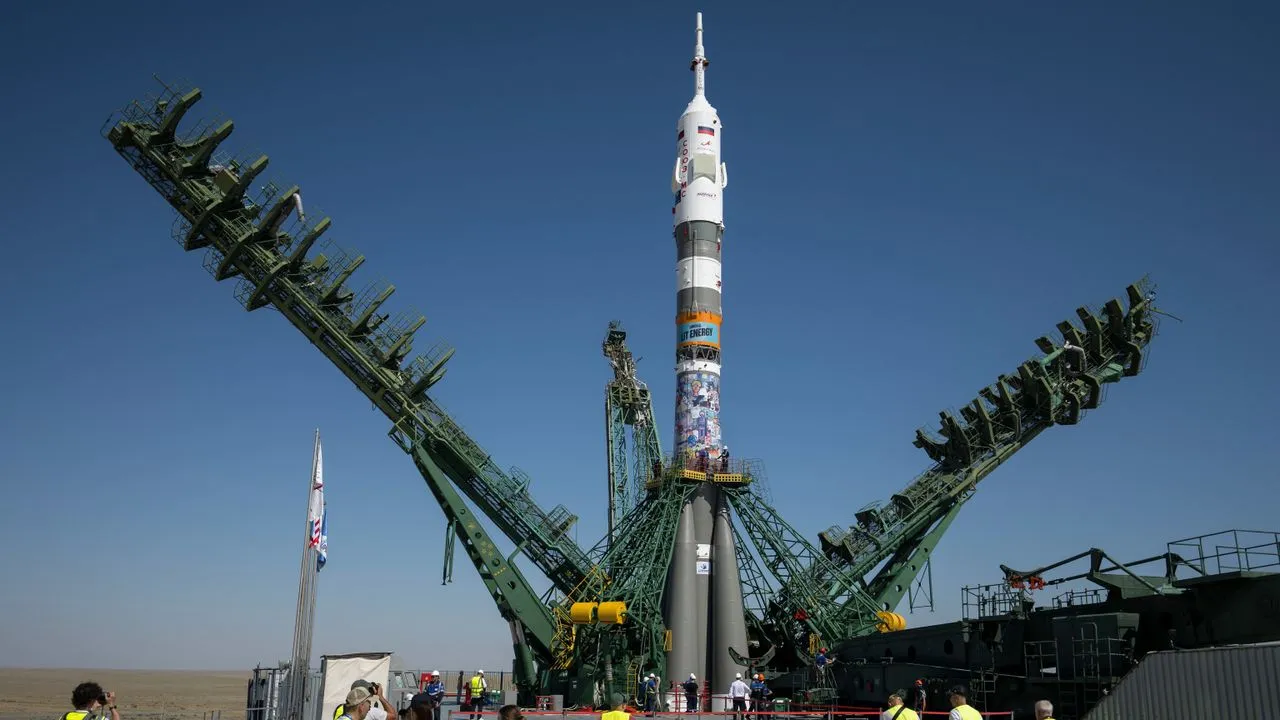
A Soyuz MS-29 launch to the International Space Station on Tuesday, July 14, carried a Soyuz rocket emblazoned with ads for Лимонад (Lemonade) LIT ENERGY. The same rocket rollout also highlighted drawings from children with cancer and the phrase “Life has no end” to advertise the Unity Charitable Foundation.
Astronauts just launched to the International Space Station on a Soyuz rocket decorated with an energy-drink ad, and it is exactly the kind of detail that signals bigger changes behind the scenes. The Soyuz MS-29 launch on Tuesday (July 14) used a Soyuz rocket “festooned” with ads for Лимонад (Lemonade) LIT ENERGY, with the branding visible in rollout shots published via NASA's Flickr account on July 11.
This is not a one-off novelty. The same Soyuz used for the launch also featured drawings from children with cancer and the phrase “Life has no end” to advertise the Unity Charitable Foundation, according to a Russian-language state media report machine-translated into English. That campaign is part of a series in support of the foundation that began in November 2025, the media report added. In other words, this launch is simultaneously consumer marketing and cause-based messaging, wrapped into a launch-day spectacle.
If you are wondering why an energy drink on a rocket matters, it helps to look at what space advertising usually is in practice: often more branding than revenue. The source is explicit that Roscosmos, like other space agencies, frequently adorns rockets with colorful artwork and logos that may not necessarily result in payment. That is a big reason the “ad in space” story has lingered as a curiosity more than a business model. Still, advertising on launch vehicles has long been a lever for attention, including when Russia’s economy and politics were different.
Russia’s ad habit is not new. The article points to a June 2018 example: a Soyuz that launched with a FIFA World Cup logo at the time the tournament was occurring in Russia. It also notes Soviet-era experiments. For example, a 1990 cosmonaut launch, partly for the Tokyo Broadcasting Service, reportedly included advertisements on the side of the Soviet Soyuz rocket, including patches from Sony, Unicharm, and Pocari Sweat. After the Soviet Union’s breakup, the Mir space station featured advertisements for companies like RadioShack, Pepsi, and Israel's Tnuva Milk. And the Proton era brought more overt commercial campaigns. A Pizza Hut ad flew on a Russian Proton rocket in 2000 for roughly $1.25 million (about $3 million in today’s dollars), and in 2001 Pizza Hut followed up with a special space pizza delivery using salami rather than pepperoni because it is more shelf-stable.
So why does this week’s launch feel different? Because the reporting ties the current wave to changing Russian rules, with a possible shift from “decorative logos” to something closer to an actual advertising framework. Ars Technica, referenced in the article, suggested that contractions in the Russian economy led to recent changes in Russia’s laws for space advertising. The rationale goes like this: Russia’s unsanctioned invasion of Ukraine in February 2022 caused many international partnerships in space (and other projects) to fall apart. Ars believes that outcome contributed to authorization from Russian President Vladimir Putin for recurring space ads.
The legislation details matter for executives because they imply a structure for selling space visibility, not just putting logos on rockets. The source says the new legislation was cited on Roscosmos' Telegram account in October 2025. According to the Roscosmos statement, as machine-translated through Ars’s reporting, amendments grant Roscosmos the right, effective January 1, 2026, to place advertising on space objects owned by both the state corporation itself and federally. The stated goal is to create a mechanism for attracting private investment in Russian space exploration and to reduce the burden on the state budget. If you are on a board or in finance, that shifts the question from “Is this marketing tacky?” to “Is this becoming budget relief and a pipeline for private capital?”
The ISS angle is what makes the story land hard. Even with sanctions imposed after the invasion of Ukraine, Roscosmos and NASA continue to work together on the ISS. Tuesday’s launch marked a milestone in that cooperation. NASA Administrator Jared Isaacman became the first person with his title to attend a Soyuz launch in eight years. SpaceNews noted that Isaacman and Roscosmos Director General Dmitry Bakanov had the first reported face-to-face meeting between the agency heads since the last in-person NASA chief visit, for an October 2018 launch.
After that meeting, Russia announced a two-year extension of its ISS commitment to 2030, along with an agreement in principle to continue offering NASA astronauts seats on the Soyuz in exchange for seats on commercial U.S. vehicles, among other developments. Put those together with the advertising law timeline and you get a second-order implication: ISS operations may remain collaborative, but the commercial and regulatory environment around Russia’s space activities can still evolve rapidly. That means partners should not only track mission schedules. They should also track what becomes allowable to sell, how private investment mechanisms get structured, and how marketing visibility might show up alongside public-private exchange agreements.
None of this changes the physics of getting to orbit. It does change the economics and signaling: space remains a stage, and Russia appears to be working to formalize the monetization of that stage beginning January 1, 2026. For executives managing partnerships in heavily sanctioned sectors, the lesson is simple. The “ad on the rocket” is not the story. The story is the business logic, now backed by amendments, riding along on the next Soyuz.
This story's Key Insights and Take-aways are locked.
Create a free account to unlock Executive Actions for one credit.
Register to UnlockAlways free for Executives Club members. Join the Club
More in Business

Uber buys Delivery Hero for nearly $15B, vaulting to top food delivery outside China
The deal doubles Uber's dual-services footprint and pushes a ride-and-eats bundling play into 50 more markets.

Epic and Google drop settlement bid, forcing rival Android app stores by July 22
Google told the court it is ready to carry third-party app stores starting Wednesday, July 22.

SK Hynix opens at $170, raises $26.5B, and tops foreign IPO records
In Friday's Wall Street debut, SK Hynix turns AI RAM demand into a $26.5B fundraising moment that rewrites comps.