

SpaceX aborts Starship Flight 13 at 6:45 p.m. EDT as two Raptors get replaced
A last-second abort on July 16 triggers a quick fix plan, and Flight 13 becomes the first trip for Starlink V3.
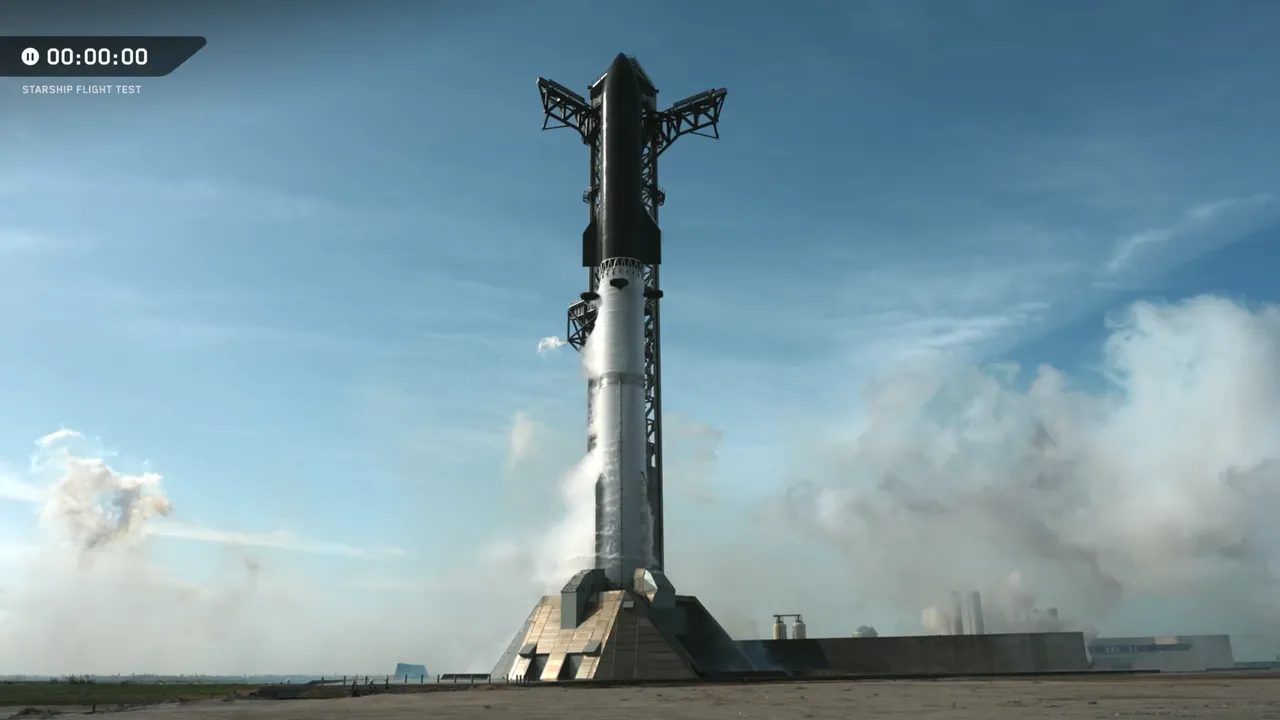
SpaceX aborted Starship Flight 13 at the last second on July 16 (6:45 p.m. EDT) as 33 Raptor engines began to fire, with Elon Musk later saying two V3 Raptors would be removed and replaced. The decision reshapes near-term launch timing and determines whether Starlink V3's first mission proceeds as planned.
SpaceX aborted Starship Flight 13 at 6:45 p.m. EDT on Thursday, July 16, right as the rocket’s first-stage Raptor engines started to ignite. The attempt occurred at the beginning of a 90-minute launch window, and the timing mattered because Starship does not treat launch windows like suggestions. This is a high-stakes, high-cost cadence test, and Flight 13 was trying to move Starship Version 3 (V3) closer to operational status.
During the launch webcast, SpaceX said it would investigate what “triggered that abort” once the booster was igniting, and then map the next steps. After the scrub, Elon Musk confirmed the immediate technical path: “To be confident of a good flight, 2 Raptors will be removed & replaced. Most probable launch timing is early next week,” Musk said via X. In other words, the abort was not a vague mystery. It turned into a concrete hardware change plan within hours.
For executives and investors watching Starship, this is the tell: SpaceX is iterating fast, but not blindly. Flight 13 is the second test launch of Starship V3, an upgraded variant designed to get the rocket to operational status. Flight 12 on May 22 was “mostly successful,” but it carried two clear problems that Flight 13 was meant to address: Super Heavy did not steer itself back for a controlled splashdown in the Gulf of Mexico as planned, and the Ship upper stage wasn’t able to relight one of its Raptor engines in space. Flight 13 repeats the core goals with an added layer of ambition.
The headline objective is still recovery and reach. SpaceX wants the Super Heavy first stage to come down on target in the Gulf of Mexico, and wants Ship to go most of the way around the world for a controlled splashdown off the coast of Western Australia. Flight 12 demonstrated that Ship can still pull off the long-range part, since Ship completed that controlled splashdown on the previous flight. So Flight 13 is essentially a targeted follow-up: prove repeatability on the booster recovery while keeping the upper-stage mission profile on track.
Then comes the market-moving part that turns a rocket test flight into a revenue-adjacent milestone: the payload suite. Flight 13 will carry 20 of SpaceX’s next-gen Starlink V3 internet satellites. SpaceX is aiming to build a constellation of 100,000 Starlink V3 spacecraft in low Earth orbit using Starship. Flight 13 marks the satellites’ first-ever trip to space, which means this is not just engineering data. It is the opening chapter of a larger deployment plan, and it matters to anyone tracking how quickly Starlink can evolve from iterative improvements to scaled capacity.
These satellites do not stay in orbit. SpaceX plans to deploy the spacecraft on Ship’s suborbital trajectory and have them crash back to Earth after about 20 minutes, according to SpaceX. Six of the 20 Starlinks going up on Flight 13 will be equipped with cameras to image Ship’s heat shield. The company did something similar with a couple of V2 Starlinks on Flight 12, which signals a pattern: collect thermal protection evidence, validate hardware performance, then feed it back into the design loop.
If you zoom out, the strategic stakes are bigger than “will it launch next?” Starship’s test schedule is a forcing function for multiple systems at once. Hardware changes, like Musk’s plan to remove and replace two Raptors, ripple through integration timelines, range operations, and scheduling around the 90-minute launch window cadence. And because Flight 13 is tied to Starlink V3's first trip, the risk is not only a delay in rocket validation, but a delay in validating the new satellite payload as part of the Starship architecture.
There is also the governance-and-comms reality. SpaceX’s own public messaging framed the next steps as investigation first, then a path forward, with Dan Huot stating they would dig into the trigger after the booster ignition sequence. Then Musk provided the hardware remedy. That combination matters in the boardroom and with counterparties: it signals both accountability to root cause and speed in execution. The story was updated at 9:38 p.m. ET on July 16 with information from Musk’s X post, underscoring how quickly SpaceX is turning telemetry or internal findings into actionable public guidance.
So where does this leave the next decision point? Flight 13 will launch from SpaceX’s Starbase site in South Texas, and Musk’s “most probable launch timing is early next week” sets expectations that this abort is a fast correction, not a drawn-out derailment. For peers in the space industry, the implicit benchmark is clear: can you sustain iteration velocity while tackling both vehicle recovery and payload milestones in the same flight? SpaceX is treating that as the job description, and the last-second abort is just the latest test of whether the next attempt will compound progress instead of resetting it.
This story's Key Insights and Take-aways are locked.
Create a free account to unlock Executive Actions for one credit.
Register to UnlockAlways free for Executives Club members. Join the Club
More in Business

Uber buys Delivery Hero for nearly $15B, vaulting to top food delivery outside China
The deal doubles Uber's dual-services footprint and pushes a ride-and-eats bundling play into 50 more markets.

Epic and Google drop settlement bid, forcing rival Android app stores by July 22
Google told the court it is ready to carry third-party app stores starting Wednesday, July 22.

SK Hynix opens at $170, raises $26.5B, and tops foreign IPO records
In Friday's Wall Street debut, SK Hynix turns AI RAM demand into a $26.5B fundraising moment that rewrites comps.