

SpaceX aborts Starship launch after Super Heavy engine startup fails at zero
A successful propellant load ended in a computer-driven engine startup abort, forcing another drain-and-wait cycle for Starbase.

SpaceX scrubbed a Starship and Super Heavy booster test flight Thursday after the countdown hit zero and computers aborted during the Super Heavy engine startup sequence. Decision-makers at space and adjacent industries should read this as a reminder that even late-cycle hardware fixes are operational risk, not theoretical risk.
SpaceX scrubbed its Starship test launch on Thursday after the countdown reached zero and computers called an abort during the Super Heavy booster’s engine startup sequence. The attempt was targeted for 5:45 pm local time at Starbase, Texas, just north of the US-Mexico border, with the two-stage rocket slated for a 6:45 pm EDT (22:45 UTC) launch window.
The day had looked orderly right up until the critical moment. The launch team proceeded through the full countdown, including the loading of more than 11.5 million pounds of propellant, specifically liquid methane and liquid oxygen, into the rocket. But when the Super Heavy engines entered their startup phase, the systems controlling the countdown triggered an abort, preventing launch and immediately switching the operation into the next phase: draining the rocket’s propellant tanks. SpaceX did not, at least immediately, announce when it planned to try again.
For executives watching programs like this, the operational reality is as important as the headline. A Starship test campaign is not just a software switch and a rocket. It is a chain of synchronized events: fueling, sequencing, engine start, ascent. Thursday’s outcome illustrates a specific risk point. The computers did not abort due to a vague “something went wrong” signal; they aborted because the engine startup sequence did not progress correctly. In other words, the last steps of the countdown are where progress can still flip instantly into a restart requirement.
That flip matters financially and programmatically. Propellant loading at this scale signals that SpaceX had already committed significant time and resources to the day’s attempt. The source notes that engineers began preparations to drain the rocket’s propellant tanks after the abort. Draining is not a minor task, and it is not a zero-cost delay. It consumes schedule runway, occupies ground systems, and pushes future attempts out. Even without a stated retry date, the consequence is clear: another loop in the “try, scrub, reset, repeat” rhythm that any regulator-facing, mission-driven program must eventually optimize.
It also feeds into how boards and capital allocators should interpret milestones. Starship is often discussed as an engineering challenge, but operations are engineering plus execution discipline. On Thursday, the computers controlling the countdown reached a point where they decided the safest move was to stop the sequence. For decision-makers, that is a signal of what kind of maturity matters: not just building engines, but integrating them into a reliable end-to-end test procedure that protects hardware from unsafe transitions.
There is also a policy and regulatory subtext, even though the source does not mention regulators directly. Launch sites like Starbase live in a world where permitting, range coordination, and safety requirements shape how often you can attempt a flight. When a launch is scrubbed after propellant loading, the practical ceiling on retries can be driven by more than engineering. It can be driven by scheduling constraints around the range, local operations, and the broader cadence of test and oversight. SpaceX’s decision not to announce a near-term attempt date immediately is consistent with this reality. Teams often need to confirm root cause and complete the safety and operational reset before committing to another attempt.
For peers across aerospace, defense, and high-risk hardware, the second-order takeaway is about expectation-setting. A single abort at engine startup does not necessarily mean the broader design is broken, but it does mean the program is still discovering failure modes in the final act. That distinction is exactly where boards should stay sharp. “Integration risk” does not vanish because a vehicle reaches a countdown clock. It reappears at the interface between systems, software sequencing, and real-world engine behavior. And until those edges are smoothed, each attempt carries a binary operational outcome: success or another reset.
Strategically, Thursday’s scrub reinforces a plain truth for anyone running time-boxed, safety-critical programs: the schedule is only as strong as the last verified step. SpaceX’s countdown proceeded smoothly through the day until the Super Heavy engine startup sequence. Then the launch team shifted from flight operations to tank drainage and preparation for what comes next. The source says officials did not immediately announce when they plan to try again. For executives in similar roles, that uncertainty is itself a data point: reliability and iteration speed are still being earned, not assumed.
This story's Key Insights and Take-aways are locked.
Create a free account to unlock Executive Actions for one credit.
Register to UnlockAlways free for Executives Club members. Join the Club
More in Business

Uber buys Delivery Hero for nearly $15B, vaulting to top food delivery outside China
The deal doubles Uber's dual-services footprint and pushes a ride-and-eats bundling play into 50 more markets.

Epic and Google drop settlement bid, forcing rival Android app stores by July 22
Google told the court it is ready to carry third-party app stores starting Wednesday, July 22.
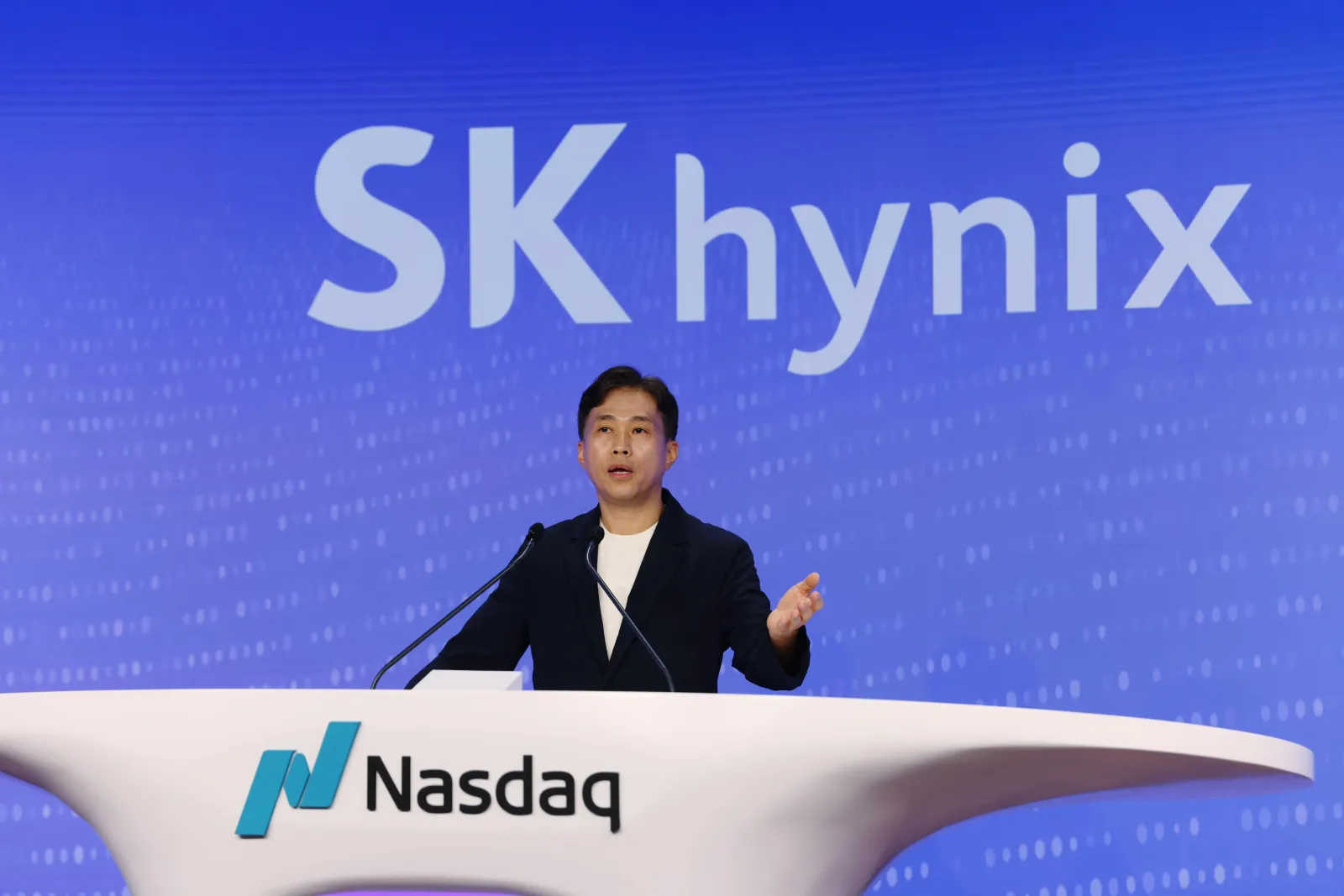
SK Hynix opens at $170, raises $26.5B, and tops foreign IPO records
In Friday's Wall Street debut, SK Hynix turns AI RAM demand into a $26.5B fundraising moment that rewrites comps.