

SpaceX buys Cursor for $60B in stock, days after IPO
The blockbuster deal targets SpaceX's AI trouble and leans on a $26T AI market claim told to IPO investors.
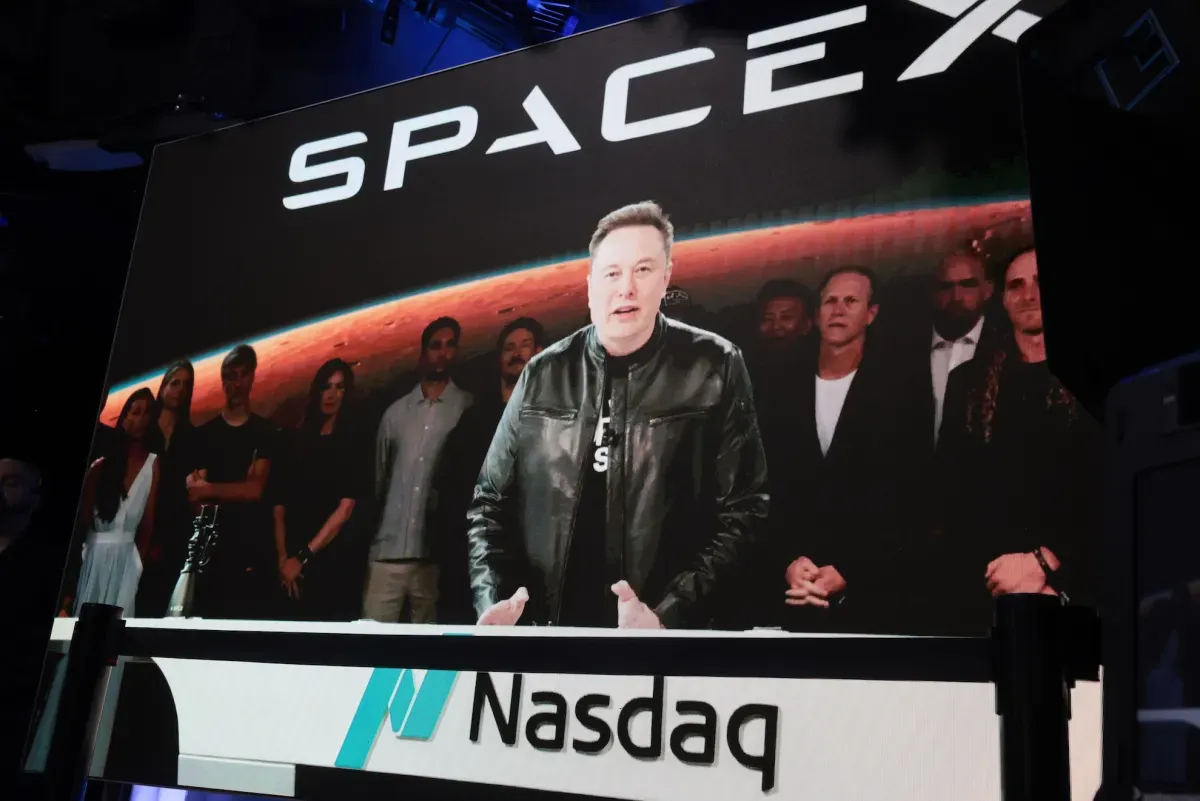
SpaceX will acquire Cursor for $60B in stock just days after its blockbuster IPO, according to TechCrunch. The company frames the move as support for its struggling AI division, citing a $26 trillion addressable AI market to IPO investors.
SpaceX is making a very loud bet on AI. Days after a blockbuster IPO, the company agreed to acquire Cursor for $60B in stock. That price tag is not just big. It is the kind of headline figure that forces executives to ask what is actually going on with the business they just took public.
The answer, at least in part, is simple and spelled out by the company itself: the deal is supposed to help SpaceX's struggling AI division. And it comes bundled with a narrative SpaceX told its IPO investors: it sees a $26 trillion addressable market in AI. In other words, the stock deal is not only a move to buy a product. It is a move to buy credibility, momentum, and capability in an arena where investors expect fast learning curves and clear traction.
Let’s zoom out on the incentive structure here, because that is where deals like this get interesting for decision-makers. A post-IPO company has less patience and more scrutiny. Markets tend to punish ambiguity, especially when the story says “transformation” but the numbers do not yet prove the transformation is real. Acquiring Cursor for $60B in stock creates a direct mechanism to accelerate capabilities, rather than waiting for internal timelines to close the gap.
But there is a second, more subtle incentive: the deal also functions as a narrative bridge between what a company can claim and what the public market will demand. SpaceX’s $26 trillion AI market framing told to IPO investors acts like a thesis statement for why aggressive action is warranted. When you stake that kind of addressable market claim, you are implicitly committing to moves that look consistent with chasing it. Buying Cursor is the “show, not tell” version of that thesis.
Still, AI is not one monolith. It is a sprawling stack of models, tooling, distribution, and adoption inside real workflows. When an executive team says an AI division is struggling, the market often hears “execution risk.” Execution risk means timelines can slip, results can disappoint, and costs can compound. An acquisition can reduce some types of uncertainty, especially if it brings in teams, technology, or products that already have traction. Even without the fine print, the headline logic is clear: SpaceX is choosing to concentrate capital and attention on AI now.
Now, the “days after blockbuster IPO” timing matters because of regulatory and governance optics, even when the deal is described at a business level. IPOs create a new set of reporting habits. They also bring investor expectations that are harder to sidestep. While the source only specifies the deal size and the acquisition purpose, the sequence itself is a governance signal: management is willing to deploy equity quickly after going public. For boards, that is a high-importance decision because it locks in strategy when the company is most exposed to market sentiment.
Then there is the capital structure angle. A $60B stock deal means the consideration is paid in shares, not cash, which affects dilution and shareholder economics. That is a board-level tradeoff: employees and early holders get a liquidity and valuation moment from the IPO, while public shareholders who buy in later are taking on dilution risk to fund an expansion of the AI agenda. If the AI division is struggling, the market will want to see that the acquisition meaningfully changes the trajectory, not just the story.
Second-order implications are what executives should focus on next. Peer companies watching SpaceX will interpret this as a signal that even businesses with massive moonshots feel competitive pressure in AI. It is also a reminder that companies will increasingly treat AI acquisitions as both capability upgrades and market-positioning moves. If you are a CEO or CFO at a firm with an AI initiative, you should assume investors will track not only product milestones, but also corporate actions that suggest management has an answer to “why now?”
For decision-makers, the stakes are straightforward. SpaceX just tied together three elements: a $60B stock acquisition of Cursor, an explicit purpose of helping a struggling AI division, and a $26 trillion AI market claim made to IPO investors. Whether that triangle holds depends on execution after the ink dries. But in the meantime, the message to the market is already delivered: SpaceX wants AI momentum, and it is buying it at scale.
This story's Key Insights and Take-aways are locked.
Create a free account to unlock Executive Actions for one credit.
Register to UnlockAlways free for Executives Club members. Join the Club
More in Business

A flaw in PHP just forced governments to pull their own sites offline
European agencies from Belgium to Germany took websites dark to patch a critical weakness in the language behind almost 70% of the web, and the blast radius extends far beyond government portals.

BioWare shuts down, Mass Effect 5 dead after $55B EA buyout
The legendary RPG studio's closure lands months after a $55 billion investment group buyout of EA, raising tough questions for gaming's biggest acquirers.
Musk weighs Tesla-SpaceX mega-merger as boards form review panels
Special committees at both companies will examine a tie-up that could fuse electric vehicles and space launch, forcing a fresh look at governance and valuation.