
SpaceX buys Cursor owner Anysphere in a $60B all-stock deal set for Q3 2026
The SpaceX-Anysphere merger agreement brings Cursor into the rocket company, with a 2026 close date that matters to AI investors.

SpaceX and Anysphere, the company behind AI coding startup Cursor, signed a merger agreement on Monday. The deal is expected to close in the third quarter of 2026, reshaping how boards think about AI talent, distribution, and strategic control.
SpaceX is buying the AI coding startup behind Cursor. On Monday, SpaceX and Anysphere signed a merger agreement, and the transaction is expected to close in the third quarter of 2026. The headline number floating around this deal is a massive one: a $60 billion all-stock arrangement. For decision-makers, this is not just a “big tech buys cool startup” story. It is a signal about how aggressively industrial-scale operators are moving into AI development workflows.
If you are an investor, founder, or operator watching the AI tooling layer, the key point is the timing and structure. This is all-stock, which means the value and risk profile are tied to SpaceX's market expectations through closing, not to a fixed cash price today. And with a Q3 2026 expected close, the merger sits in a window where AI demand, regulatory scrutiny, and competitive dynamics can all shift. The agreement on Monday is the start of that long arc, not the finish line.
So why would SpaceX care about Cursor, an AI coding product? In practice, companies do not acquire software tools just to “have” them. They acquire them to compress time-to-build, reduce friction in engineering cycles, and strengthen internal capabilities. Coding assistants can turn routine development into faster iteration loops, especially when teams are under pressure to ship features, fix issues, and maintain complex systems. For SpaceX, which operates at industrial scale with high engineering velocity, small improvements in development speed and reliability can compound. A merger that brings Anysphere and its Cursor offering into SpaceX could be viewed as a strategic attempt to deepen control over the AI development pipeline.
Now, zoom out to the market context. Over the past year, investors have poured capital into AI application layers, developer tooling, and workflow automation. But developer tools have a particular vulnerability: they can be disrupted if the underlying models, platforms, or distribution channels shift. When an industrial heavyweight like SpaceX moves to acquire a coding assistant company via an all-stock deal, it hints at a different playbook. Instead of betting purely on market adoption of a standalone tool, the buyer can integrate the capability into its own product and engineering machine. That shifts the question from “will developers choose this tool” to “can the combined company turn AI-assisted development into a durable advantage inside its own operations.”
There is also the board and governance angle. A merger agreement is not the same as a closed deal, and an all-stock transaction increases the importance of corporate structure, valuation discipline, and shareholder alignment. In plain terms: since the buyer is paying with stock rather than cash, decision-makers will care about how the deal will look at closing, what risks are tied to the buyer's equity value, and what conditions might need to be met for completion. The fact that the expected close is in Q3 2026 underscores that this will likely be evaluated over time, not in a single moment.
Regulatory background is a constant companion for large mergers, especially ones involving companies that sit at the intersection of technology and infrastructure. Even without details in the source beyond the merger agreement and the expected close window, the structure tells a story: large, cross-sector deals typically require review and alignment with legal frameworks applicable to corporate combinations. That means the path from Monday's signed agreement to a Q3 2026 close can involve scrutiny, documentation, and compliance steps. For executives, this is why deals like these are as much project management as they are strategy. The legal calendar becomes part of the business plan.
The second-order implications land on peers in the AI and developer tooling ecosystem. If Cursor's owner Anysphere ends up under SpaceX's umbrella, it may pressure other boards to ask uncomfortable questions: how defensible is a developer tool if a better integrated distribution channel appears? How quickly can standalone AI tooling companies pivot if a major buyer treats them as acquisition targets rather than partners? And how should startups structure their roadmap when a strategic buyer can move from interest to merger agreement with a timeline stretching into 2026?
For decision-makers, the practical takeaway is timing and positioning. SpaceX, Anysphere, and everyone watching the deal now have a clear milestone: a merger agreement signed Monday and an expected close in the third quarter of 2026, priced as a $60 billion all-stock deal. That combination suggests a long runway, a potentially value-relevant equity component, and a strategic bet on AI coding workflows that goes beyond novelty. In the AI race, the next competitive edge may not be a model, it may be who controls the tools that turn ideas into production code.
This story's Key Insights and Take-aways are locked.
Create a free account to unlock Executive Actions for one credit.
Register to UnlockAlways free for Executives Club members. Join the Club
More in Business

A flaw in PHP just forced governments to pull their own sites offline
European agencies from Belgium to Germany took websites dark to patch a critical weakness in the language behind almost 70% of the web, and the blast radius extends far beyond government portals.

BioWare shuts down, Mass Effect 5 dead after $55B EA buyout
The legendary RPG studio's closure lands months after a $55 billion investment group buyout of EA, raising tough questions for gaming's biggest acquirers.
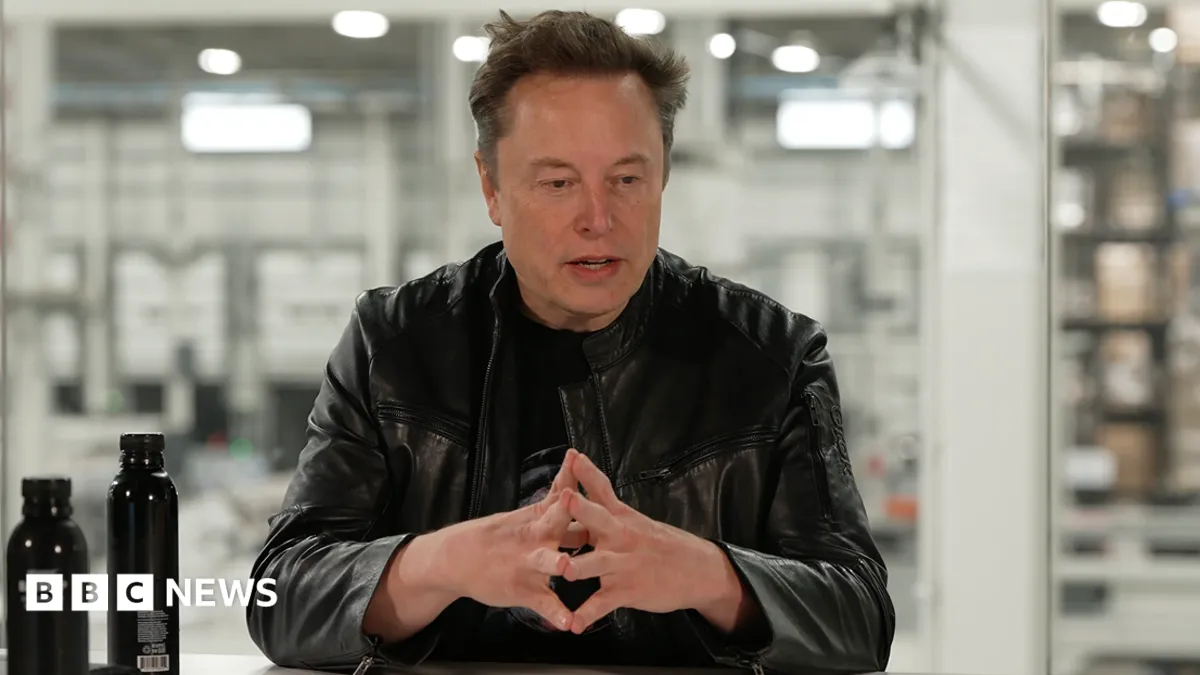
Musk weighs Tesla-SpaceX mega-merger as boards form review panels
Special committees at both companies will examine a tie-up that could fuse electric vehicles and space launch, forcing a fresh look at governance and valuation.