
SpaceX nails Starship’s 13th test landing, energizing NASA’s moon push and orbital ambitions
A successful second test of Starship’s newest design strengthens the path to the Moon, and SpaceX’s orbit data goals.
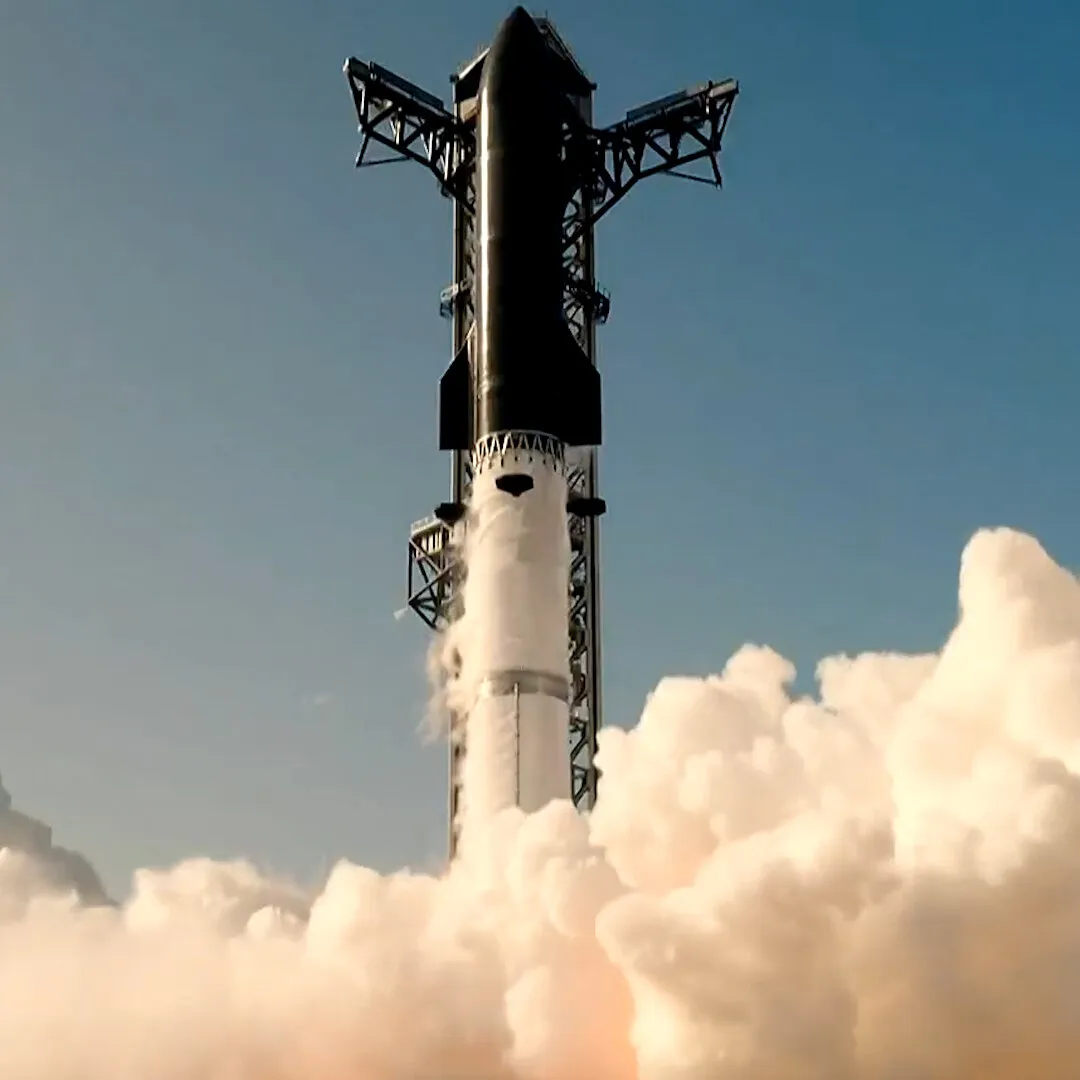
SpaceX completed the second test of its newest Starship design successfully, marking the 13th Starship test overall. The landing success boosts NASA’s moon plans and supports SpaceX’s hopes to deploy a million data centers in orbit.
SpaceX just turned its 13th Starship test into a win, sticking the landing on the second test of its newest Starship design. That matters because Starship is not some science-fair rocket. It is the core bet SpaceX is using to bridge from near-Earth operations to much bigger, harder missions that require reliability, cadence, and confidence that the hardware can handle repeat use.
The successful landing is a direct boon to NASA’s moon plans, and it also serves as a reality check for SpaceX’s longer-term orbital strategy. In the same breath as public-sector lunar ambitions, the story is tied to SpaceX’s hopes to deploy a million data centers in orbit. That is an eye-catching vision, but the business truth underneath it is simpler: if you want to build and operate anything at that scale, your launch system has to be boringly dependable at the moments that count, like testing and landing.
To understand why executives should care about a landing test, think about how space programs actually get funded and approved. NASA’s moon plans involve more than motivation. They are about schedules, engineering risk, and the credibility that a system can do what it claims across repeated attempts. Test campaigns are the language agencies use to reduce uncertainty. Every time a prototype performs well, it helps align stakeholders who are otherwise balancing competing priorities: safety requirements, budget constraints, engineering timelines, and procurement commitments.
On SpaceX’s side, the incentives are equally intense but arranged differently. Starship is not only a vehicle; it is a platform strategy. SpaceX’s goal of deploying a million data centers in orbit is effectively a demand forecast plus a logistics plan. The vehicle needs to deliver not just payload capacity in theory, but the ability to support throughput in practice, including the difficult end stages like landing. A stuck landing is a small physical event that can translate into a big operational milestone.
Regulatory framing adds another layer. Space activities sit inside a web of safety and compliance expectations because they involve high-energy engineering, debris risks, and complex mission profiles. While the source does not detail any specific regulatory action in this instance, successful flight and landing testing typically feeds the broader process of demonstrating competence, which can influence how regulators, mission partners, and customers view risk. For decision-makers outside of aerospace, the takeaway is that regulatory confidence often follows demonstrated performance, not powerpoint slides.
There is also a second-order implication for capital allocation and corporate governance. When a company is pursuing an ambitious long-horizon plan, boards and investors look for leading indicators that the plan is still feasible. The first sign you would want is not a perfect future forecast, it is a pattern of successful system behavior. In this story, the success on the second test of its newest Starship design, and the fact that it is the 13th test overall, are exactly the kind of leading indicators that can reduce internal doubt and external skepticism.
For NASA and other mission partners, the successful landing is a signal that the program can keep moving instead of cycling endlessly through troubleshooting. For SpaceX and its commercial ecosystem, it reinforces momentum for deploying payloads, building operational maturity, and supporting the concept of large-scale orbital infrastructure. And for peers in the space industry, it raises the competitive bar: if SpaceX can keep tightening its loop from test to iteration, it becomes harder for competitors to justify slower development cycles.
Put it together and you get the strategic stake. A successful landing on Starship’s newest design is not merely a headline. It is a step toward a lunar future that NASA is pursuing, and it is a piece of the puzzle behind SpaceX’s audacious orbit data vision. If Starship can sustain progress through test after test, it strengthens the case that the next phase of both public and commercial space agendas can be planned with less uncertainty.
This story's Key Insights and Take-aways are locked.
Create a free account to unlock Executive Actions for one credit.
Register to UnlockAlways free for Executives Club members. Join the Club
More in Science

Alaska's 1,580-foot tsunami had warning signs. Scientists just found them.
Rapid glacier retreat, heavy rainfall, and thousands of tiny tremors preceded Alaska's 1,580-foot tsunami, a warning for every coastal community in a warming world.

The rare mutation that lets high-risk brains dodge Alzheimer's
Scientists found a natural defense against protein buildup, opening a new path to preventive treatments.

3,000 steps a day may halve Alzheimer's decline, study finds
New research links a modest daily walk to less tau buildup and nearly half the cognitive and functional decline, even for those with early signs.