
SpaceX’s $1.77T valuation faces skepticism as it burns cash ahead of IPO
With losses and heavy spending, investors and regulators are questioning whether a blockbuster IPO can pencil out at $1.77 trillion.
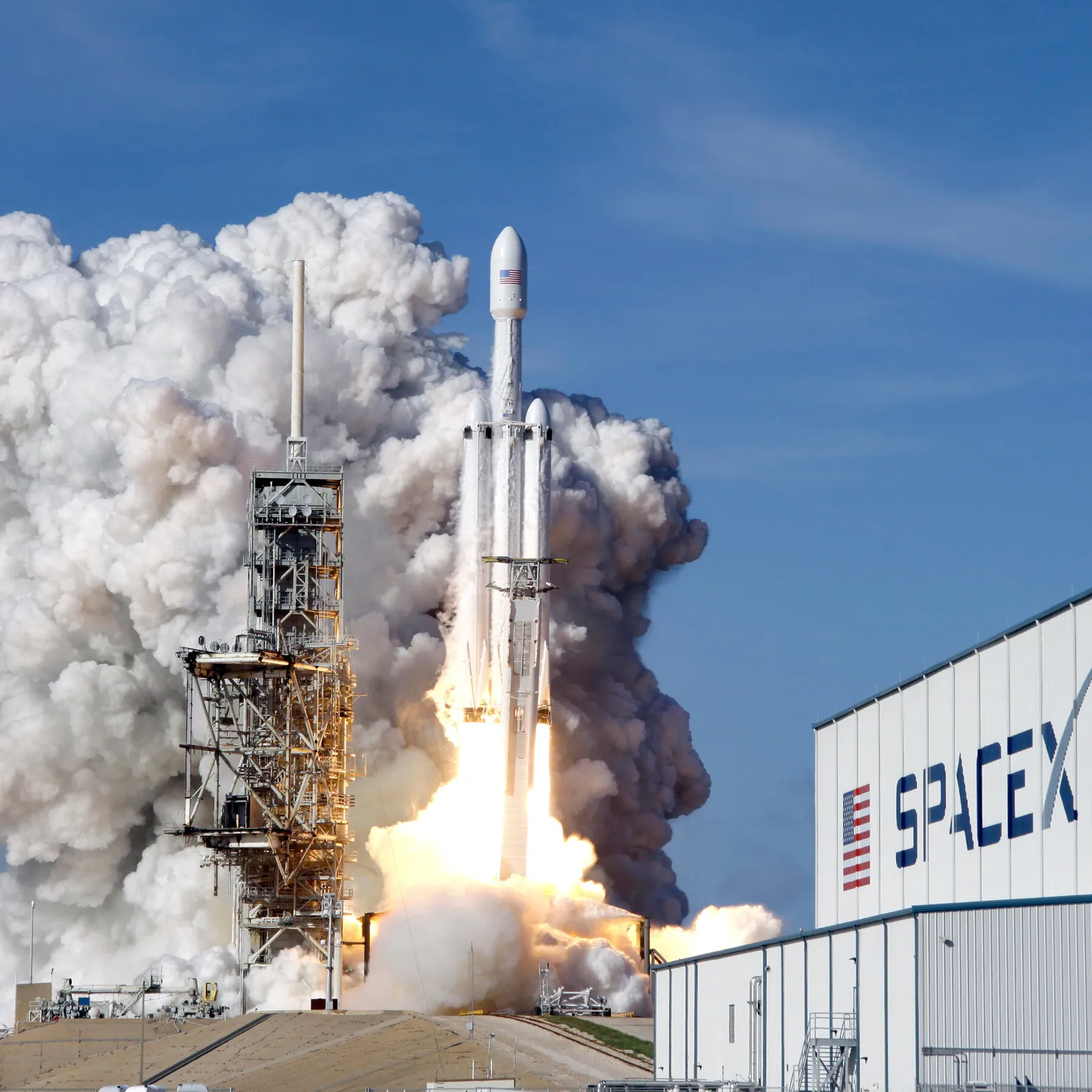
Elon Musk’s rocket company, SpaceX, is spending big and losing money as skepticism grows around its ability to justify a blockbuster initial public offering. Decision-makers are asking whether the valuation being discussed can hold up under basic financial and governance scrutiny.
Elon Musk’s SpaceX is being valued at $1.77 trillion, and skeptics are questioning whether the company can justify that number as it prepares for a high-profile initial public offering. The core issue is simple, and it is also the hardest kind for any capital markets story: SpaceX is spending heavily while losing money. That combination is already forcing investors, analysts, and governance watchers to ask what exactly they are paying for, and when they will see returns.
In other words, the valuation debate is not happening in a vacuum. It is happening while the company’s financial profile is still consistent with early or mid-cycle scaling, not with mature profitability. So the question is whether a future upside narrative is enough to rationalize a valuation of $1.77 trillion today, even if the technology and market ambition are real. For decision-makers, that matters because IPOs are not only about what a company does, but what its investors believe about its path from spending to cash flow, and about the risk that the math fails before the story does.
To understand why this is such a live wire, it helps to remember what IPOs typically require. Public market investors expect companies to show either (a) a credible route to profitability, (b) a defensible reason for why profits are delayed, or (c) a strong basis to underwrite continued capital infusions. SpaceX, according to the basic premise in the reporting, currently has the hard part covered in one dimension, it is spending big. But it does not yet have the other dimension, profitability, which is where scrutiny concentrates.
That is where skeptics tend to land. Heavy spending can be legitimate if it is clearly targeted at scaling operations, improving margins, or building durable advantages. But when spending and losses are the headline financial facts, boards and underwriters also have to consider whether the company’s valuation depends on assumptions that are difficult to validate quickly. The more the valuation reaches, the more investors want to know what milestones will de-risk it, what costs will do over time, and what happens if timelines slip. Even when the technology is advanced, capital markets pricing can still punish uncertainty.
There is also a governance and process angle that often gets underestimated in stories like this. A blockbuster IPO is not just a fundraising event, it is a visibility event. Once a company goes public, it is subject to ongoing disclosure requirements and market discipline, and the bar for justification rises. Boards tend to think about how they will explain strategy and financial results to a wider audience, not just to sophisticated investors. If a company’s value is tied to future potential, it needs to be able to show consistent progress so that the public narrative does not drift into “trust me” territory.
The regulatory framing matters too. Even without the specific regulatory actors named in the limited source, the reality is that an IPO valuation at this scale invites heightened scrutiny from the whole ecosystem: filings, disclosures, and the internal checks that come along with becoming a public company. Regulators and market participants often look for clarity around business models and risk factors. For SpaceX, the simple financial facts in the report, spending big and losing money, become part of the risk story that must be explained credibly. The investor question is whether those losses are temporary and productive, or whether they are a sign that costs are running ahead of monetization.
So what are the second-order implications for decision-makers who are not SpaceX themselves? If a company can float at a valuation level approaching $1.77 trillion while still burning cash, it can set expectations for how markets price growth stories. That can affect how other startups time their IPO plans, how boards think about valuation targets versus financial readiness, and how CFOs structure capital strategies. It also raises the uncomfortable possibility that capital markets optimism can outpace the company’s financial milestones, at least for a while.
For executives and board members in similar categories, this is the strategic stake: the IPO will force a public reckoning between ambition and accounting. Investors want a path, not just a vision. And when the valuation being discussed is this large, even small uncertainties about burn rate, timelines, or monetization can loom bigger than they would for a smaller company. Skepticism, in that context, is not just noise. It is an early warning system for what the broader market may demand once the story hits public screens, regulators, and quarterly reporting.
This story's Key Insights and Take-aways are locked.
Create a free account to unlock Executive Actions for one credit.
Register to UnlockAlways free for Executives Club members. Join the Club
More in Business
SpaceX IPO: Wedbush calls a Tesla merger “holy grail,” Morningstar pegs $63 fair value
Trading starts June 12 at $135, but analysts are split over a $72-per-share “option premium” on orbital AI dreams.

Microsoft SkillOpt upgrades AI agent skills without changing model weights
Open-source framework turns markdown skill files into optimizable objects, boosting accuracy while keeping frozen model parameters untouched.

Britain’s regulator greenlights Novo Nordisk’s weight-loss pill on Thursday, needle-free win
Approval by Britain’s medicines regulator adds a new oral option and strengthens Novo Nordisk’s early lead versus Eli Lilly.