

SpaceX’s 1 billion-share Mars deal hinges on one problem: Martian toxic dust
A physicist says dust would contaminate water, food, and bodies, and even tunnels and suits may not save the plan.
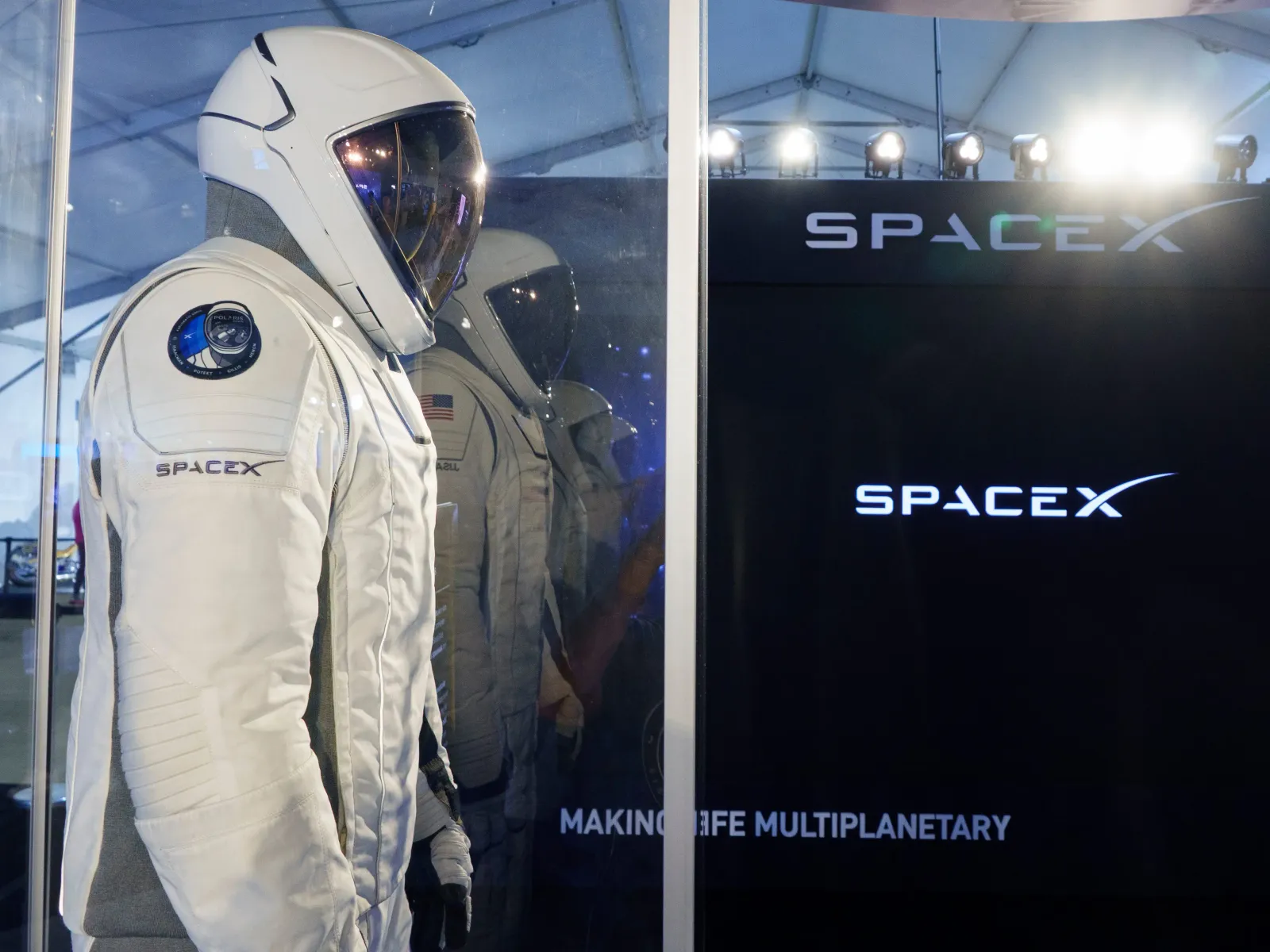
SpaceX’s board has pledged to grant Elon Musk 1 billion SpaceX shares if he can get a colony of 1 million humans on Mars. Physicist and science journalist Adam Becker argues the biggest obstacle is toxic, deadly dust that would infiltrate suits and habitats.
SpaceX’s Mars bet is not just about rockets or landing. The SpaceX board will grant Elon Musk 1 billion SpaceX shares if he can get a colony of 1 million humans on Mars, and physicist Adam Becker says the part everyone underestimates is the dirt itself. Becker, author of “More Everything Forever,” argues that Martian dust is toxic and deadly, so fine that it will cling to astronauts’ spacesuits and then contaminate water, food, and human bodies. In his view, this is less a distant engineering challenge and more a basic life-support risk that can quietly unravel the entire “self-sustaining city” story.
On Elon Musk’s path, dust is not a minor nuisance. Becker explains that the dust is very fine and will get into your water, your food, and your body. He also frames how the contamination would happen in practice: Martian dust would stick to spacesuits, then inevitably track into any habitat the colonists build. He specifically notes that underground shelters, one proposed way to protect colonists from radiation, wouldn’t solve the dust problem because the issue is not only exposure to radiation, it is bringing the dust inside the closed loop of life. Becker’s bottom line is blunt: he described seeing this dust issue and thinking, essentially, wait a minute, this is not going to happen the way people assume.
This matters because the incentive structure is enormous, and it is anchored to a very particular outcome: 1 million humans living in a colony on Mars. Musk founded SpaceX with the explicit goal of making humanity a “multi-planetary species,” and the board’s pledge ties that vision to a measurable, civilizational milestone. That creates a board-level dynamic where optimism and execution speed are rewarded, but the hardest constraints are often the ones that do not show up until you try to run the system at scale. Dust, in Becker’s framing, is a constraint that scales with every trip outside, every suit change, every filtration failure, and every habitat expansion.
Becker also stacks the case with a broader list of obstacles, which is where the story stops being a sci-fi worry and starts looking like a systems-engineering checklist. A trip to Mars takes roughly six to nine months, exposing astronauts to radiation and prolonged weightlessness. Once there, colonists face low gravity, a virtually non-breathable atmosphere, and the enormous logistical challenge of constructing a permanent settlement. Even if you assume you can solve transportation and landing, you still have to keep people alive and healthy long enough to reproduce, educate the next generation, maintain equipment, and build the infrastructure that makes the colony self-sustaining.
SpaceX’s plan, as described in the source, leans heavily on Starship as the vehicle that will eventually transport cargo and settlers to a self-sustaining city on Mars. Musk has repeatedly framed that vision as necessary to safeguard civilization’s future, and he has floated ideas like terraforming Mars by releasing gases trapped in the planet’s ice caps to make the environment more Earth-like. But Becker’s point is that “more Earth-like” is not the same thing as “habitable for generations,” and toxic dust is a concrete, physical contaminant problem that shows up even in early settlement phases. He also suggests there is not enough material on Mars to create a breathable atmosphere, making Mars more like a remote research outpost at best, rather than a surface city.
The source includes a second expert voice on the same theme, and it reinforces the argument that Mars is a much bigger technical mountain than optimism suggests. Alexei Filippenko, a professor of astronomy at the University of California, Berkeley, told Business Insider that a self-sustaining Mars colony is “not theoretically impossible,” but it will be far more difficult than Musk imagines, and it will take way more time. Filippenko points to biological hurdles, including giving birth and growing up in low gravity. He also adds that there is no thick atmosphere and no magnetic field on Mars to block particles, referring to the dust issue Becker highlights, from the solar wind.
Becker’s lived-in Mars picture is even more specific about what “settlement” could mean if dust and other constraints dominate. He says you would need to bring massive amounts of air and water to live on the surface without a space suit, even temporarily, and that there is not a good way to bring that stuff from Earth in the quantities needed. Instead, he characterizes life on Mars as a few dozen people living in tunnels underground that never really go outside, calling it incredibly depressing. Whether or not one agrees with that emotional conclusion, the operational implication is the same: if the colony must function like an enclosed system, then every breach of dust control becomes existential, not cosmetic.
For executives and boards watching the space race, the strategic stakes are straightforward. When incentives are tied to mission milestones as dramatic as “1 million humans on Mars,” the real risk is not only technical difficulty, it is mispricing uncertainty about life-support constraints that do not behave like a software roadmap. Dust, low gravity, radiation exposure during a six to nine month trip, and the lack of a thick atmosphere and magnetic field are all examples of hard constraints. If one of those constraints is underestimated, it can turn a multi-year program into a decoupling between the brand of inevitability and the physics of survival. In other words, the question is not whether Starship can reach Mars. The question, as Becker frames it, is whether Mars dust can be managed well enough to make “multi-planetary species” anything more than a slogan.
This story's Key Insights and Take-aways are locked.
Create a free account to unlock Executive Actions for one credit.
Register to UnlockAlways free for Executives Club members. Join the Club
More in Business

Uber buys Delivery Hero for nearly $15B, vaulting to top food delivery outside China
The deal doubles Uber's dual-services footprint and pushes a ride-and-eats bundling play into 50 more markets.

Epic and Google drop settlement bid, forcing rival Android app stores by July 22
Google told the court it is ready to carry third-party app stores starting Wednesday, July 22.
SK Hynix opens at $170, raises $26.5B, and tops foreign IPO records
In Friday's Wall Street debut, SK Hynix turns AI RAM demand into a $26.5B fundraising moment that rewrites comps.