
SpaceX's $100B Louisiana spaceport: thousands of launches a year
The company's Starbase, LA in Vermilion Parish signals a new era of launch infrastructure and Gulf Coast economic stakes.
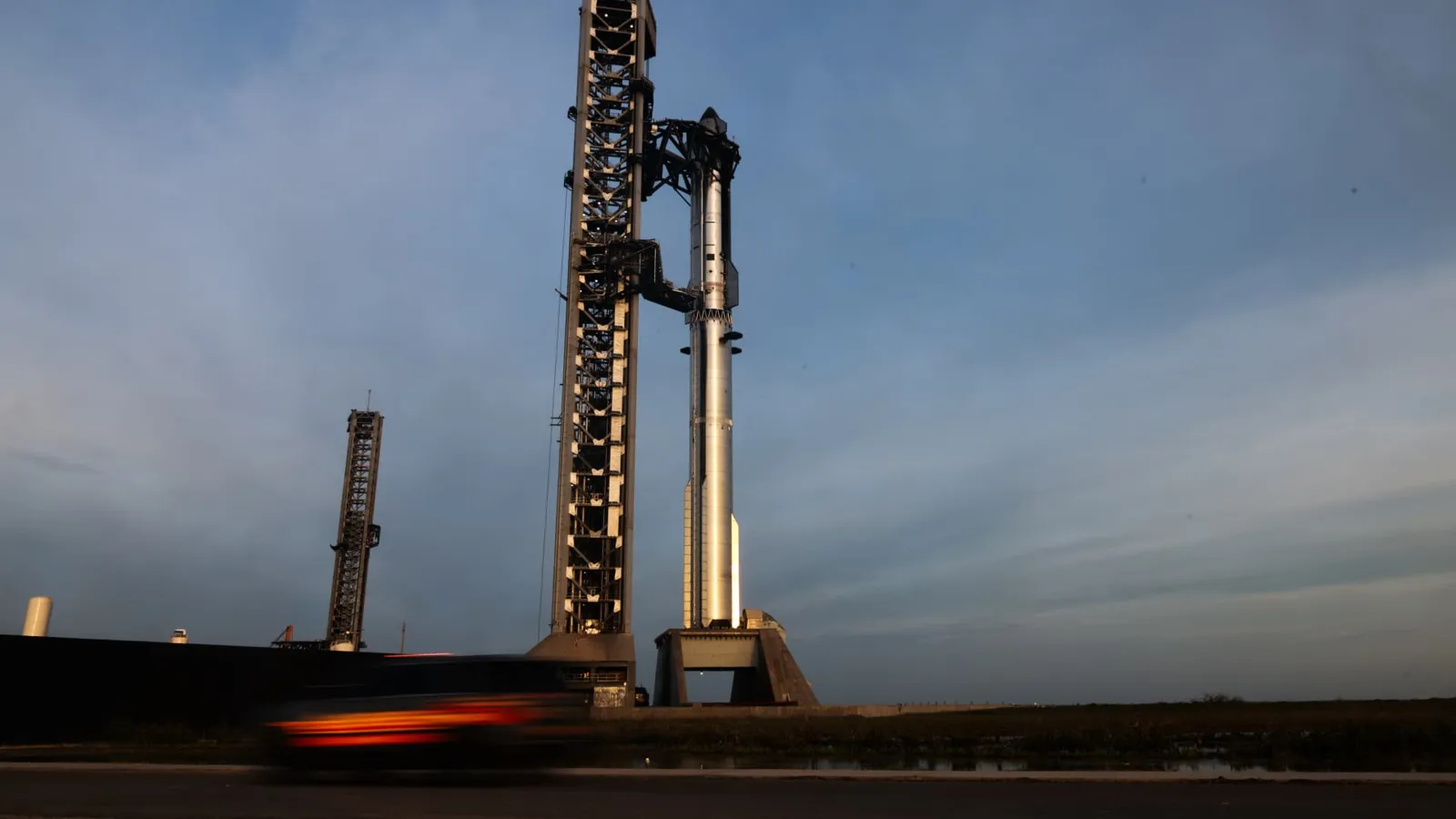
SpaceX plans to build a $100 billion spaceport in Vermilion Parish, Louisiana, called Starbase, LA, designed to support thousands of launches annually. For decision-makers, this signals a major shift in launch infrastructure, regional economic development, and the competitive landscape of space operations.
SpaceX is planning a $100 billion spaceport in Vermilion Parish, Louisiana, a facility the company says will support thousands of launches annually. The project, named Starbase, LA, represents one of the largest infrastructure commitments in the commercial space industry, and it puts the Gulf Coast at the center of a new launch economy that could reshape how often humanity reaches orbit. For executives watching the space sector, the scale is the story: a single site designed for thousands of launches per year would dwarf the current cadence of every launch provider on Earth combined. In 2024, the entire global industry managed roughly 260 orbital launch attempts, and SpaceX itself completed about 130 of them. A facility built for thousands of annual launches is not an incremental expansion; it is a declaration that SpaceX intends to make orbital access as routine as air travel, and it is spending at a scale that only a handful of companies or governments could even contemplate. The $100 billion price tag, reported by CNBC, would make Starbase, LA one of the most expensive industrial developments ever undertaken in the United States, comparable to the largest infrastructure projects in the country's history. For context, the International Space Station, a multi-decade, multi-agency effort, cost roughly $100 billion in cumulative dollars, and the Apollo program, adjusted for inflation, cost around $250 billion. A single company committing $100 billion to a launch site is a signal that the private sector now operates at a scale once reserved for nation-states. The choice of Vermilion Parish is also strategic. The site sits along the Gulf Coast, close to the equator, which allows rockets to take advantage of the Earth's rotation to reach orbit more efficiently. It is also near existing aerospace infrastructure in Louisiana and Texas, including SpaceX's current Starbase facility in Boca Chica, Texas, which has been the company's primary development and testing site for its Starship program. By establishing a second major site in Louisiana, SpaceX gains redundancy, additional launch capacity, and a new relationship with a state government that has been aggressively courting aerospace investment. Louisiana has offered significant incentives to attract the project, though the specific terms of those incentives have not been fully disclosed. The economic implications for the region are substantial. A $100 billion facility would create thousands of construction jobs and, once operational, a permanent workforce of engineers, technicians, and support staff. It would also attract a supply chain of aerospace manufacturers, logistics providers, and service companies, potentially transforming Vermilion Parish, a rural coastal area, into a hub of high-tech industry. For local officials, the project represents a generational opportunity to diversify an economy historically dependent on oil, gas, and fishing. But the project also raises regulatory and environmental questions. Launch sites of this scale require extensive environmental reviews, and the Federal Aviation Administration, which licenses commercial launches, will need to assess the impact on the region's wetlands, wildlife, and coastal communities. SpaceX has faced scrutiny over its environmental practices at its Texas site, including concerns about water usage, noise, and the impact of test flights on local habitats. The Louisiana project will likely face similar scrutiny, and the company will need to navigate a complex web of federal, state, and local regulations. The timeline for the project is also unclear. SpaceX has not announced a specific start date for construction or a target date for the first launches from Starbase, LA. Given the scale of the investment and the regulatory hurdles, the project could take a decade or more to reach full operational capacity. For competitors, the implications are stark. A launch site capable of thousands of launches per year would give SpaceX an almost insurmountable advantage in launch capacity, making it even harder for rivals like United Launch Alliance, Blue Origin, or Rocket Lab to compete for commercial and government contracts. It would also strengthen SpaceX's position in the race to deploy large constellations of satellites, including its Starlink network, which requires frequent, reliable, and relatively inexpensive launches. For investors and executives in the space sector, the project is a reminder that the industry is entering a phase of massive capital intensity. The companies that thrive will be those that can secure the infrastructure, regulatory approvals, and government support needed to operate at scale. For Louisiana, the project is a bet on the future of space, and for the broader economy, it is a sign that the commercial space race is no longer just about rockets; it is about building the industrial base for a new era of orbital activity. The $100 billion price tag is not just a number; it is a measure of how far the industry has come and how far one company is willing to go to dominate it.
This story's Key Insights and Take-aways are locked.
Create a free account to unlock Executive Actions for one credit.
Register to UnlockAlways free for Executives Club members. Join the Club
More in Technology

doubleAI's Maxwell rewrites code while it runs, claims 38x speedups
The Tel Aviv startup's code execution model formally verifies optimizations, turning AI into an agent for the hardware itself.
Saudi military official paid to fly OpenAI bugging suspect's family out, prosecutors say
A court filing says a Saudi military official funded the family's exit and Riyadh offered bail, putting foreign-influence risk squarely on AI boards.

AI researcher's 26,000-word claim: Neural nets aren't tangled after all
Nick Cammarata's Goodfire post has the AI world split - if he's right, monitoring frontier models just got a lot easier.