
SpaceX’s IPO left $16.7B on the table, and AI capex makes it sting
June 12’s pop looked normal, but the Green Shoe math and cash burn turn it into a funding problem.
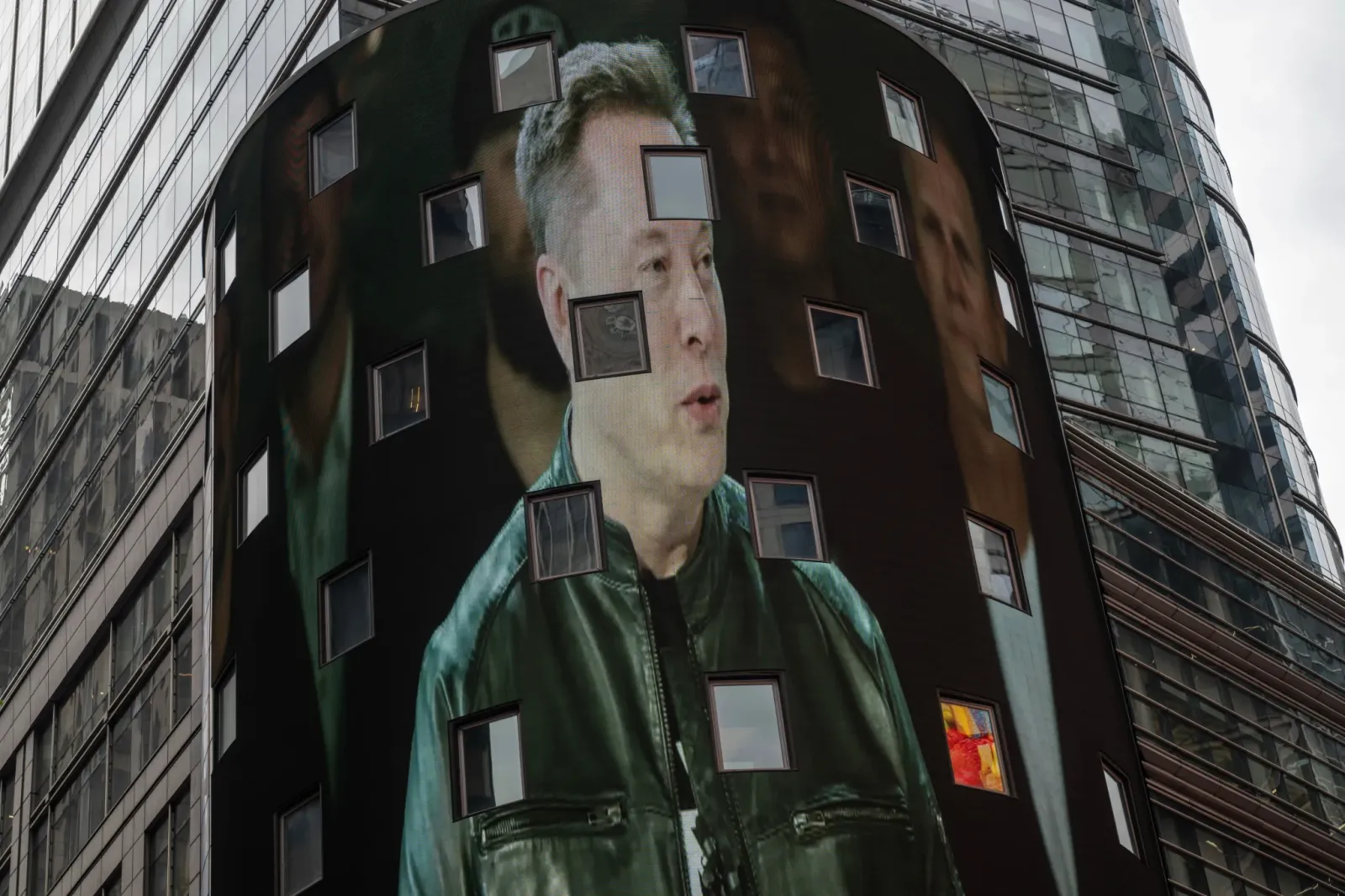
SpaceX’s June 12 IPO priced at $135 and closed at $160.75, with Jay Ritter of the University of Florida estimating $16.7 billion “left on the table” once the 15% Green Shoe is included. That gap matters because SpaceX’s AI buildout is eating cash faster than operations can replace it, raising dilution risk for shareholders.
On June 12, SpaceX (SPCX) pulled off an IPO debut that looked almost boringly “within historical norms”: shares jumped from the $135 offer price to close at $160.75, up 19%. In percentage terms, stats assembled by Jay Ritter, a University of Florida professor and the world’s leading expert on IPOs, match the average first-day bump over the last several decades.
The part that is not boring is the money SpaceX effectively didn’t collect. Fortune reports Ritter’s official “left on the table” number for SpaceX is $14.5 billion, but his methodology focuses on the one-day figure. It doesn’t include the 15% “over-allotment,” also called the Green Shoe, which lets underwriters distribute extra shares at the IPO price if the stock rises on day one, and stabilize by repurchasing those extra shares if the stock drops. When you include that 15% Green Shoe, Fortune says the total proceeds SpaceX won’t collect (through the time those shares are dispensed) are $16.7 billion ($14.5 billion plus 15%).
That $16.7 billion would be a headline even if SpaceX’s business were already printing cash. But Fortune notes the company is not. Its scale as an ongoing business is smaller than the IPO spectacle suggested: last year, SpaceX posted $18.7 billion in revenue, only 12% more than the day one jump delivered to IPO investors. And while the market’s valuation by the first day close reached $2 trillion, the business still needs “tens of billions” to fund the capex required for what it calls its principal growth engine, its new AI franchise.
The filing itself is unusually plain-English about the capital intensity. Fortune points to SpaceX’s S-1, including language that the AI business is early stage, being integrated into the organization, and its strategy is still developing. Crucially, it “will require significant capital expenditures to fund compute, infrastructure and power generation, model training, and product development.” The numbers underneath that warning are already large. Last year, capex dedicated to AI amounted to $12.7 billion, absorbing 81% of its expenditures on plant and equipment. In Q1, AI-related outlays for data centers and GPUs jumped to $7.7 billion, and the S-1 implies those costs will swell further from there.
Cash flow arithmetic is doing the damage. Fortune reports that over the past five quarters, SpaceX has lavished $31 billion on capex, four times the cash collected from running its businesses. The reason is the combination of deep operating losses in AI and smaller deficits on the rocket side, which together dwarf profits from Starlink, the satellite mobile and broadband arm described as one of the company’s more money-spinning franchises. Then there is the even more uncomfortable follow-up: most of the IPO proceeds are spoken for already.
SpaceX’s S-1 disclosed that the company has committed $62.6 billion, or 71% of the $86 billion raised in the offering and Green Shoe, for amounts owed to several parties. Fortune lists examples including repayment of a loan from Tesla, Musk’s second largest holding, and payment to EchoStar for “Spectrum Acquisition Closing.” After those commitments, Fortune says only $23 billion is available to cover AI capex. Add that to cash on hand, and you get a headline war chest that is still not that big for a fast-accelerating AI spend. At the end of Q1, SpaceX had cash of $24 billion, so IPO take plus reserves totals less than $50 billion. Fortune argues AI spending on capex and R&D is accelerating so quickly that SpaceX could burn through that number in less than a year.
This is why the “on paper” first-day math turns into a real governance issue for anyone allocating capital to SpaceX or sitting on its board. The $16.7 billion not collected is one-third of the $50 billion war chest, Fortune says, which would have materially extended the runway. It also feeds into a second-order risk investors already care about when a company’s valuation jumps faster than its cash generation can keep up: dilution. The bar to rewarding shareholders is already super-high due to SpaceX’s stratospheric valuation. Fortune notes SpaceX continued to climb after the IPO, reaching a $2.44 trillion valuation by June 18, up 36% from the $1.8 trillion it would have commanded at $135.
When cash is scarce relative to spending plans, the financing mechanism tends to be one of two things: use existing reserves longer, or issue more stock. Fortune points to the latter immediately, citing SpaceX’s June 16 announcement that it is purchasing coding agent Cursor for $60 billion in an all-stock transaction. The shares Cursor owners get will be based on their average end-of-day price in the seven days before closing, and Fortune notes even at today’s $2.6 trillion valuation the deal would dilute SpaceX’s shareholders by 2.4%. If the stock price retreats before closing, that dilution would rise. In other words, when your acquisitions are paid with equity priced at extraordinary levels, you gain flexibility now, but you also pass the bill to existing shareholders later if fundamentals do not catch up.
For executives and board members watching SpaceX, the lesson is not “don’t IPO” or “don’t leave money on the table.” It is that the market’s first-day story can be mathematically normal while the company’s funding math is still unforgiving. Even with a never-before-witnessed $86 billion raise including the 15% over-allotment, the cash is constrained by committed spend and an AI ramp that Fortune describes as potentially burning through less than a year’s worth of “IPO take plus reserves.” In that environment, the $16.7 billion gap becomes more than trivia. It becomes fuel timing, dilution probability, and ultimately whether the AI buildout can stay ahead of the balance sheet.
This story's Key Insights and Take-aways are locked.
Create a free account to unlock Executive Actions for one credit.
Register to UnlockAlways free for Executives Club members. Join the Club
More in Business
Accenture’s $4.18bn play fails as AI fears spark a 20% worst-ever stock plunge
On Thursday, Accenture hit its biggest one-day drop on record after forecasting worries that AI could hollow out consulting.

SpaceX stock jumps 3% after it overtakes Amazon’s market cap
CNBC says SpaceX’s shares surge following its IPO Friday, forcing investors to reprice what “space” and “AI” are worth.
SpaceX’s first options day breaks U.S. records after a $85B IPO win
Big IPO, bigger options debut: what it means for investors, risk teams, and anyone benchmarking market appetite.