
SpaceX schedules Starship Flight 13 July 16 after FAA blocks relaunch from May mishap
A 90-minute window starts at 2245 UTC as Starship and Super Heavy try again with hardware tweaks and new rules.
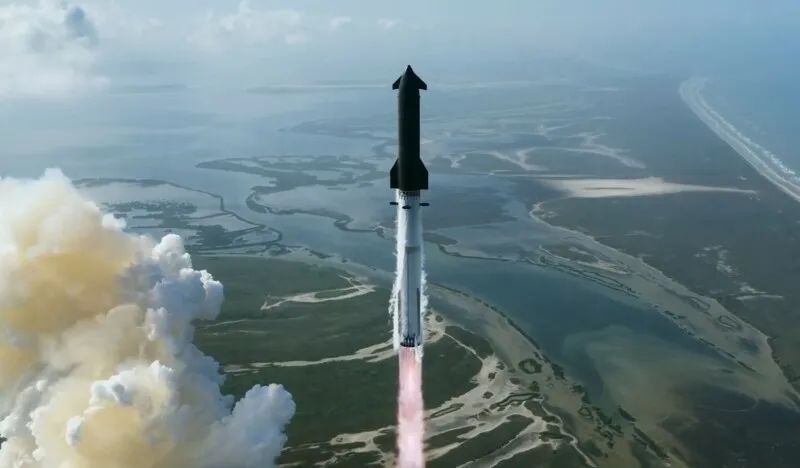
SpaceX is aiming to launch Starship Flight 13 on Thursday, July 16, carrying 20 Starlink satellites during a sub-orbital test and a heat-shield look. The FAA required an investigation after the May Super Heavy Booster failed to perform a soft touchdown and engine relight issues followed a booster directional flip.
SpaceX is lining up Starship Flight 13 for Thursday, July 16, with a 90-minute launch window opening at 2245 UTC. This time, Flight 13 will carry 20 Starlink satellites, deploy them during Starship's sub-orbital lob, and try to avoid repeating the anomalies from the previous test. If that sounds like normal test-program cadence, here is what makes it a board-level moment: the May flight triggered a Federal Aviation Administration (FAA) requirement for an investigation before Starship and Super Heavy could launch again.
So the practical question behind the date is simple, and the source answers it in detail. In May, SpaceX disclosed that slight differences in engine startup on the ship caused the booster directional flip to be off by approximately 90 degrees; after the flip, five of the 33 booster engines failed to relight, and the boostback burn ended early. Starship also lost one of its three Raptor engines following stage separation, yet still reached its planned suborbital trajectory. Flight 13 is SpaceX's attempt to take those failure threads, stitch them together, and show reliability improvements without pretending the last test was fine.
The mission profile is built around next-generation Starlink V3 satellites and a sort of self-imaging test setup. The plan is for the 20 satellites to extend their solar arrays and antennas, then connect with Starlink's constellation via high-capacity lasers. Six of the satellites will carry cameras to look at Starship's heat shield. SpaceX adds another clever layer for targeting: some tiles on the vehicle have been painted white to simulate missing tiles and serve as targets during the test. That matters because heat-shield performance is not an academic concern. Starship's ability to survive re-entry, and to be trusted to execute mission-critical steps, is what turns a test vehicle into an operational transport.
Those satellites are not meant to come home. Because the satellites will share the same sub-orbital trajectory as Starship, they will burn up in the atmosphere approximately 20 minutes after deployment. That sounds wasteful until you remember what they are buying: a controlled, repeatable way to test deployment mechanics and in-flight performance signals under re-entry-correlated conditions. It also means the program is accepting the cost of the test as a price of learning, rather than treating every data point as something to recover and reuse.
The hardware changes also tell you what SpaceX believes the weak link actually is. The company says multiple hardware and operational modifications have been made to address the interconnected causes, and it plans additional reliability improvements in upcoming versions of the Raptor engine. SpaceX did not elaborate on the interconnected causes in the detail most engineers would want. Still, it did provide two specific statements about what has been changed: the startup sequence has been modified to be more robust to timing variability and more reliably flip in the desired direction; and there have been hardware modifications to improve re-light reliability.
On the operational side, Flight 13 continues a key testing boundary condition: neither the booster nor Starship will be recovered. The booster is expected to make a controlled descent in the Gulf of Mexico. Starship will again attempt a controlled re-entry and splashdown in the Indian Ocean, as on previous flights. And crucially, in-space reignition of one of Starship's Raptors is described as essential before SpaceX can send Starship to orbit, deploy Starlink satellites using the vehicle, or meet NASA's requirements for the Artemis III and IV lunar landers. In other words, Starship is still in the phase where demonstrating orbital-critical behavior depends on nailing reignition reliability, not just making it to a planned suborbital arc.
Regulatory friction is the other big driver here, and it is directly tied to why this flight is worth watching beyond the usual rocket-news cycle. After the May mishap, the FAA required an investigation before the Starship-Super Heavy could launch again. That is not just paperwork. For a company operating in a public-scrutiny environment, regulator actions can shape schedule certainty, stakeholder patience, and the risk tolerance of partners who care about launch cadence. If Flight 13 goes smoothly, it gives SpaceX momentum on both the technical narrative and the compliance narrative. If it stumbles on something similar, the problem is not just engineering, it is credibility with the regulator and with anyone who is building mission plans around future flights.
For executives and investors watching from adjacent industries, the second-order takeaway is this: Starlink deployment, high-capacity laser connectivity, and even Artemis-linked timelines all depend on a reliability story that is measurable, not vibes-based. Flight 13 is designed to generate evidence, with cameras, painted heat-shield tiles, and a repeat attempt after a specific 90-degree flip deviation and booster engine relight failures. The date is July 16. The stakes are whether SpaceX can convert investigation-driven fixes into a path back to higher-confidence flight operations.
This story's Key Insights and Take-aways are locked.
Create a free account to unlock Executive Actions for one credit.
Register to UnlockAlways free for Executives Club members. Join the Club
More in Technology

Google quietly links your phone number to every Android account on your SIM
Adding a SIM now ties your phone number to all Google accounts - and future accounts inherit it. Here's the security and privacy stakes.

Hijacker AI 'Skynet mode' runs 100,000 attack steps against exposed models
Symantec caught a criminal AI agent that borrows other models, steals data, and mines crypto; the only relief is no confirmed victims yet.

Nvidia's AI-financier shift faces its first big test as neoclouds stumble
A rout in neocloud stocks is forcing investors to weigh Nvidia's hidden exposure as both supplier and lender to the AI buildout.