

SpaceX stacks Starship Flight 13 for July 16 launch, betting on V3 cryogenic reliability
Two stages are stacked for a 90-minute window, and NASA will be watching propellant handling like it is mission-critical.

SpaceX has stacked the two stages of its Starship ahead of Flight 13, scheduled for July 16 at 6:45 p.m. EDT (2245 GMT) from Starbase, Texas. The test launches the second Version 3 (V3) Starship, and its performance is closely tied to NASA's Artemis lunar lander certification checklist.
SpaceX is rolling its Starship rocket back onto the launch posture for Flight 13, with liftoff set for today, July 16, during a 90-minute window that opens at 6:45 p.m. EDT (2245 GMT) from pad 2 at Starbase, Texas. After several days of testing, the company stacked and readied both stages overnight, and now the vehicle is moving into prelaunch procedures ahead of the countdown.
What matters for decision-makers is not just that Starship is on the pad. It is that this flight tests the upgraded Version 3 (V3) configuration, including changes aimed at making the rocket more operationally mature for future missions. Flight 13 is launching the second V3 Starship, with Super Heavy and Ship assembled after Booster 40 was returned to the pad on July 15 and Ship 40 was rolled from the hangar beginning yesterday evening. From here, the sequence is straightforward: prelaunch checks, launch countdown, and then a series of maneuvers that will reveal whether the new design can behave as expected.
For context, Starship is designed for full reusability, meaning both Super Heavy and Ship are intended to return to their launch site for landing and refurbishment. That is a fuel math problem as much as an engineering problem. The rocket has to carry enough propellant not only to reach space but also to come back, and V3 leans into propellant management upgrades to support that operational goal. One critical V3 update involves propellant transfer docking ports added to Ship's dorsal side, which is the side opposite the heat-shield tiles on its ventral, belly side. The reason is practical: Ship uses the majority of its fuel getting to space, and will therefore require propellant transfers from various refueling flights to fly beyond low Earth orbit.
That is why NASA is watching V3 so closely. The source is explicit that NASA has a vested interest in Starship's yet-unproven ability to transfer and maintain cryogenic fuels that power its Raptor 3 engines. NASA has contracted SpaceX to design a lunar lander version of Starship for Artemis, and managing onboard propellants is one of the requirements in NASA's checklist to certify the vehicle to fly with crews. If you are an executive assessing risk, this is the core: the path to certification runs through the kinds of propellant operations that a test flight either validates or strains.
Technically, Flight 13 is built on a V3 package that is different from the Version 2 (V2) predecessor. V3 is taller and carries more propellant. It also has lost significant mass around its engine section due to upgraded avionics systems, a detail that hints at where SpaceX is focusing weight and control improvements. Power comes from upgraded Raptor 3 engines: Super Heavy will fly with 33 Raptor 3 engines, and Ship will carry another six Raptor 3s (three sea-level and three vacuum-optimized). These changes are meant to mature the vehicle toward clearing it for official operation, and today is the next step in that progression.
The stakes also come with recent lessons. Flight 13 is described as aiming to smooth over a few rough patches from V3's debut on the mostly successful Flight 12 on May 22. The hiccups included Super Heavy failing to steer itself back to Earth for a controlled splashdown, and Ship not relighting one of its Raptor engines in space as planned. For a board or investor audience, this matters because it ties the narrative to measurable behavior during the flight profile, not just hardware availability. The launch is structured so that the vehicle can demonstrate key phases that are hard to “paper over” in later analysis.
If all goes according to plan, Super Heavy will perform a boostback burn and a soft splashdown in the Gulf of Mexico. Ship will then carry on with a suborbital trajectory and is expected to release 20 Starlink V3 satellites. Those upgraded Starlinks include six equipped with cameras intended to inspect Ship's heat-shield tiles during flight. The satellites will follow the same suborbital trajectory as Ship and are expected to burn up during reentry through Earth's atmosphere. Ship is scheduled to execute a landing burn and soft splashdown about a little more than an hour after liftoff, and it is expected to meet a watery demise in the Indian Ocean.
Strategically, the results of Flight 13 feed directly into readiness for future Artemis-linked demonstrations. SpaceX plans to complete demonstrations later this year in preparation for Artemis III, which is targeted for mid-to-late 2027 and will fly a crew of four aboard NASA's Orion spacecraft to dock with Ship in Earth orbit ahead of Artemis IV in 2028. NASA contracted Blue Origin's Blue Moon as an additional Artemis lander, with docking operations with Orion during Artemis III. In other words, even if today’s flight looks like a test for the rocket, it is also a stress test for an entire certification and mission cadence.
For executives at any company tied to aerospace timelines, supply chains, or regulators, this is the kind of moment where “it launched” is not the headline. The headline is whether V3’s design, including propellant handling and engine behavior, can reduce the uncertainty that keeps crews, certifications, and schedules locked in limbo. Flight 13 is stacked, readied, and waiting. The question now is whether the vehicle can turn those upgrades into repeatable, certifiable performance.
This story's Key Insights and Take-aways are locked.
Create a free account to unlock Executive Actions for one credit.
Register to UnlockAlways free for Executives Club members. Join the Club
More in Business

Uber buys Delivery Hero for nearly $15B, vaulting to top food delivery outside China
The deal doubles Uber's dual-services footprint and pushes a ride-and-eats bundling play into 50 more markets.

Epic and Google drop settlement bid, forcing rival Android app stores by July 22
Google told the court it is ready to carry third-party app stores starting Wednesday, July 22.
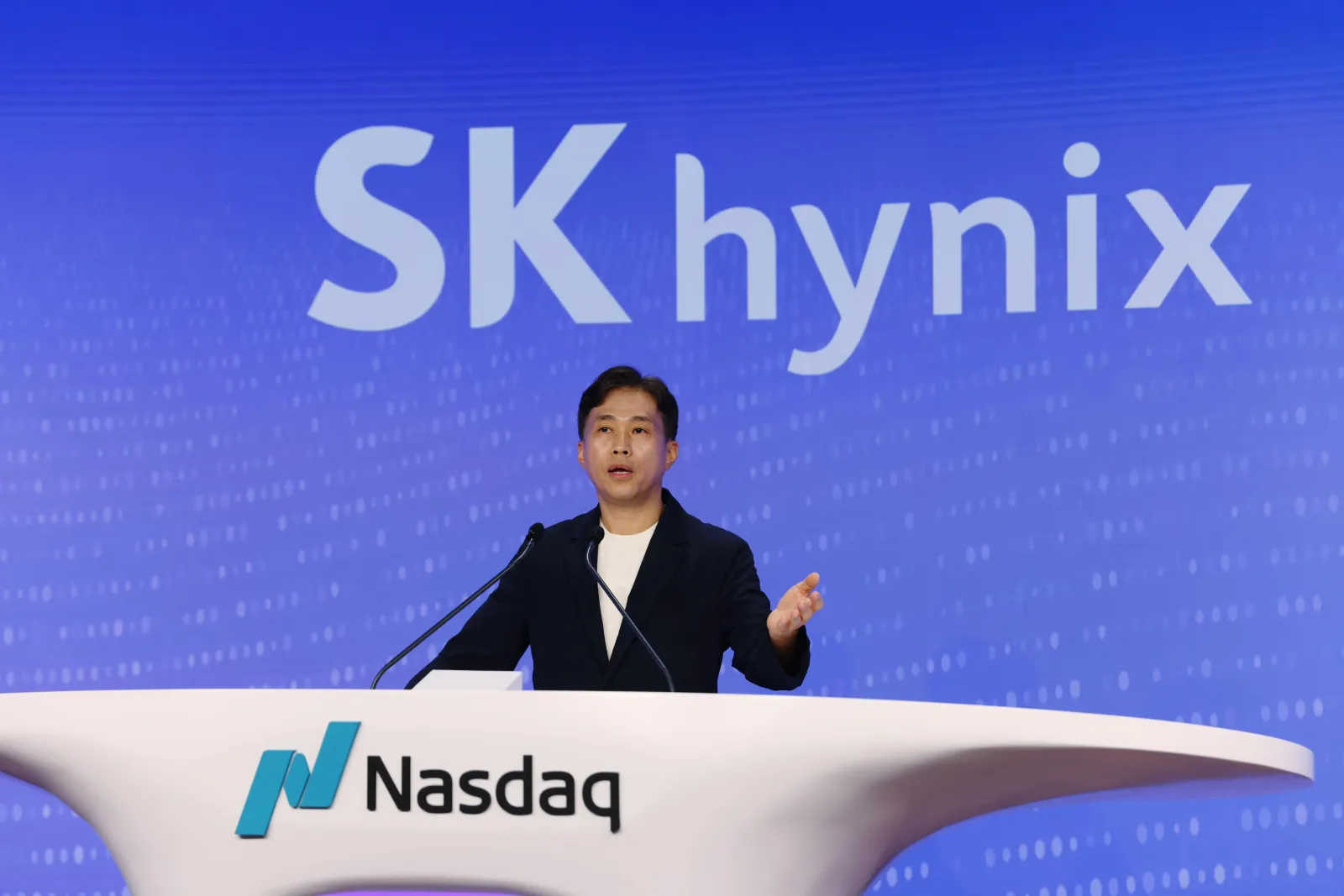
SK Hynix opens at $170, raises $26.5B, and tops foreign IPO records
In Friday's Wall Street debut, SK Hynix turns AI RAM demand into a $26.5B fundraising moment that rewrites comps.