
SpaceX stock jump after June 12 makes a Tesla all-stock deal easier
Shotwell did not rule it out. The market did the rest, changing dilution math for both sides.
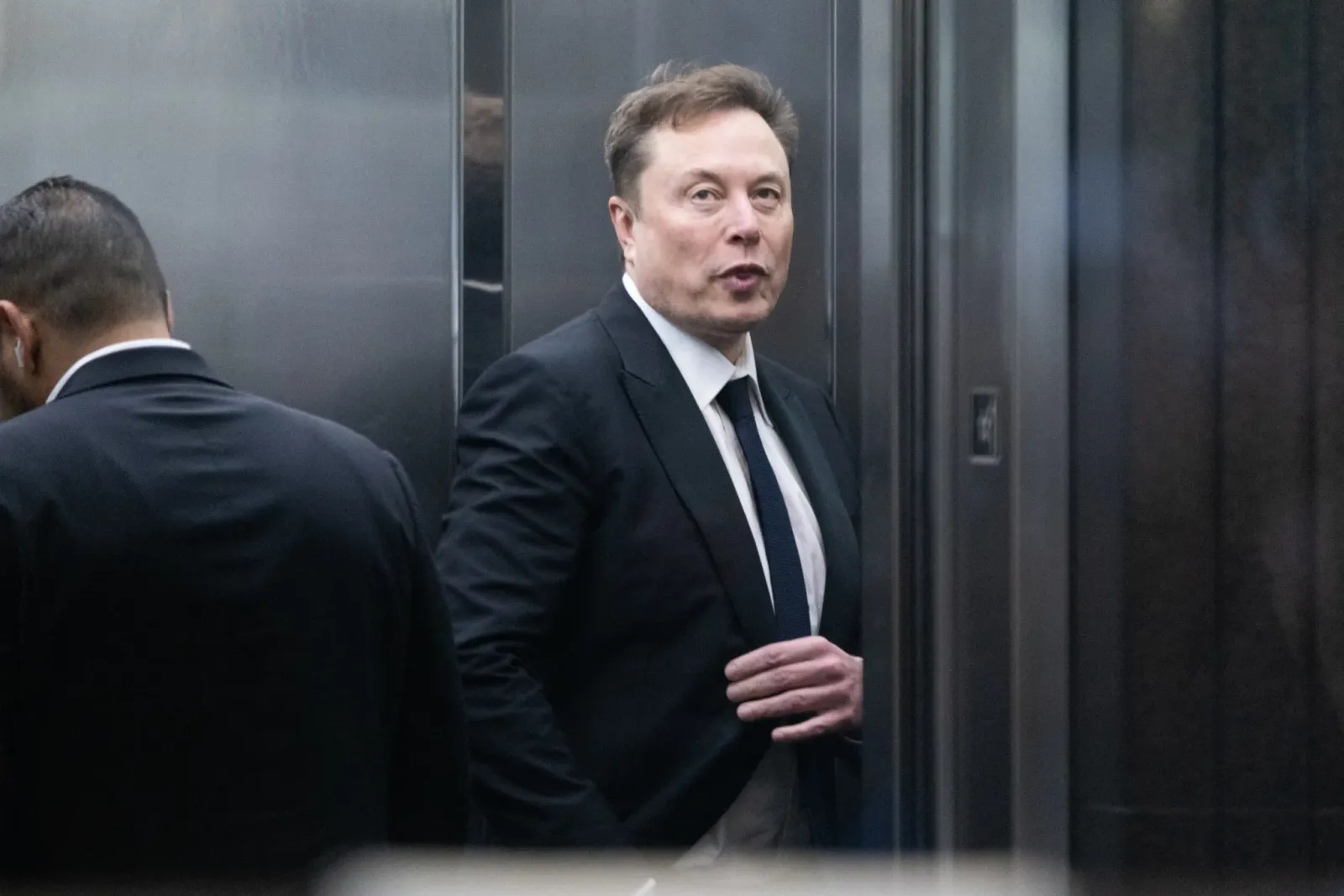
Gwynne Shotwell, SpaceX president and COO, told CNBC on June 12 that a potential merger with Tesla could make sense, describing “a convergence” between the companies. As SpaceX shares soared in the days after, the stock-for-stock terms would require less dilution than investors expected, even while SpaceX fundamentals remain thin.
On June 12, in a CNBC interview, SpaceX president and COO Gwynne Shotwell did not dismiss the idea that SpaceX could buy Tesla, and she even suggested it might make sense. She framed it as “a convergence we're all trying to accomplish in the future,” and said a tie-up “might make Elon's life a little easier.” Two weeks earlier, that sounded like a talking point. But after SpaceX’s historic early Nasdaq run, the basic math for an all-stock Tesla acquisition got significantly more favorable.
Here’s the key shift: as SpaceX shares vaulted after trading began, SpaceX’s valuation rose so much that it could buy Tesla by issuing far less stock than would have been required if SpaceX’s valuation had stayed at its pre-trading level. The article pegs the “easier to solve” problem to dilution. At Tesla’s around $1.5 trillion market cap and a referenced SpaceX offer price of $135 a share, the implied scenario required SpaceX to issue 46% more shares if it bought Tesla in an all-stock transaction, assuming both companies’ valuations stayed constant around that level. Then SpaceX shares jumped 37% to $185 by the close on June 18, sending its valuation to $2.44 trillion. That change cuts the dilution requirement to 38% instead of 46%.
To decision-makers, that’s not a cute footnote. Stock-for-stock M&A is extremely sensitive to the acquirer’s market price, because it determines how much ownership you must hand over to get the target. In the headline sense, the odds of a merger “keep climbing every time the stock shoots up” because each new valuation bump makes the deal terms mechanically easier. In the real world, that encourages boards and investors to rethink what looks feasible, especially when the acquirer’s share price has become both inflated and, from an integration standpoint, tempting.
The article also ties this to Tesla’s own pressure points. It says Tesla’s fundamentals are getting weaker and weaker: in the past four quarters, Tesla posted $3.4 billion in GAAP net earnings, down from $15 billion in 2023 and $7.0 billion in 2024. Yet Tesla’s market cap is still hovering around $1.5 trillion. The gap, according to the source, is largely attributed to Musk’s promises of big profits from robots and self-driving cars, products not yet selling, with advertised entries that keep getting delayed. In other words, Tesla is valued like an AI and robotics platform that has not fully materialized its earnings power.
That creates a specific incentive for a SpaceX bid, at least “in theory,” as the article puts it: if SpaceX can use an overvalued stock to acquire a target that still trades at a much higher valuation than its current earnings, the merger can look like a path to solving Tesla’s “How to bail out Tesla” problem. Meanwhile, SpaceX shareholders might worry about what the combined company would actually earn, not just what it would be worth. The source points to a crowded skepticism view on Wall Street: many fear Tesla’s astronomical market cap rests more on the possibility SpaceX will offer something close to what Tesla is selling for, than on steady current operations.
The paper’s math goes further on what the combined entity could look like if both companies’ valuations roughly held. It says that with both valuations staying about the same through completion of a merger, the combined entity would sport a market cap of $4 trillion. That would make it the fourth most valuable U.S. enterprise behind Nvidia, Alphabet, and Apple, and more than one trillion ahead of Amazon and Microsoft. But the same source flags a problem that matters in governance and capital markets: it would also have negative profits, because SpaceX’s losses in the past four quarters more than offset Tesla’s “puny gains.” The piece bluntly summarizes the tradeoff: Musk would be using one incredibly pricey stock to buy another of the same genre.
And then there’s the governance and concentration risk, the part execs actually lose sleep over. SpaceX may suffer less dilution than it would have before the run-up, but its shareholders would still go from owning 100% of SpaceX to less than two-thirds after combining with Tesla. What would they get? The article says Tesla’s “bedrock EV business” would come along with a multi-product portfolio that includes robotaxis, robots, and batteries, plus SpaceX’s rocket, Starlink, and AI assortment. It describes Musk as making SpaceX even more of a conglomerate and harder to manage. For investors and board members, that’s the classic second-order issue: conglomerates can look brilliant on a slide and still destroy value when integration complexity is higher than the market expects.
The source also brings in how the story has already been priced by market observers. Before SpaceX’s moonshot, analyst Dan Ives at Wedbush put the odds of a merger at 80%. Long-time Tesla investor Ross Gerber, citing Musk’s move to fold xAI into SpaceX, concluded this gambit would advance a vision of running one big company, described as “a kind of Berkshire Hathaway of AI-driven tech.” Betting site Kalshi showed odds at 52% that it would happen by May of next year. By the time of the report, Kalshi raised that number by two points to 54%. None of those are certainty, but they show that the market already saw a pathway, and the stock jump widened it.
Finally, the article points to SpaceX’s own filing for a rationale that could help Musk sell the story to stakeholders. The SpaceX S-1 filing highlights collaboration areas between the two companies, including partnering to develop digital workflows and their joint-ownership in the Terafab facility, which plans to produce a gigantic one terawatt a year in compute hardware. It also notes Tesla owns around $4 billion in SpaceX stock via its previous stake in xAI, purchased by the rocket-maker in February. Add that to Musk’s stated view that his two top holdings share a common AI vision, and you get cover for why a deal might be justified, at least narratively.
So the real stake for decision-makers is not whether a headline becomes a merger. It is how capital markets are re-ranking the probability space in real time. When one company’s shares rise fast enough, it can turn a messy, valuation-sensitive acquisition into a more executable transaction. For founders, boards, and investors watching high-momentum re-ratings, this is the lesson behind the drama: your “odds” can change without any new technology, because the dilution math changed overnight.
This story's Key Insights and Take-aways are locked.
Create a free account to unlock Executive Actions for one credit.
Register to UnlockAlways free for Executives Club members. Join the Club
More in Business

A flaw in PHP just forced governments to pull their own sites offline
European agencies from Belgium to Germany took websites dark to patch a critical weakness in the language behind almost 70% of the web, and the blast radius extends far beyond government portals.

BioWare shuts down, Mass Effect 5 dead after $55B EA buyout
The legendary RPG studio's closure lands months after a $55 billion investment group buyout of EA, raising tough questions for gaming's biggest acquirers.
Musk weighs Tesla-SpaceX mega-merger as boards form review panels
Special committees at both companies will examine a tie-up that could fuse electric vehicles and space launch, forcing a fresh look at governance and valuation.