

SpaceX upper stage will hit the moon Wednesday, intentionally targeting nothing at all
A rocket left over from a year-old lunar mission is set to crash into the lunar surface, and scientists plan to watch closely.
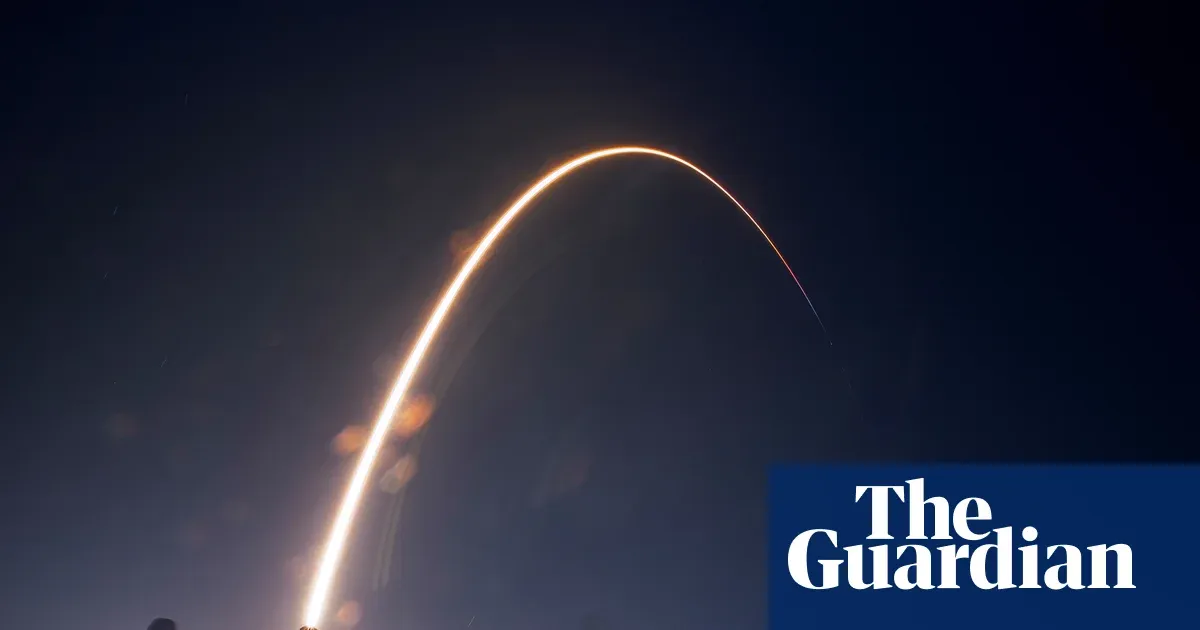
A drifting SpaceX rocket upper stage, launched more than a year ago with lunar landers, is on a collision course with the moon. On Wednesday, it is expected to unintentionally impact the lunar surface, creating a new crater and a dust plume scientists will study.
On Wednesday, a drifting SpaceX rocket upper stage is expected to unintentionally slam into the moon, carving out a crater and blasting up a plume of dust and rubble. That is the headline detail skywatchers will track, and it is also the scientific reason this matters: the impact is effectively a one-time experiment created by orbital mechanics, not by a deliberate target.
The context starts with the mission timeline. SpaceX launched a pair of lunar landers more than a year ago. After the landers separated from the rocket and followed their own paths, the rocket upper stage was left drifting. Instead of remaining a benign piece of space hardware, it is now on a path that brings it into the moon’s surface on Wednesday, turning what could have been an inert remnant into a physical event.
For scientists and observers, the value is straightforward: an impact produces material evidence. A crater forms, and the dust and rubble plume rises from the lunar surface. Those are not abstract outcomes. They are observable signals that can help researchers understand surface behavior under high-energy collisions, and they give scientists an opportunity to study how lunar material responds when it is struck by an incoming mass.
For decision-makers at space companies and in adjacent industries, the interesting part is that this kind of moment sits at the intersection of mission design, long-tail tracking, and public scrutiny. Launch vehicles often carry multiple stages and subsystems through complex sequences. Even when the primary mission goals are achieved, leftover components can end up in trajectories that take months or years to play out. In other words, the “what happens next” risk is not always immediate, and it is not always visible to the casual fan until it suddenly becomes a live event in the sky.
There is also a regulatory and governance angle, even when the source does not spell out specific compliance actions. Space missions and orbital operations generally exist in a world where regulators care about predictable trajectories, collision avoidance, and environmental stewardship in space and beyond. This lunar impact is not portrayed as a malicious decision or an engineered collision. It is framed as unintentional. Still, the mere fact that a stage can end up impacting a celestial body underscores why regulators and mission planners typically treat end-of-life trajectories as serious operational work, not an afterthought.
The second-order implication for boards is the reputational and operational pressure that follows real-world events, even when they are scientifically anticipated. A lot of aerospace decision-making is about managing uncertainty and communicating what is expected versus what is not. When something like a lunar crash becomes an observable event, the spotlight shifts quickly from internal technical planning to external interpretation. Companies that want to stay trusted must be able to explain the difference between “we designed the impact” and “the leftover hardware will impact because of its drift.”
There is a similar lesson for investors and partners evaluating execution quality. Mission campaigns frequently measure success in milestones: landers reaching the right destination, systems functioning, data returning. But the broader quality of a mission also includes how thoroughly teams anticipate what happens to all the hardware, including components that no longer serve the primary objective. When those components interact with the environment, even on the moon, they create outcomes that can become part of the public record.
And for peers watching from other launch programs, this Wednesday event is a reminder that the universe does not pause for corporate schedules. Orbital drift, timing, and impact geometry can convert leftover hardware into a scientific moment. The strategic stakes are simple: as the space economy grows, the industry will increasingly face situations where unintentional physical events create both opportunities for observation and demands for accountability. In that sense, the moon is not just the target of future missions. It is also the place where space operations leave long shadows, and this impact is one of them, scheduled for Wednesday.
This story's Key Insights and Take-aways are locked.
Create a free account to unlock Executive Actions for one credit.
Register to UnlockAlways free for Executives Club members. Join the Club
More in Science

Alaska's 1,580-foot tsunami had warning signs. Scientists just found them.
Rapid glacier retreat, heavy rainfall, and thousands of tiny tremors preceded Alaska's 1,580-foot tsunami, a warning for every coastal community in a warming world.

The rare mutation that lets high-risk brains dodge Alzheimer's
Scientists found a natural defense against protein buildup, opening a new path to preventive treatments.

3,000 steps a day may halve Alzheimer's decline, study finds
New research links a modest daily walk to less tau buildup and nearly half the cognitive and functional decline, even for those with early signs.