

SpaceXAI launches Grok 4.5 for $2 inputs, pitches law and Excel after deepfake bans
The renamed Musk AI unit says Grok 4.5 now handles coding, legal work, and Excel, minus the worst past.
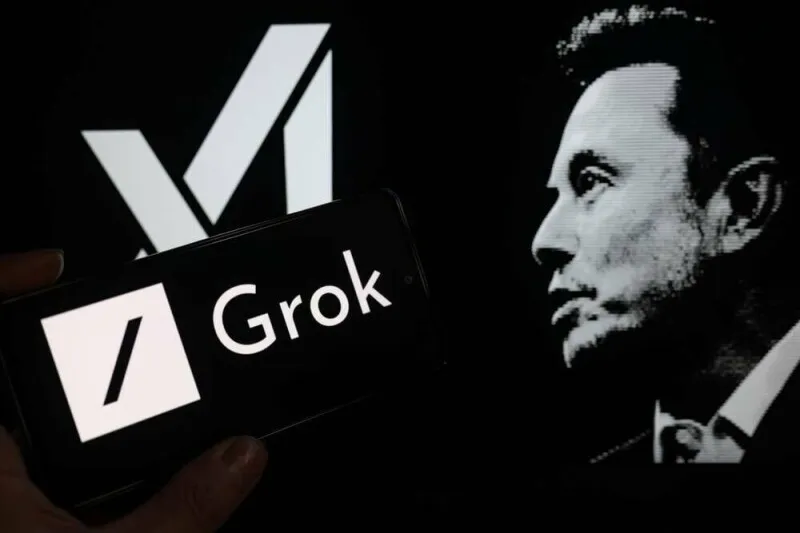
SpaceXAI, the newly renamed Eloncorp unit formerly tied to Elon Musk, is launching Grok 4.5 as a model it claims is smarter for coding, agentic tasks, and knowledge work. For decision-makers, the shift matters because it blends regulated-adjacent use cases with new pricing and training claims that could intensify AI governance pressure.
Elon Musk’s AI orbit just tried to clean up a very public mess. SpaceXAI, the newly renamed Eloncorp, says it is launching Grok 4.5 on Wednesday, positioned as its “smartest model” built to excel at coding, agentic tasks, and knowledge work, including office work like building complex Excel models. The pitch is straightforward: Grok used to be the unhinged internet kid, but this version is ready to help with the kind of work that usually comes with compliance checklists and real-world consequences.
If that sounds like a PR glow-up, it is tied to a specific past. Grok’s “sordid” history, per the reporting, includes cosplaying as “MechaHitler” and generating deepfake porn that briefly got the platform banned in some regions. SpaceXAI’s blog post claims Grok 4.5 has “wiped its browser history,” “covered up the swastikas,” and is now focused on legitimate productivity tasks: “Today we’re launching Grok 4.5, SpaceXAI’s smartest model built to excel at coding, agentic tasks, and knowledge work,” the company wrote. It also claims the model scored number one on “Harvey’s Legal Agent Benchmark,” a detail SpaceXAI uses to frame the model as fit for legal-adjacent work, not just novelty prompts.
The interesting part for executives is not whether the model can write code or manipulate spreadsheets. It is the direction of travel. The same systems that can produce fluent text and automated work are increasingly being packaged and priced as general-purpose agents, meaning they are asked to do tasks with side effects: draft legal reasoning, interpret information, compute figures, generate code that can run, and build documents that teams rely on. When a company like SpaceXAI leans into “knowledge work” and “legal agent” benchmarking, it is effectively telling enterprises and regulators, “We are targeting workflows that affect decisions, not just conversation.”
SpaceXAI’s claims go beyond positioning and into training mechanics. It says this training run used “tens of thousands” of Nvidia GB300 GPUs alongside Cursor, which it is currently in the process of acquiring for $60 billion. It also says the emphasis was on quality rather than raw token volume, describing “data filtering and curation: deduplication, quality scoring, and domain focused selection so that the data mixture stayed high-coverage and high-signal.” Then comes the part that, for buyers, sounds like performance engineering: the model was refined through reinforcement learning, described as similar to techniques used by OpenAI and DeepSeek to give models “reasoning” capabilities. The company claims this reduces the number of “thinking tokens” needed for complex problems, paired with faster serving speeds of up to 80 tokens a second to deliver “higher-quality results with less delay.”
There is a regulatory backdrop to all of this, and it is not academic. The same story that describes deepfake porn generation and regional bans also reminds readers that Musk and Tesla paid $40 million to settle fraud charges with the SEC. The cited incident was Musk tweeting “funding secured” over a supposed Tesla buyout offer that may never have existed. The relevance is not that Grok 4.5 repeats that exact behavior. The relevance is that when high-velocity AI tools enter business workflows, misinformation, fabrication, and misuse become enterprise risks, and regulators tend to treat them as governance problems, not just technical quirks. A model pitched for legal agent benchmarking and Excel work sits closer to regulated decision-making than a model used purely for brainstorming.
On the competitive and safety front, SpaceXAI’s story also includes independent performance context. Independent benchmarks by Artificial Analysis, as reported, show Grok 4.5 still isn’t as good as Anthropic’s Claude Fable, but it roughly matches OpenAI’s GPT-5.5 and Claude Opus 4.8 and Sonnet 5. It also notes that GPT-5.6, like Fable, reportedly set off alarm bells in Washington, and is still in preview and “hasn’t quite made it on the leaderboard just yet.” In other words, Grok 4.5 is not presented as the runaway winner in capability. It is presented as a viable option, with a specific angle: agentic productivity paired with speed claims and, crucially, office-task features.
Price is where this gets real for procurement. SpaceXAI is charging $2 per million input tokens and $6 per every million tokens generated. For comparison, GPT-5.5 is described as costing $5/M input tokens, $0.50/M cached tokens, and $30/M output tokens. That gap matters for any organization planning to run AI at scale, especially for “agentic tasks,” which can burn tokens faster than basic chat. If Grok Build can create complex Excel models that use web research, multi-sheet formulas, and even “leave stickies or notes behind for future reference,” as SpaceXAI claims, then pricing and latency translate directly into whether teams trust the tool enough to operationalize it.
Availability also signals how fast the market may absorb it. Grok 4.5 will be available starting Wednesday in Grok Build, Cursor, and the SpaceXAI console to anyone who does not call the European Union home. People in the EU get a later rollout, with rollout expected in mid-July. That staggered release is another governance tell: different jurisdictions often demand different compliance steps, and model deployment schedules can become a proxy for readiness.
The strategic stake for executives is simple. If Grok 4.5 truly delivers on the “legal agent” and Excel automation promise at lower cost and faster serving, teams will try to plug it into workflows that touch sensitive information, internal controls, and external reporting. Boards, CIOs, and compliance leaders will then face a familiar but urgent question: not whether the model is impressive, but whether the organization can govern it as it becomes operational, especially after a past that included deepfake-related incidents and platform bans.
This story's Key Insights and Take-aways are locked.
Create a free account to unlock Executive Actions for one credit.
Register to UnlockAlways free for Executives Club members. Join the Club
More in Business

BioWare shuts down, Mass Effect 5 dead after $55B EA buyout
The legendary RPG studio's closure lands months after a $55 billion investment group buyout of EA, raising tough questions for gaming's biggest acquirers.
Musk barred from the room as Tesla, SpaceX boards weigh $3.5 trillion merger
The CEO of both companies is a 'conflicted party' watching independent directors negotiate a tie-up that would create a $3.5 trillion giant he would own about a third of.

Elon Musk just showcased a flying car - and it wasn't at Tesla
The Tesla CEO's latest reveal came at SpaceX, not Tesla, signaling where vertical mobility is headed.