

Spain return to Madrid within 24 hours, after beating Argentina 1-0 on extra time
La Roja’s World Cup win sparked a trophy reveal, airport arrival, and a parade drawing over 1 million people.
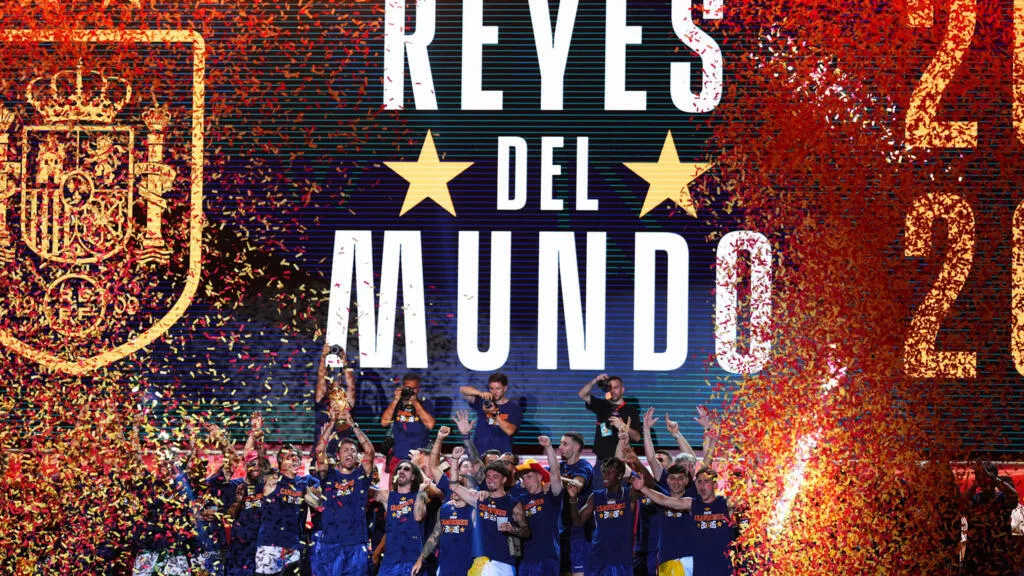
Spain’s players, with head coach Luis de la Fuente, returned to Madrid less than 24 hours after the World Cup final victory over Argentina, 1-0 after extra time. The celebration drew more than 1 million people and culminated with a major concert at Cibeles Square.
Spain pulled off a victory lap that felt almost instant: less than 24 hours after winning the World Cup final against Argentina 1-0 after extra time, La Roja reunited with their supporters in Madrid. The timing matters. This was not a slow fade into the history books. It was a rapid conversion of sporting achievement into a city-scale public moment, with the team physically returning before the emotion had time to cool.
The players, alongside head coach Luis de la Fuente, presented the trophy upon arrival at the airport. From there, the celebrations moved across the capital. This is the exact kind of “tight loop” moment executives recognize in any high-stakes arena: win, announce, demonstrate authenticity, and then deliver the crowd-facing proof in real time. In sports terms, the message was clear and immediate. In branding terms, it was faster than the internet’s attention cycle and more durable than a single highlight.
And yes, the scale was loud. More than 1 million people attended the parade. That number is not just a fan-count. It is operational reality. When you have that many people in a single public event, you need coordination across logistics, public safety, transport, and crowd management. Even for leaders not in football, the pattern is familiar: mass participation compresses planning timelines and raises the consequences of any misstep. The upside is equally familiar too. When an event lands, it creates a shared narrative that can outlast the competition itself.
The parade ended with a major concert at Cibeles Square. Cibeles Square is a symbolic finish line in Madrid. So the structure of the celebrations was intentional, even if it was driven by the day’s momentum rather than a corporate plan. A trophy reveal at the airport grounded the story in the team’s presence. A city-wide parade then spread that story outward. The concert at the end extended the moment from “sporting victory” into “cultural event.” That matters for decision-makers because it shows how quickly sports can shift from results to community identity when execution is tight.
There is also a less glamorous, but very real, economic subtext. World Cup finals tend to produce second-order effects that reach beyond stadiums: travel spikes, hospitality demand, and local spending, plus a temporary surge in media attention that can boost merchandise sales and tourism interest. This is not guaranteed, and it is not evenly distributed, but it is a consistent feature of global tournaments. Madrid’s ability to absorb the win so quickly, and to mobilize more than 1 million people, signals that the city infrastructure and local organizations were ready to meet the demand created by the final itself.
For boards and operators, there is a useful lens here: moments like this are earned, but they are also executed. Winning the World Cup is the headline. The way Spain returned to Madrid within 24 hours, staged a trophy presentation at the airport, and delivered an end-of-day payoff with a concert creates a full narrative arc. It reduces uncertainty for fans and turns “we won” into “we celebrated, together.” That is how you convert attention into loyalty.
And because football is business in everything but name, the strategic stakes extend to peers. When one national team delivers a celebration at this scale, it sets an expectations bar for future campaigns, sponsorship visibility, and partner engagement during major tournaments. It also reinforces the value of head coach leadership as part of the public-facing story. Luis de la Fuente is named in the account because he was present for the trophy presentation, alongside the players, which underlines that coaching is not just tactics. It is also the public face of how a team earns belief.
Spain’s World Cup moment is over on the pitch, but it is still in motion in the city. The numbers are specific: Argentina, 1-0 after extra time. Madrid, less than 24 hours later. And attendance, more than 1 million, ending with a major concert at Cibeles Square. For leaders across media, sports, or any mass-event category, the takeaway is simple: the fastest path from winning to long-term value is often the one that keeps the audience inside the same story, from arrival to celebration, before the hype has a chance to evaporate.
This story's Key Insights and Take-aways are locked.
Create a free account to unlock Executive Actions for one credit.
Register to UnlockAlways free for Executives Club members. Join the Club
More in Entertainment

12TB Steam 'teraleak' goes beyond Valve: GTA 3, Mafia 2 prototypes exposed
A 12-terabyte dump of Steam data reveals prototypes and builds of third-party classics like GTA 3 and Mafia 2, plus unreleased Valve content, rewriting game history.

LinkedIn's romance problem: 1 in 4 workers say dating on it is fair game
A new survey shows a quarter of U.S. employees treat the professional network as fair game for romance, even as LinkedIn bans it and removes hundreds of thousands of offending posts.

Enhypen's first No. 1 album breaks K-pop's Billboard 200 streak
The K-pop group's 98,000-unit debut tops the chart while Dolly Parton's catalog reentry shows how death reshapes streaming.