
Spielberg’s Disclosure Day debuts with $44M, but Obsession keeps cashing in at #2
Box office numbers confirm the new reality: opening matters less than staying profitable in week five.
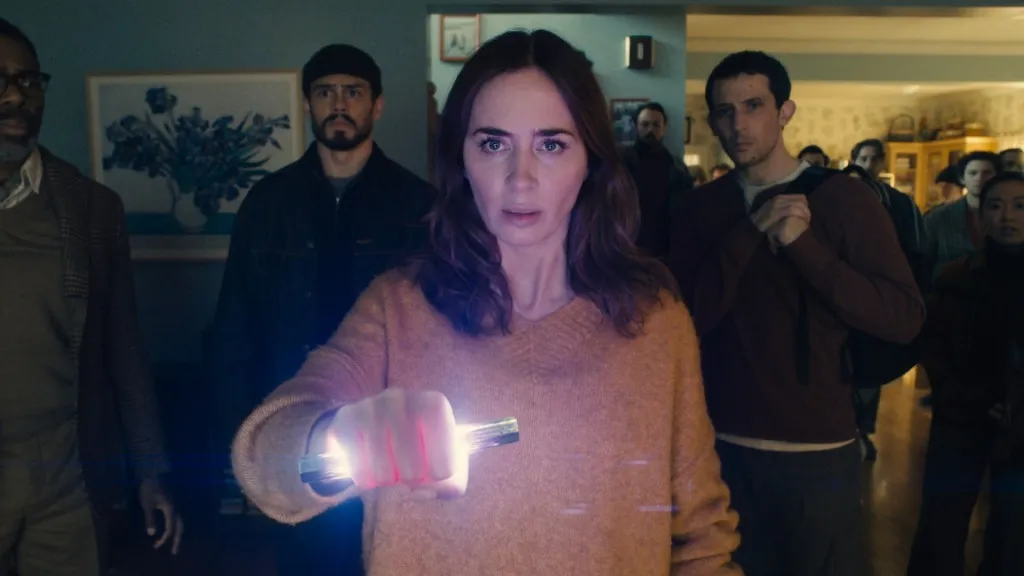
Steven Spielberg's Disclosure Day opened at an estimated $44 million domestically and $92 million globally, according to Rentrack (née Comscore). The results underline how audiences can move on quickly, while an indie like Curry Barker's Obsession keeps compounding over weeks.
Steven Spielberg’s Disclosure Day opened to an estimated $44 million domestically, topping the chart in week one with a global total of $92 million, according to Rentrack (née Comscore). That puts the alien epic at number one, but it also reveals the more interesting story hiding underneath: the box office throne did not buy the kind of runaway dominance you might expect from a Spielberg brand.
Even at a strong #1 debut, Disclosure Day’s performance lands in context. The A.V. Club notes it bested Spielberg’s last chart-topper, 2018’s Ready Player One, and marks the biggest opening for an original work from the director. But it still came nowhere near the franchise-and-IP power of his earlier blockbusters like Kingdom Of The Crystal Skull and The Lost World: Jurassic Park, which opened far bigger. The takeaway for decision-makers is immediate: name recognition can launch a film, but profitability is the longer game, and the market is already telling studios where to focus.
That longer game belongs to Curry Barker’s Obsession. In its fifth week, Obsession posted another modest drop, earning $19 million over the weekend and holding a strong position below Spielberg at number two. The A.V. Club frames this as a reminder to Hollywood that being number one matters less than making lots of money at number two. The numbers back it up: Obsession’s domestic total is north of $188 million, and its global take is a staggering $286 million. For operators, this is what durable demand looks like in real time, the kind of staying power that keeps revenue flowing after the opening weekend hype cycle ends.
This weekend’s rest of the chart reads like a case study in audience switching costs. Backrooms fell behind its fellow indie creeper and sank to number four with $11 million. At number three, Scary Movie posted the biggest drop in franchise history, down 73% from its $55 million opening weekend to $14.5 million. The A.V. Club’s logic is blunt: audiences moved on from the franchise’s familiar Ghostface and returned to Obsession. That is not just a horror-story punchline. It’s a signal that sequels and franchises may struggle when audience attention is fragmented, especially when an indie competitor is outperforming on the metric that matters most to everyone in finance and programming: cumulative earnings.
Elsewhere, the chart shows how quickly novelty burns off and how sensitive viewers can be to messaging. Masters Of The Universe arrived at number five with $8.6 million in its second weekend, a 71% drop. Neither of those saw the biggest weekend percentage decline. The A.V. Club points to The Amazing Digital Circus: The Last Act, which fell 87% and dropped out of the top 10 after its previous-week entry, an illustration of how even an audience that wants a “moment” will often treat it like a limited run.
Also notable are two new releases that crept into the top 10, each with a different lesson for marketing and release planning. The Furious, described as an A.V. Club-approved Hong Kong actioner that redefines Hammer Time, made $2.7 million in 1,200 theaters. Stop! That! Train! landed at number 10 with a $2 million opening after bypassing a last-minute stop at what the article calls the AI Controversy Station. The A.V. Club says there’s no way to know how many potential moviegoers Stop! That! Train! lost because of the controversial tech, but it “certainly wasn’t a selling point.” The point for executives: in a world where audiences are constantly deciding what gets their time, controversy can be an anti-marketing channel, not a pr campaign.
Putting it all together, the full top 10 reads like a map of modern movie economics: 1. Disclosure Day ($44 million) 2. Obsession ($19 million) 3. Scary Movie ($14.5 million) 4. Backrooms ($11 million) 5. Masters Of The Universe ($8.6 million) 6. Star Wars: The Mandalorian And Grogu ($4.7 million) 7. Michael ($4.1 million) 8. BTS World Tour Arirang: Live Viewing ($3.8 million) 9. The Furious ($2.7 million) 10. Stop! That! Train! ($2 million).
For peers making decisions across studio strategy, theater programming, and investment portfolios, the second-order message is clear. Opening weekend is a headline metric, but Obsession’s week-five performance shows what boards and CFOs should actually watch: how fast the drop is, how long the film stays in the competitive set, and whether the movie’s value proposition survives beyond initial curiosity. In this chart, Spielberg delivers the launch. Obsession delivers the compounding.
This story's Key Insights and Take-aways are locked.
Create a free account to unlock Executive Actions for one credit.
Register to UnlockAlways free for Executives Club members. Join the Club
More in Entertainment

Russell Brand's accuser 'bewildered and confused' as he denies 7 sex charges
The criminal case against the comedian is a live test of how media companies manage talent risk when serious allegations go public.

'It's a Magic Trick': Ballet Experts Say Rosalía's SNL Pose Is Impossible
Three ballet experts tell Rolling Stone Rosalía's gravity-defying SNL stillness shouldn't be possible - and why the debate is now part of the show.

Activision CMO: GTA 6 Will Boost Call of Duty, Not Bury It
Activision's top marketer says Rockstar's blockbuster will drive players back to consoles and into Modern Warfare 4, even as the company admits its recent strategy failed.