
Stanford scientists regrew knee cartilage in old mice by blocking an aging protein
A Stanford team reversed cartilage loss in aged mice and restarted cartilage production in human tissue from knee replacement patients, a preclinical result that reframes osteoarthritis as something to treat rather than something to replace.
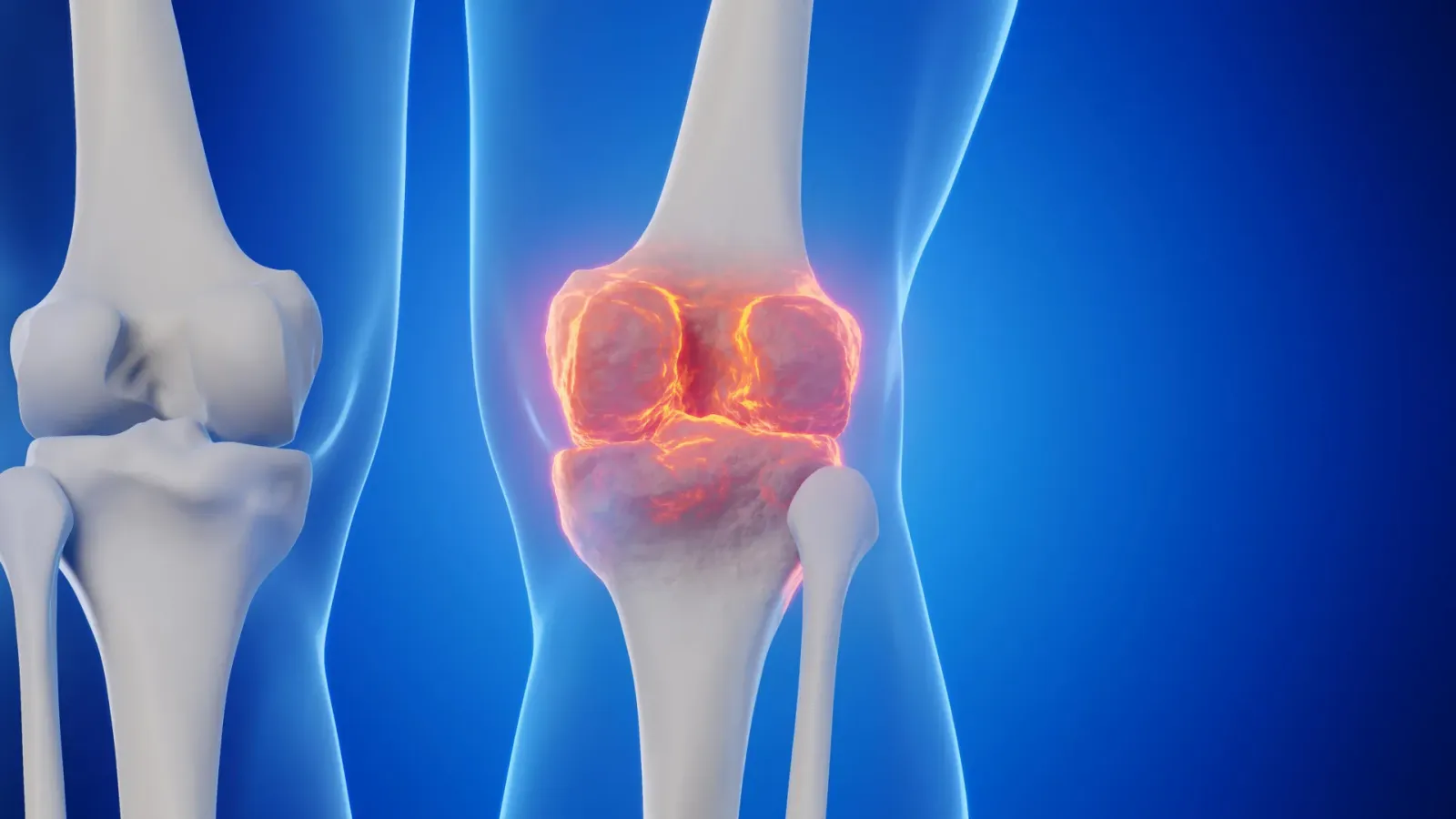
Stanford scientists blocked a protein that becomes more abundant with age and regrew naturally lost knee cartilage in old mice, helped prevent osteoarthritis after ACL-like knee injuries, and triggered new, functional joint cartilage production in human tissue taken from knee replacement patients. The result is preclinical, but it puts a specific molecular target in play for pharma, device makers, and investors watching the orthopedics pipeline.
Stanford scientists have done something the orthopedic world has long treated as close to impossible: they regrew knee cartilage. The trick was not a scalpel and not a stem cell injection. It was blocking a protein that becomes more abundant with age. In old mice, that single intervention restored cartilage the animals had already lost naturally. In mice given an ACL-like knee injury, the same approach helped prevent osteoarthritis from taking hold. And in cartilage taken from human knee replacement patients, exposure to the same inhibitor caused the tissue to begin producing new, functional joint cartilage.
That last sentence is the one that should raise eyebrows. Human cartilage, harvested from joints that were already being discarded, started building again. Cartilage is the tissue that makes knees work and the tissue that refuses to heal. It has no blood supply, so the usual repair crews never arrive. Once it wears down, the standard trajectory runs in one direction: pain, stiffness, injections, arthroscopy, and eventually a metal and plastic joint. The Stanford finding is a credible challenge to that trajectory, and it is the first thing in a long while that reads like a reversal rather than a delay.
The biology is what makes it surprising. The protein the team targeted is not present at the same levels in young, healthy joints. It accumulates with age, which suggests the body may be building its own brake on cartilage repair as it gets older. Blocking that brake, rather than adding new cells or growth factors, appears to let existing cartilage do what it already knows how to do. That is a meaningfully different strategy from the regenerative medicine playbook of the last two decades, which has largely focused on delivering cells, scaffolds, or biologics into the joint. Here the intervention is subtractive: remove an inhibitor, and the tissue responds.
The evidence arrives in three parts, and the order matters. First, aged mice that had lost cartilage naturally regained it after treatment. That is the hardest test to pass, because it mirrors the slow, grinding cartilage loss humans experience over decades rather than a sudden injury. Second, mice with an ACL-like knee injury were protected against developing osteoarthritis, which hints the approach may work as prevention as well as repair. Third, and most provocative, human cartilage from knee replacement patients began producing new, functional joint cartilage after exposure to the same inhibitor. That third result is ex vivo, meaning the tissue was studied outside the body. It is not a clinical trial, and it is not a patient walking without pain.
That distinction is the whole ballgame for anyone thinking about timelines. A mouse result plus a dish result is preclinical evidence. The path from here to a prescription typically runs through toxicology studies, dose finding, large-animal work, and then three phases of human trials, a sequence that historically takes years and fails more often than it succeeds. The target also has to be safe to block systemically, since a protein that accumulates with age may be doing something useful elsewhere in the body. None of that is a reason to dismiss the finding. It is a reason to treat any talk of saying goodbye to joint replacements as a direction of travel, not a date on the calendar.
The commercial stakes are enormous and slightly awkward. Orthopedics is built on a simple premise: cartilage fails, and when it fails badly enough, you replace the joint. That premise supports a global industry of implant makers, surgical centers, and rehabilitation providers. A therapy that regrows cartilage does not just compete with that industry, it competes with its core assumption. The incumbents most exposed are the ones whose revenue depends on procedure volume, while the winners would be whoever owns the inhibitor, the delivery method, and the clinical data. Watch for the familiar pattern: academic publication first, patent filings quietly alongside it, then either a spinout or a licensing deal with a large pharma partner that has the balance sheet to run late-stage trials.
Demographics do the rest of the work. Populations are aging, obesity rates are high, and sports participation among younger people keeps feeding knees into the pipeline. Every one of those trends pushes more people toward the same endpoint. If a drug could interrupt that endpoint even partially, the addressable population is not a niche. It is anyone who has ever been told their knee is just wear and tear.
For executives and boards, the practical read is this: the science is early, the direction is real, and the strategic question is not whether cartilage regeneration arrives but who is positioned when it does. Device makers should be stress-testing what even a modest reduction in late-stage procedures does to their models. Pharma and biotech investors should be mapping which labs hold the underlying intellectual property. And everyone else, the founders, operators, and investors who will read this while icing a knee, should note the more personal implication. The body appears to have a brake on its own repair mechanism. Someone just showed it can be released.
This story's Key Insights and Take-aways are locked.
Create a free account to unlock Executive Actions for one credit.
Register to UnlockAlways free for Executives Club members. Join the Club
More in Science

Alaska's 1,580-foot tsunami had warning signs. Scientists just found them.
Rapid glacier retreat, heavy rainfall, and thousands of tiny tremors preceded Alaska's 1,580-foot tsunami, a warning for every coastal community in a warming world.
The rare mutation that lets high-risk brains dodge Alzheimer's
Scientists found a natural defense against protein buildup, opening a new path to preventive treatments.

3,000 steps a day may halve Alzheimer's decline, study finds
New research links a modest daily walk to less tau buildup and nearly half the cognitive and functional decline, even for those with early signs.