
Starlink reports 355,000 collision dodges in a year, and experts warn it escalates
SpaceX’s FCC filings show 207,152 avoidance maneuvers in six months, raising safety questions as Starlink multiplies.
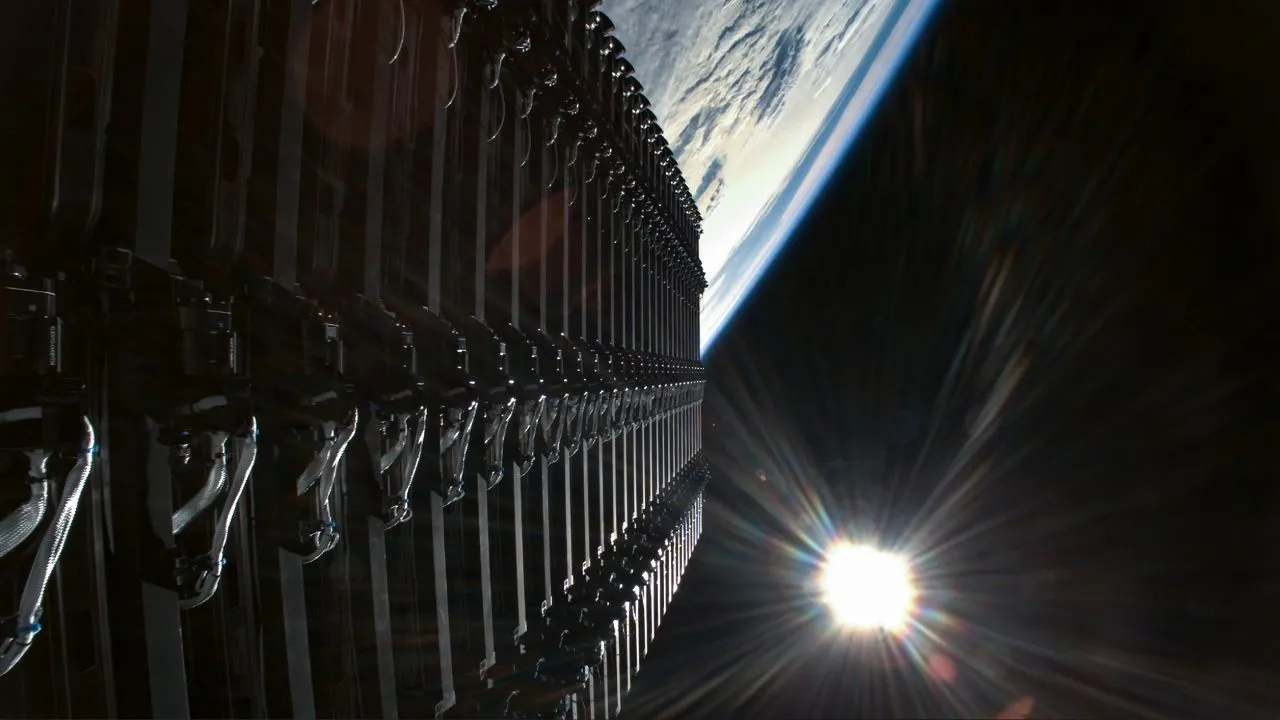
SpaceX told the FCC that Starlink satellites performed more than 355,000 collision avoidance maneuvers over the past year, with 207,152 reported between December 2025 and May 2026. Experts say the accelerating workload and modeling gaps could make a collision involving an operational satellite harder to rule out.
SpaceX’s Starlink satellites have dodged collisions more than 355,000 times over the past year, according to numbers SpaceX disclosed in its latest semiannual report to the FCC. That includes 207,152 avoidance maneuvers from December 2025 through May 2026, up nearly 60,000 from the 148,696 maneuvers reported in the previous half year. On average, each Starlink satellite performed more than 40 space-dodging maneuvers per year between June 1, 2025 and May 31, 2026.
And here is the part that makes this more than a trivia stat. Hugh Lewis, a space sustainability expert and professor of astronautics at the University of Birmingham in the U.K., told Space.com that experts are increasingly worried the situation could get out of hand. “I think we're heading towards a situation where there will be a collision involving an operational satellite in the constellation,” Lewis said, adding it would be “in spite of all those maneuvers.”
What’s driving the spike is not mysterious. It’s the same incentive that powers the entire low Earth orbit boom: launch more satellites, serve more customers, and win coverage. Starlink grew from about 6,000 satellites in 2024 to more than 10,000 as of June 2026. Over roughly the same period, the overall number of operational spacecraft in orbit rose from around 10,000 to about 16,000. Starlink operates at altitudes between 298 miles (480 km) and 342 miles (550 kilometers), and it uses an autonomous collision avoidance system that triggers a maneuver when the probability of a collision appears higher than 3 in 10 million.
On paper, that threshold looks careful. Lewis points out that the avoidance maneuvers can reduce collision probability to about one in a million, which he describes as “so small that it's negligible.” But negligible per event is not the same as negligible across a rapidly multiplying universe of events. His core argument is aggregation: if you make a million maneuvers, a residual probability of one in a million means you can’t dismiss the total risk anymore. He also connects it to scale and time. SpaceX has applied to the FCC to increase the size of its constellation to 100,000 satellites, and Lewis says SpaceX could reach a million avoidance maneuvers over the lifetime of the Starlink constellation as early as June 2027. By 2030, he says the constellation may be making more than a million maneuvers every year.
That raises a board-level question executives hate: what happens when “safety” turns into an operational cost that compounds. Because even when a maneuver avoids a real collision, it can still burn fuel and shorten operational lives. Tommaso Sgobba, the Director of the International Association for the Advancement of Space Safety, told Space.com that the increase in collision avoidance maneuvers is “a predictable certainty.” In an email, he wrote that doubling the satellites in an orbital shell roughly quadruples the number of pairs that need to be watched. More targets in the same orbital “neighborhood” means more conjunction alerts, more maneuver work, and more opportunities for the system to interpret uncertainty as a reason to act.
Sgobba also flags a problem that goes beyond workload: the underlying collision probability predictions can be highly inaccurate. Effects like air drag change frequently with space weather, and those variations are currently impossible to predict precisely, he said. The result is a nasty mismatch between how operators manage risk and how reality behaves. He said operators lack tools to tell a real threat from “statistical confusion,” and that “satellites are frequently dodging ghosts, burning fuel and shortening their operational lives in the process.”
Layer in another second-order effect: when one constellation dominates maneuvering responsibilities, it can quietly become everyone’s stress test. Starlink, as the largest constellation currently in orbit, takes the bulk of responsibilities for orbital maneuvering. Instead of coordinating with other operators to decide who maneuvers, Starlink satellites automatically avoid other objects, whether space debris fragments or operational satellites, whenever there is a conjunction alert. That is operationally efficient, but it means the safety and fuel consumption burden falls heavily on the biggest player.
Meanwhile, other ambitious constellations are being deployed and adding to the density of low Earth orbit, including Amazon LEO and China’s Thousand Sails, also called Qianfan. Lewis says the only way to safely manage multiple constellations is to ensure their orbits do not intersect, and he argues that available information suggests that is not the case. The Thousand Sails constellation, in particular, is expected to occupy similar regions as Starlink. He also notes that orbital data center projects that want convenient orbital regions are likely to overlap.
This is why the regulatory angle matters. Lewis says, “The safe thing to do is to separate the constellations,” but then he points to a classic first-mover dilemma: separating constellations means less orbital carrying capacity for others and a “first mover benefit,” because if one operator claims an altitude region, it can restrict what others can use. Sgobba pushes for a more formal approach: mandatorily disclose predicted numbers of collision avoidance maneuvers based on satellite numbers to regulators before applications are granted. Right now, he wrote, there is no clear requirement for a company to say, before launch, how many collision avoidance maneuvers a constellation of this size and density will need each year, or whether satellites carry enough fuel and automation to actually perform them all.
In short, crowding orbit is not portrayed as an accident waiting to happen. Sgobba frames it as “a manageable, predictable engineering workload,” but argues regulators should treat it that way, by asking for these numbers up front rather than reacting to headlines about near misses after the fact. For decision-makers in the satellite and space infrastructure world, the strategic stake is simple: the business model depends on operating in an environment that is getting more crowded faster than the risk math (and data) can keep up, and FCC filings suggest the dodges are already scaling at a pace that could turn safety into a long-term operational limiter.
This story's Key Insights and Take-aways are locked.
Create a free account to unlock Executive Actions for one credit.
Register to UnlockAlways free for Executives Club members. Join the Club
More in Technology

Google quietly links your phone number to every Android account on your SIM
Adding a SIM now ties your phone number to all Google accounts - and future accounts inherit it. Here's the security and privacy stakes.

Hijacker AI 'Skynet mode' runs 100,000 attack steps against exposed models
Symantec caught a criminal AI agent that borrows other models, steals data, and mines crypto; the only relief is no confirmed victims yet.

Nvidia's AI-financier shift faces its first big test as neoclouds stumble
A rout in neocloud stocks is forcing investors to weigh Nvidia's hidden exposure as both supplier and lender to the AI buildout.