

Starmer pledges cast-iron support for Ukraine in Kyiv meet with Zelensky
On his final Ukraine visit as PM, Keir Starmer meets Volodymyr Zelensky and signals unwavering backing.
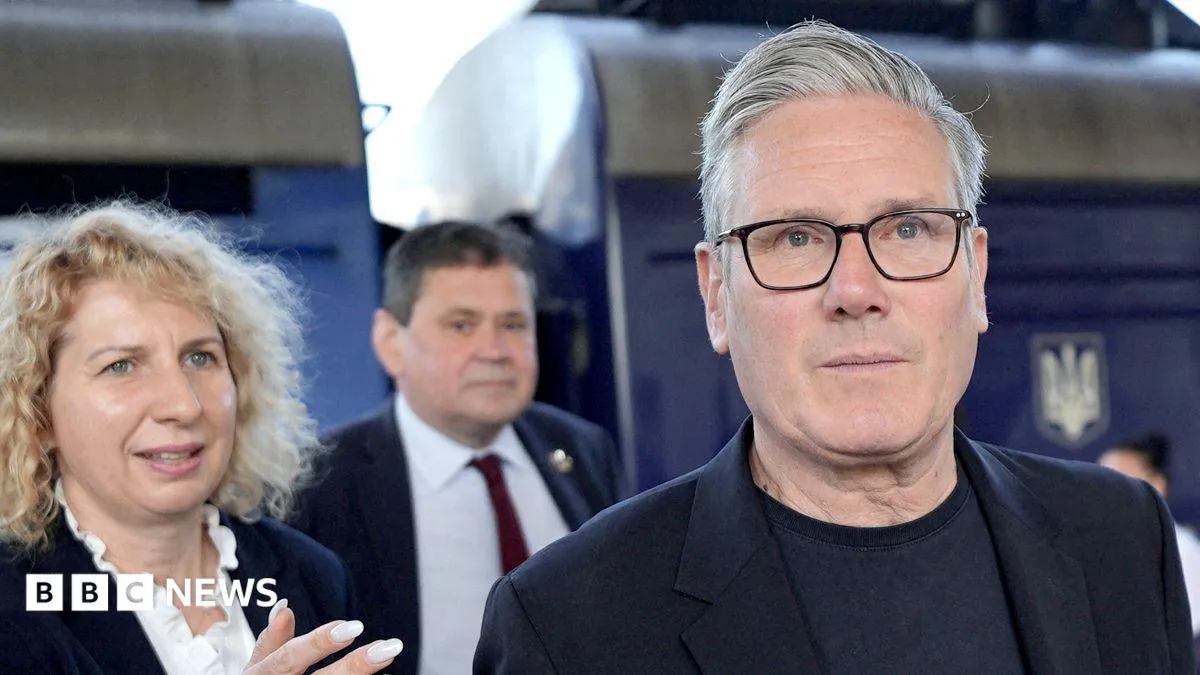
UK Prime Minister Keir Starmer will meet Ukrainian President Volodymyr Zelensky in Kyiv later on Thursday. The meeting underscores London's stated commitment to Ukraine, shaping how partners and markets read the durability of support.
UK Prime Minister Keir Starmer is set to meet Ukrainian President Volodymyr Zelensky in Kyiv later on Thursday, making one thing unmissable before the visit ends: a public pledge of “cast-iron support” for Ukraine.
That phrase matters because it is not just diplomacy theater. In politics and markets, signals travel faster than schedules, and this is a signal meant to land both in Kyiv and in allied capitals. Starmer’s final visit as PM is effectively a message with a timestamp: the UK will frame its backing for Ukraine as firm, durable, and hard to wiggle out of when headlines shift or governments change.
If you are an executive or investor trying to map risk, “cast-iron” language is a shorthand for continuity. Public promises can look symbolic, but they often drive operational reality through slower channels: procurement decisions, aid coordination, sanctions enforcement posture, and the day-to-day expectations of counterparties. The BBC’s report is straightforward about the action, the place, and the counterpart, but the strategic subtext is clear. When a leader chooses to close out a term with a high-visibility foreign meeting, they are not merely checking a box. They are trying to reduce uncertainty for partners who depend on consistent external support.
Ukraine is not a typical international relationship where government statements stay neatly in the policy column. It is tied to security planning, industrial mobilization, and the broader architecture of allied cooperation. Decisions about manufacturing capacity, logistics, and cross-border support are influenced by how much confidence external governments communicate. For boards and executives, the practical question is not whether words are strong. It is whether strong words translate into consistent support through changing administrations and domestic pressures.
This is where political communications intersects with financial and regulatory realities. In many countries, foreign policy choices show up indirectly in legal and regulatory frameworks. Sanctions regimes, export controls, and compliance expectations tend to evolve on a policy timeline that can be out of sync with market sentiment. Even when companies are not directly involved in defense manufacturing, they operate in supply chains and service networks that are sensitive to compliance rules and cross-border constraints.
So what does a “final visit as PM” imply? It implies time sensitivity. Leaders approaching transitions want to lock in certain narratives and align expectations before successors set a new tone. That can be particularly important for Ukraine, where international partners juggle domestic politics, budget cycles, and competing crises. By meeting Zelensky in Kyiv later on Thursday, Starmer is placing the UK’s stated commitment in the most visible possible context: Ukraine’s capital, with Ukraine’s president, at the moment when his term’s arc is ending.
There is also a second-order effect for allied governments. Public pledges do not just reassure the immediate recipient. They also reinforce internal discipline among coalition partners, because commitments become harder to walk back once they are on record. That can shape how other leaders talk to their own parliaments and publics. If the UK frames its support as “cast-iron,” it sets a benchmark language that partners may feel pressure to match, at least rhetorically, even if the operational details differ.
For executives and investors, the stake is continuity risk. In fast-moving environments, uncertainty is expensive. It can slow deals, freeze hiring plans, disrupt investment timelines, and complicate compliance planning. Stable signals from major states help counterparties plan. That is especially true for organizations that rely on governments as customers, as regulators, or as gatekeepers for cross-border activity.
The bottom line is simple. Starmer’s meeting with Volodymyr Zelensky in Kyiv later on Thursday, paired with a pledge of “cast-iron support” for Ukraine, is designed to close the gap between what allies say and what they will be expected to deliver. In politics, promises are never the same thing as outcomes. But when the message is delivered at the center of the conflict, by a prime minister in his final visit as PM, it becomes part of how the world measures commitment. And that measurement influences decisions far beyond politics.
This story's Key Insights and Take-aways are locked.
Create a free account to unlock Executive Actions for one credit.
Register to UnlockAlways free for Executives Club members. Join the Club
More in Politics

LA County: DOJ's 20,000 'noncitizen' voter list is 'unreliable,' includes U.S.-born
Preliminary review by Los Angeles County election officials finds errors in the federal list, raising the stakes for voter roll integrity ahead of November.
Trump's $1.5B Pentagon chip investment lands in North Carolina
A $1.5 billion defense infusion for North Carolina chipmaking signals a new era of Pentagon-backed reshoring - here's what it means for the industry.

Nigeria confirms first Ebola case in Abuja, a woman just off a Uganda flight
Health Minister Muhammad Ali Pate says the patient flew in from Uganda, putting Africa's latest outbreak on Nigeria's doorstep.