

Starship Flight Test 13 aborts at the pad after engine start failures force replacements
SpaceX needs two Raptor engines swapped before the next attempt, just as Artemis IV timelines tighten the no-excuses clock.
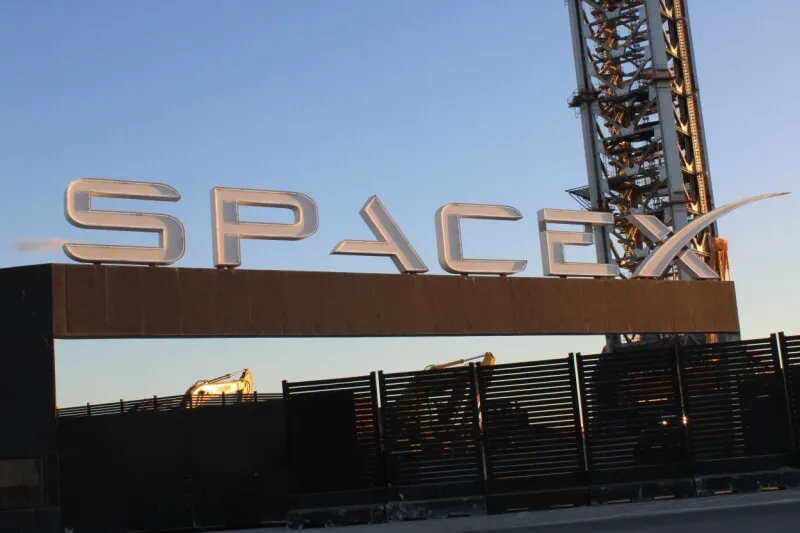
SpaceX's 13th Starship flight test aborted at the launchpad on July 16 after four Raptor engines failed to start. The near-liftoff abort forces engine removal and replacement, raising pressure on SpaceX to iterate rapidly for Artemis missions.
SpaceX's 13th Starship test did not even make it to liftoff. Moments before the engines were supposed to carry the vehicle upward, four Raptor engines failed to start, and an automated system triggered an abort at the launchpad. Elon Musk confirmed the core issue directly, saying, “Some of the engines didn't start, triggering an automatic launch abort… To be confident of a good flight, two Raptors will be removed and replaced. Most probable launch timing is early next week.” That is the immediate headline stake: the “flight” portion got paused on the ground again, and the fix is not vague troubleshooting. It is physical work, two Raptors removed and replaced.
Timing matters because the next “most probable” window is measured in days, not months, and SpaceX cannot afford long stalls if it is going to meet a multi-mission qualification runway. Flight Test 13 was the second Starship test of the V3 configuration, but it still did not reach orbit. That puts extra weight on what investors and mission planners want to see next: engine reignition in space, the capability that would let Starship move beyond suborbital flights and toward orbital operations.
The tricky part is that the system that saved the rocket from an uncontrolled launch also highlights how close the program is to the edge during every attempt. Musk’s confirmation frames the abort as a safety and confidence event. If enough engines did not come up, the automated system refused to continue. That is good engineering discipline, and it also tells decision-makers something uncomfortable: the rocket is still in the phase where it can fail late in the sequence, right when “go” should happen. The source notes the nature of the problem is not clear, and it does not confirm whether the vehicle needs to be de-stacked for engine replacement. In practical terms, that uncertainty is costly. De-stacking or other launchpad operations can add hours or days, and in a rapid-iteration program, even small delays compound.
Now layer in the calendar pressure from NASA and the Artemis program. The source says the abort “is not a great look” for a vehicle that must launch multiple times quickly to meet requirements for the Artemis IV Moon landing planned for 2028. Even if Starship’s immediate goal is nearer-term orbital qualification, Artemis timelines do not wait for engineering to be ready. Artemis III is scheduled to launch next year, and Starship must be qualified for orbital operations by then. That means each test is evaluated not only on what it achieved, but on how it moves the program toward the specific milestone of orbital reliability. A test that ends at the pad after engine start failures interrupts the feedback loop that SpaceX needs for iteration.
There is also the market pressure, because investors are watching both engineering progress and burn rate optics. The source notes the abort may not have “done SpaceX stock any favors.” Shares had already been pulled down from an early surge that made Musk a trillionaire “(on paper).” By the close of trading, shares slid to just over $131, below the $135 initial public offering price that valued the loss-making business at roughly $1.78 trillion. For boards and major stakeholders, that is a reminder that technical setbacks are not isolated from capital markets. A near-liftoff abort can translate into sentiment risk, especially when the company has a public valuation anchored to very big expectations.
Regulatory and customer scrutiny is part of that same reality. NASA is paying close attention, and the source highlights a concrete example: NASA confirmed it will use SpaceX's Starlink to deliver Artemis III imagery from Orion. That is not just a ceremonial line. It ties Starlink’s mission support to a broader Artemis communications and mission architecture, and it raises the stakes for coordination across systems and schedules. It “would be a shame” if that imagery did not include a rendezvous with Starship, because SpaceX must be able to lift the behemoth off the ground, let alone into orbit. While Starlink is the immediate deliverable NASA cited, the underlying message is that Artemis dependents are building plans around SpaceX’s ability to deliver on schedule.
Finally, the strategic implication for the rest of the industry is simple and brutal: every “failed to start” sequence that ends in an automated abort becomes a benchmark for how quickly SpaceX can learn, repair, and return to the pad. Flight Test 13 is the kind of setback that can either harden the program through faster iteration or slow it down if each anomaly leads to more complex rework. Musk’s “two Raptors will be removed and replaced” gives the clearest signal the source contains about corrective action. But the lack of clarity around the underlying nature of the problem, plus the unresolved question about de-stacking, leaves executives in the satellite, launch services, and space infrastructure ecosystem watching one thing closely: can SpaceX turn a launchpad abort into a short-cycle lesson without slipping the Artemis-bound timeline that customers and regulators are already aligning to.
This story's Key Insights and Take-aways are locked.
Create a free account to unlock Executive Actions for one credit.
Register to UnlockAlways free for Executives Club members. Join the Club
More in Business

Uber buys Delivery Hero for nearly $15B, vaulting to top food delivery outside China
The deal doubles Uber's dual-services footprint and pushes a ride-and-eats bundling play into 50 more markets.

Epic and Google drop settlement bid, forcing rival Android app stores by July 22
Google told the court it is ready to carry third-party app stores starting Wednesday, July 22.

SK Hynix opens at $170, raises $26.5B, and tops foreign IPO records
In Friday's Wall Street debut, SK Hynix turns AI RAM demand into a $26.5B fundraising moment that rewrites comps.