
Starship's first orbital flight doubles as Starlink V3's commercial debut
The next Starship test will reach orbit for the first time and deploy working Starlink V3 satellites, turning a test flight into a revenue-generating mission.
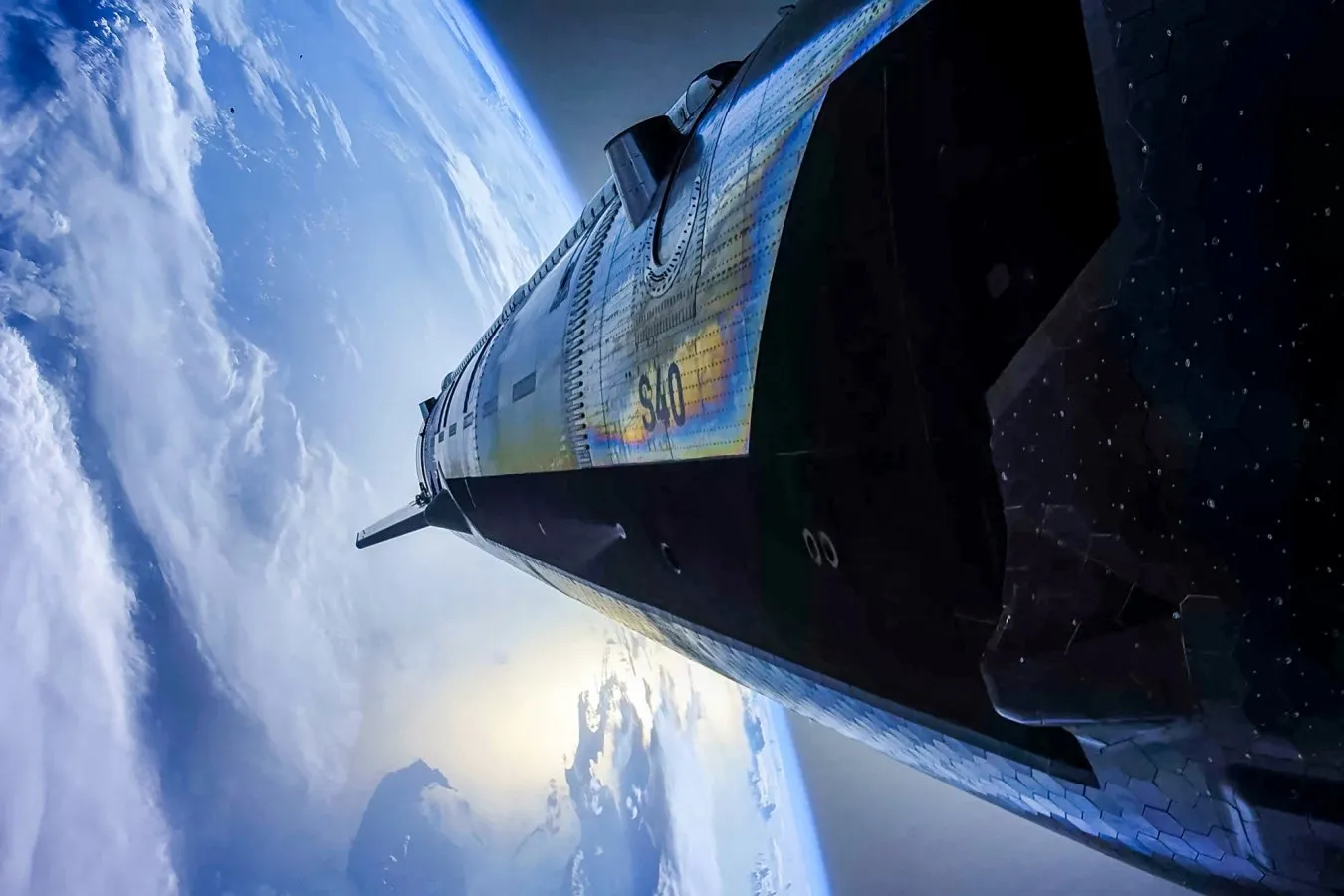
SpaceX's next Starship test flight will be its first orbital mission and will deploy working Starlink V3 satellites, marking the first commercially useful Starship mission. For decision-makers, this shifts Starship from experimental prototype to operational asset, with implications for launch costs, satellite broadband competition, and the broader space economy.
The next flight of SpaceX's Starship will be its first orbital mission, and it will carry working Starlink V3 satellites into orbit. That makes the flight the first commercially useful Starship mission, a milestone that moves the world's largest rocket from test program to revenue-generating asset.
For decision-makers, the stakes are immediate. Starship has flown multiple suborbital test flights, some ending in explosions, but this flight changes the math. Instead of a prototype proving it can go up and come down, Starship will be doing the job it was designed for: delivering next-generation satellites that expand SpaceX's broadband network and generate real revenue.
The Starlink V3 satellites are the key. Current Starlink satellites are launched on Falcon 9 rockets, but the V3 generation is larger and heavier, designed to deliver more bandwidth and connect more users. Starship's massive payload capacity is the reason SpaceX built it, and this flight will be the first time the two systems work together in orbit. The V3 satellites are not just an incremental upgrade; they represent a step change in what a single launch can place into orbit, which is exactly where Starship's lift capacity becomes an economic advantage.
The commercial logic is clear. SpaceX has built a satellite broadband business with millions of subscribers, but the network needs constant expansion and upgrade. Falcon 9 can only lift so much mass per launch. Starship, with its fully reusable design and super heavy lift capability, is the only vehicle that can economically deploy the V3 fleet at scale. This flight is the proof point that the architecture works as intended.
For the broader launch industry, the implications are uncomfortable. Competitors like United Launch Alliance's Vulcan, Europe's Ariane 6, and Blue Origin's New Glenn are all trying to capture commercial and government launch contracts. If Starship reaches orbit and starts deploying satellites, it will undercut the cost-per-kilogram economics that every other rocket is priced against. The cost per kilogram to orbit has been the defining metric of the launch industry for decades, and Starship's fully reusable design is intended to drive that number down by an order of magnitude. The pressure on rivals to match that efficiency will intensify, and customers with large constellations will have a new, powerful option.
There are also second-order effects for telecom and internet infrastructure. Starlink already serves customers in remote areas, on ships, and in conflict zones. A faster V3 deployment cycle means more capacity, lower latency, and potentially lower prices for end users. That puts pressure on traditional telecom providers and on other satellite broadband players like Amazon's Project Kuiper, which has yet to launch a large operational constellation. Governments and enterprises that rely on connectivity will watch this flight closely.
The flight is not without risk. Orbital missions are harder than suborbital hops, and deploying satellites adds complexity. The vehicle must reach orbit, release the satellites, and then survive reentry and landing. Any failure would delay the timeline, but SpaceX's iterative approach has historically meant that even failures produce data that accelerates the next attempt.
This story's Key Insights and Take-aways are locked.
Create a free account to unlock Executive Actions for one credit.
Register to UnlockAlways free for Executives Club members. Join the Club
More in Science

Alaska's 1,580-foot tsunami had warning signs. Scientists just found them.
Rapid glacier retreat, heavy rainfall, and thousands of tiny tremors preceded Alaska's 1,580-foot tsunami, a warning for every coastal community in a warming world.

The rare mutation that lets high-risk brains dodge Alzheimer's
Scientists found a natural defense against protein buildup, opening a new path to preventive treatments.

3,000 steps a day may halve Alzheimer's decline, study finds
New research links a modest daily walk to less tau buildup and nearly half the cognitive and functional decline, even for those with early signs.