

Stealth drone spins 25 times per second, turns invisible to cameras, still sounds like itself
A fast-spinning drone blurs on camera but cannot hide from sound, raising new questions for surveillance and regulation.
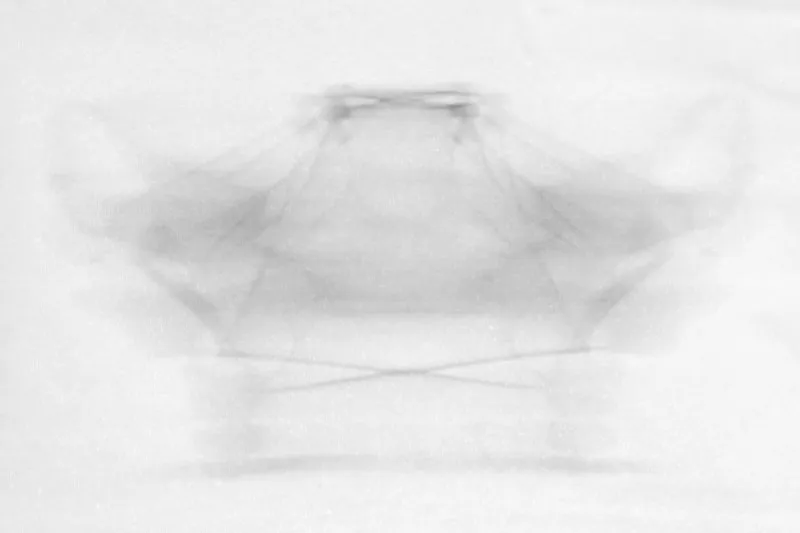
A New Scientist report describes a drone that spins 25 times per second so it becomes a vague blur to avoid being spotted. The creators acknowledge a hard limit: it can still be easily heard, even if it is visually hard to catch.
A drone that spins 25 times per second can dodge being spotted by cameras by turning into a vague blur. That is the core claim in a New Scientist report on the technology, and it matters because “stealth” in the modern world is not a single thing. It is usually a bundle of tricks that try to defeat sensors one by one: cameras, radar, microphones, thermal imaging, and human attention.
Here, the tactic is brutally simple. Instead of relying on magic coatings or perfect invisibility, the drone uses motion. At 25 spins per second, its image smears beyond what an observer can reliably parse, collapsing into something closer to background noise than a distinct aircraft. In other words, the drone tries to beat sight with speed.
But the report also includes the part that is easy to overlook until you operate or govern the system: the creators admit it can still be easily heard. That is not a minor detail. It is a reminder that “disappearing” is often conditional, not absolute. A camera can be fooled by motion blur, but sound is not bound to the same physics in the same way. Microphones detect pressure changes, not pixel stability. So even if the visual signature vanishes, the acoustic signature remains, potentially enabling detection by listeners, recording devices, or other sensor systems that do not depend on crisp visual contrast.
For decision-makers, this matters because surveillance and compliance planning rarely rests on one modality. If your security stack includes cameras plus audio detection, this drone becomes a test of how well your coverage holds when one layer degrades. The moment visual identification becomes unreliable, operators and boards should expect a shift toward audio verification, geofencing, and sensor fusion. Even when a target is hard to see, it can still be hard to ignore if it makes noise consistently enough to trigger alerts or localization.
There is also a regulatory angle worth taking seriously. When a technology promises “stealth” outcomes, regulators tend to focus on intent and deployment risk, not just technical novelty. The report does not lay out legal specifics, but in general, any aerial system that complicates detection can raise scrutiny under rules related to airspace safety, communications, and operational restrictions. Regulators will likely ask practical questions: how often such drones will be used, where they can fly, how operators will demonstrate safety, and what happens when detection systems fail or become less reliable.
From a business perspective, this is a reminder that defense against detection is a two-sided arms race that changes what customers buy. Organizations that rely on surveillance for safety, asset protection, or public security do not only want “can you see it” answers. They want robustness. A drone that becomes a vague blur shifts procurement requirements toward multi-sensor coverage and better incident workflows, not just higher-resolution cameras. That can influence budgets, vendor negotiations, and product roadmaps across the security market.
The second-order implication for peers is that “stealth” features can shift the operational burden rather than eliminate it. If the visual signature degrades, human operators may depend more on sound cues, patterns of movement, or cross-checking with other sensors. That can increase false positives if the acoustic environment is busy, or it can increase time-to-confirm detection during high-stakes incidents. Boards and executives should assume that the technology will force upgrades in process as much as hardware.
Finally, there is the strategic takeaway that cuts across defense, security, and drone startups: hiding from cameras is not the same as being undetectable. The creators themselves concede the limitation. For investors and operators evaluating similar systems, the differentiator is not just how effectively a drone can avoid being spotted. It is how predictable its failure modes are across sensors, what countermeasures remain available, and how reliably systems can respond when one signal becomes ambiguous.
This story's Key Insights and Take-aways are locked.
Create a free account to unlock Executive Actions for one credit.
Register to UnlockAlways free for Executives Club members. Join the Club
More in Science

Alaska's 1,580-foot tsunami had warning signs. Scientists just found them.
Rapid glacier retreat, heavy rainfall, and thousands of tiny tremors preceded Alaska's 1,580-foot tsunami, a warning for every coastal community in a warming world.

The rare mutation that lets high-risk brains dodge Alzheimer's
Scientists found a natural defense against protein buildup, opening a new path to preventive treatments.

3,000 steps a day may halve Alzheimer's decline, study finds
New research links a modest daily walk to less tau buildup and nearly half the cognitive and functional decline, even for those with early signs.