
Steam indie Bahast says “pay us” to reduce gen AI, devs fire back fast
A new dark fantasy idle ARPG claims gen AI was “nearly impossible” for a solo dev, then invites support.
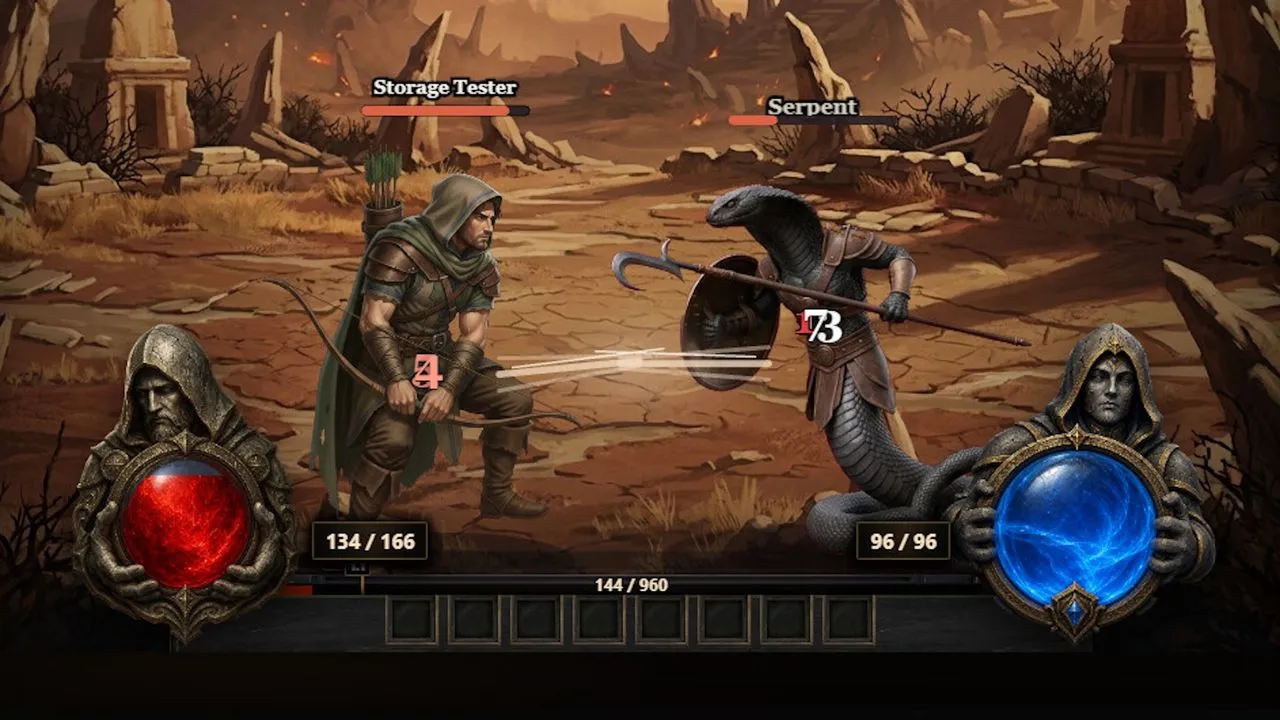
Indie RPG creator Aura Triolo highlighted the Steam AI disclosure for Bahast, a dark fantasy idle ARPG, where the developer argues gen AI was essential to ship. The backlash is a real governance problem for studios and platforms trying to balance speed, cost, and trust.
A Steam AI disclosure for Bahast, a new “dark fantasy idle ARPG,” just detonated a familiar debate in a new way: the developer framed generative AI as “nearly impossible” for a solo dev, then asked players to fund the game so they could “reduce AI usage.” In other words, the pitch is not “AI is optional,” it is “support us and we might use less.”
The disclosure, as flagged by Bluesky user Aura/Moom (game dev and animator Aura Triolo), reads: “This game uses AI in various places. A a [sic] solo developer it was nearly impossible to put out this game in a meaningful time frame or act on feedback without leveraging AI as a tool. I'm happy to reduce AI usage if the game is financially stable enough through your support! Thank you in advanced [sic] if we ever get that opportunity.” That combo, necessity plus conditional reduction, is exactly what set other developers off.
So what happened next? Devs went digging. Triolo only shared the Steam blurb, but other people quickly pulled the game details, and the thread evolved into a cross-industry argument about whether gen AI is “efficiency” or an unacceptable workaround. GamesRadar+ spoke to over 30 developers and heard “myriad arguments” against gen AI as a tool, even when creators claim it speeds production. The story is not just about taste. It is about incentives, signal quality, and who bears the cost when something gets flagged as a shortcut.
One core dispute is economic framing. The Bahast disclosure leans hard on the solo developer constraint, suggesting that without AI help, the game could not reasonably ship in time or iterate based on feedback. Several responses reject that narrative, including a blunt rebuttal from David Lindsey Pittman of Eldritch maker Minor Key Games: “The 'I'm just a little solo dev' thing also really doesn't work for us solo/tiny devs who have made things without using the art-stealing-cheat-machine.” Alexandre Stroukoff, half of Squeakross studio Alblune, pushed back with “Just learn to scope and stop being a whiny baby.”
The emotional intensity is not random. In indie production, cash flow and schedule are brutal. But developers are also arguing about what players and peers should treat as acceptable inputs. When the source says multiple devs believe gen AI is being positioned as an “excuse,” it is really a trust question. If the same teams can ship without gen AI when budgets are tighter, then “necessity” becomes a marketing claim, not a production constraint. Mtgames, a solo developer, made the point personal: “I'm literally unemployed and I still make all of my assets by hand.” Another solo dev, Ryan Nurse of Altrix Studios (maker of retro Prism games like the upcoming Prism Warriors DX), offered an accounting-style counter: “If you exclude Steam's publishing fee, and the $5 I spent to get TIC-80 Pro back in 2019, I have not spent a single penny developing either Prism Indigo or Prism Warriors.”
Even when the debate moves away from “art stealing” accusations and toward pure tooling, it still lands on incentives. The Bahast statement does not just admit AI usage. It implies there is room to dial it down, but only if the project becomes financially stable “through your support.” That means the disclosure is also a funding pitch, whether intended or not. And that is where boards, platform teams, and studio leaders should pay attention: conditional statements become policy pressure later. If enough users interpret “support” as “fund our AI reduction later,” then every future disclosure carries the weight of a promise.
The controversy also happens alongside an industry-wide shift. The source notes that industry figures like Epic Games head Tim Sweeney insist that AI-aided development will be essential going forward. At the same time, Sony describes AI as “exciting,” good for “synthetic assets,” and an “important foundational technology supporting our strategy.” These are not indie-only conversations. They are strategic positions from major players, and they shape what gets funded, what gets staffed, and what gets labeled as future-proof. The clash you see in dev comment threads is partly a signal war between “this is the road ahead” and “this is the shortcut that breaks the craft.”
Regulatory and platform framing is also creeping into the background. The source references a recent survey that found relatively few Steam users have a major issue with AI in games, while also noting that the “conductor” warned using AI will still cost you sales, and the surveyed demographic does not perfectly match the broader audience. That mismatch matters for decision-makers because product risk often appears first in community perception, then in conversion. Even if the majority of users do not raise a red flag, a vocal minority can still influence wishlists, press coverage, and reputational capital. And for small teams, reputational capital is oxygen.
Second-order implications are especially sharp for execs managing studios that either adopt gen AI or consider policies around it. If your AI usage becomes a bargaining chip in disclosures, you may be implicitly agreeing that AI reductions are “earned” through revenue. That can create internal misalignment: creative teams push for speed and scale, while community-facing teams worry about how disclosures read as leverage. It can also create platform friction. Steam disclosure language is now not only “informing players,” it is getting treated as a statement about morality, legitimacy, and craft.
If you are a founder, producer, or investor watching this space, the strategic stake is simple: gen AI is no longer just a production tool. It is a governance and trust problem, and Bahast is the latest example of how quickly “tooling” becomes “credibility.” The teams that win will be the ones that can ship efficiently without turning every disclosure into a public referendum. The teams that lose will discover that when developers say “AI was necessity,” peers may answer with spreadsheets, process stories, and accusations of “excuse,” until the market stops separating capability from intent.
This story's Key Insights and Take-aways are locked.
Create a free account to unlock Executive Actions for one credit.
Register to UnlockAlways free for Executives Club members. Join the Club
More in Entertainment

12TB Steam 'teraleak' goes beyond Valve: GTA 3, Mafia 2 prototypes exposed
A 12-terabyte dump of Steam data reveals prototypes and builds of third-party classics like GTA 3 and Mafia 2, plus unreleased Valve content, rewriting game history.

LinkedIn's romance problem: 1 in 4 workers say dating on it is fair game
A new survey shows a quarter of U.S. employees treat the professional network as fair game for romance, even as LinkedIn bans it and removes hundreds of thousands of offending posts.

Enhypen's first No. 1 album breaks K-pop's Billboard 200 streak
The K-pop group's 98,000-unit debut tops the chart while Dolly Parton's catalog reentry shows how death reshapes streaming.