

Stella Li builds BYD’s global empire while Hungary labor claims threaten its Europe comeback
BYD’s executive VP says Hungary is “the number one priority,” as EU scrutiny and overseas accusations pile up.
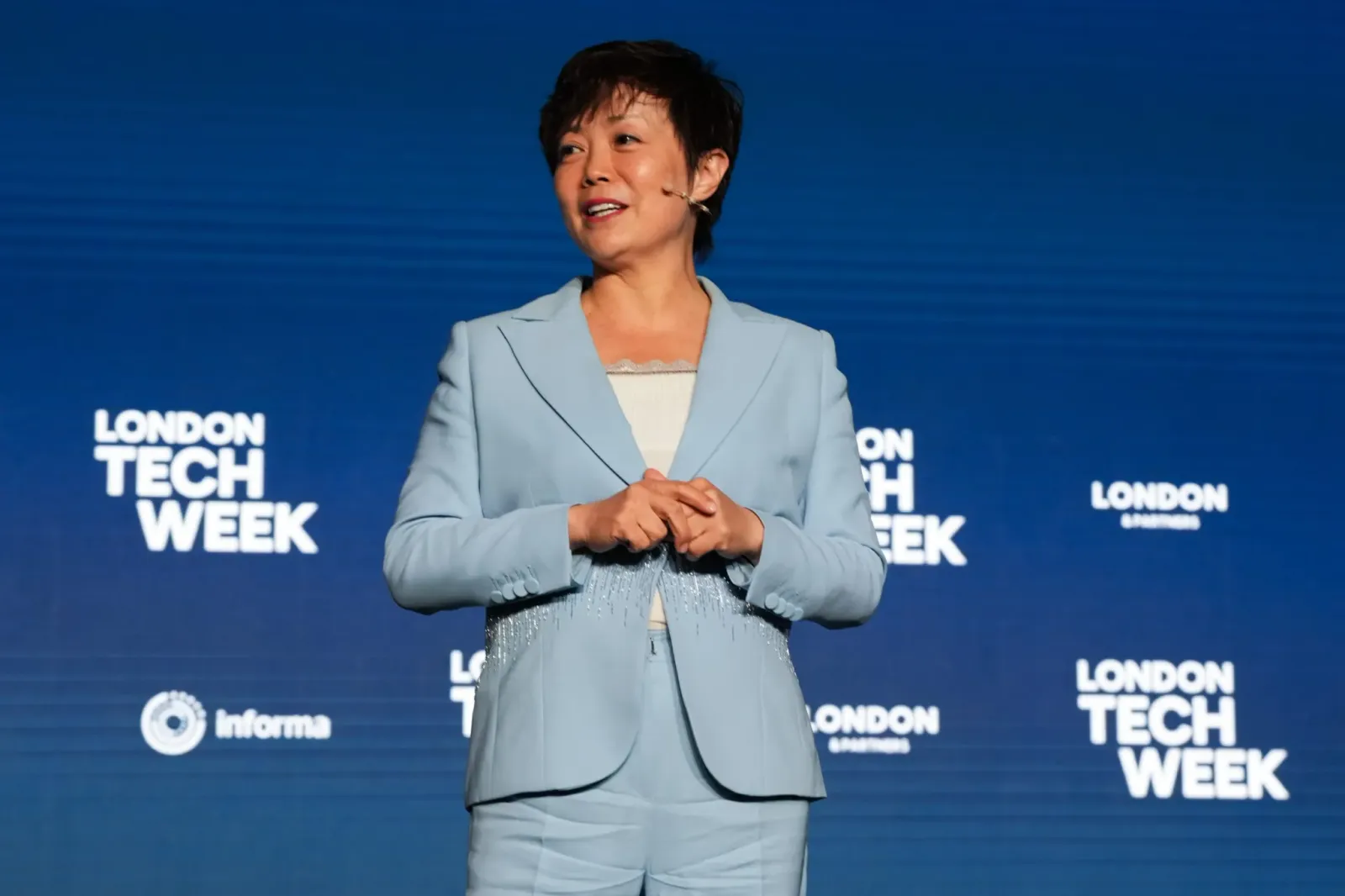
Stella Li, BYD’s executive VP and longtime partner to CEO Wang Chuanfu, is the face and operator of BYD’s push to become the world’s largest automaker in five years. Her drive for global production and pricing now collides with EU foreign subsidy investigations and labor-rights allegations tied to BYD’s Hungary and Brazil operations.
BYD CEO Wang Chuanfu told shareholders in Shenzhen that BYD wants to become the world’s largest automaker within five years. The fastest route, he implied, is overseas scale: growing production and sales outside China as pressure at home keeps intensifying. And in that international race, the person doing a lot of the wiring is Stella Li, BYD’s executive VP, who in recent reporting described spending roughly 70% of her time traveling, meeting government officials, hiring local executives, and shaping pricing and product strategy market by market.
That “Stella Show” approach is not decorative. When Li arrived at the Paris Opera House in April to showcase BYD’s European launch, the point was to demonstrate new offerings with real spectacle. But the real plot is operational: international sales more than doubled in 2025 to just over 1 million vehicles, and BYD sold more than 160,000 vehicles abroad in May, up 80% year on year, targeting 1.5 million overseas sales in 2026. With global vehicle sales reaching 4.27 million units in 2024 and 2025 new-energy vehicle sales hitting a record 4.6 million, BYD’s growth engine is already humming. The question for leadership is whether regulators, politics, and labor allegations can stall the exact manufacturing and market-access expansion that those numbers require.
Li’s job, as described, is to convert ambition into infrastructure and legitimacy across borders. Over her 30-year career at BYD, she has overseen the company’s transformation from mobile phone battery maker to the world’s top electric vehicle seller, and she is widely seen as an architect of BYD’s rapid international expansion. She has led road shows, personally toured markets, and worked to assemble local teams. She also built the overseas presence from scratch early on, including opening BYD Europe in 1998, before moving into the U.S. and Japan.
The origin story matters because it explains the operating style. Li told Fortune she first toured BYD’s factory in 1996, when Wang Chuanfu was working out of a two-room apartment, one room as the office and the other for finance. She recalled an “old, terrible building” outside, but a clean interior with a red carpet, forcing her to take off her shoes. That anecdote captures the mindset BYD exported to other countries: treat international push as a long campaign, not a one-time launch.
The campaign also required selling credibility to skeptical partners. In Li’s telling, early years involved hustling at trade shows and pitching often skeptical Western partners. Gender skepticism was part of the friction too, especially when she walked into European boardrooms and sat across from “towering-primarily male-tech executives.” Her message was simple: trust is earned through technology and delivery. The breakthrough, she said, came from a major battery conference in Paris in 1999. Struck by China’s absence, she lobbied to speak the following year, and in 2000 argued that China would soon become the world’s biggest market for mobile phones and the batteries powering them. She said that speech helped win customers like Nokia and Motorola, laying groundwork for BYD’s first global relationships and enabling BYD’s IPO on the Hong Kong Stock Exchange in 2002, when Motorola and Nokia were among key customers.
Now the same “trust gap” is playing out in a harsher arena: regulatory and labor scrutiny. As BYD expands into Europe, it is already under scrutiny as part of EU investigations into foreign subsidies. Separately, a labor rights group, China Labor Watch, brought forward alleged violations at BYD’s Szeged plant in Hungary, including seven-day workweeks, excessive overtime, recruitment fees leading to debt bondage, visa breaches, and harsh living conditions for Chinese migrant workers hired through subcontractors. BYD responded with an official statement asserting it places the highest priority on labor rights and compliance with Hungarian and European laws, including requirements for contractors, subcontractors, and labor providers, and said it is committed to responsible and transparent activity aligned with global principles.
Despite the controversy, Li told reporters in London that BYD will begin assembling cars at the Hungary plant in the fourth quarter of this year, calling it “the number one priority right now.” She added that BYD has paused work on a planned plant in Turkey while it focuses on Hungary, and is already seeking a second European production facility. In other words, Li is treating manufacturing continuity as the bargaining chip. If Hungary becomes a regulatory quagmire, a schedule slip affects supply, homologation timelines, and the ability to defend pricing. If it does not, BYD gains leverage with local stakeholders by proving it can operate at European scale.
But Europe is not the only risk zone. In Brazil, labor prosecutors accused BYD and its contractors of trafficking workers and subjecting them to conditions described as “analogous to slavery.” BYD denied the allegations, calling them misleading and culturally biased, and later settled with authorities in a deal that included payments and commitments to improve conditions, without admitting wrongdoing. For executives, these episodes create a pattern: international expansion is not just engineering and marketing. It is also political risk management, where labor credibility becomes part of market access.
All of this lands in the middle of a brutal competitive backdrop at home. BYD faces price wars in China’s increasingly competitive EV market, which makes overseas expansion both urgent and strategically difficult. Overseas, it is navigating regulatory pressure, labor rights allegations, and a U.S. market that remains effectively closed. Li has historically been the key figure bridging these gaps, but her responsibility is scaling up as BYD’s ambitions skyrocket.
The second-order stakes are obvious for any board watching BYD’s next five years. The company’s overseas numbers show momentum, but the pathway to “world’s largest automaker” depends on whether regulators and political systems accept BYD at scale. If trust breaks, it can force redesigns of production plans, delay new facilities, and complicate local hiring and partner relationships. If trust holds, BYD’s global manufacturing footprint becomes a competitive moat, turning international expansion into not just growth, but control of the future supply chain. For leaders in auto, tech manufacturing, and cross-border industrials, the lesson is uncomfortable: the winning metric is not only vehicles sold. It is also the ability to keep moving while scrutiny follows you everywhere.
This story's Key Insights and Take-aways are locked.
Create a free account to unlock Executive Actions for one credit.
Register to UnlockAlways free for Executives Club members. Join the Club
More in Business

Anthropic's S-1 reveals $80.7B loss as it races OpenAI to IPO
The Claude maker files publicly for a Nasdaq listing under 'ANT,' exposing staggering losses and a world-altering ambition before it can beat OpenAI to the market.

A flaw in PHP just forced governments to pull their own sites offline
European agencies from Belgium to Germany took websites dark to patch a critical weakness in the language behind almost 70% of the web, and the blast radius extends far beyond government portals.

BioWare shuts down, Mass Effect 5 dead after $55B EA buyout
The legendary RPG studio's closure lands months after a $55 billion investment group buyout of EA, raising tough questions for gaming's biggest acquirers.