

Stephen King calls ‘Cape Fear’ TV “more fucked up than Peter O’Toole on his birthday”
The Apple TV remake of The Executioners gets King’s stamp, and it sparked a public author-versus-author spat.
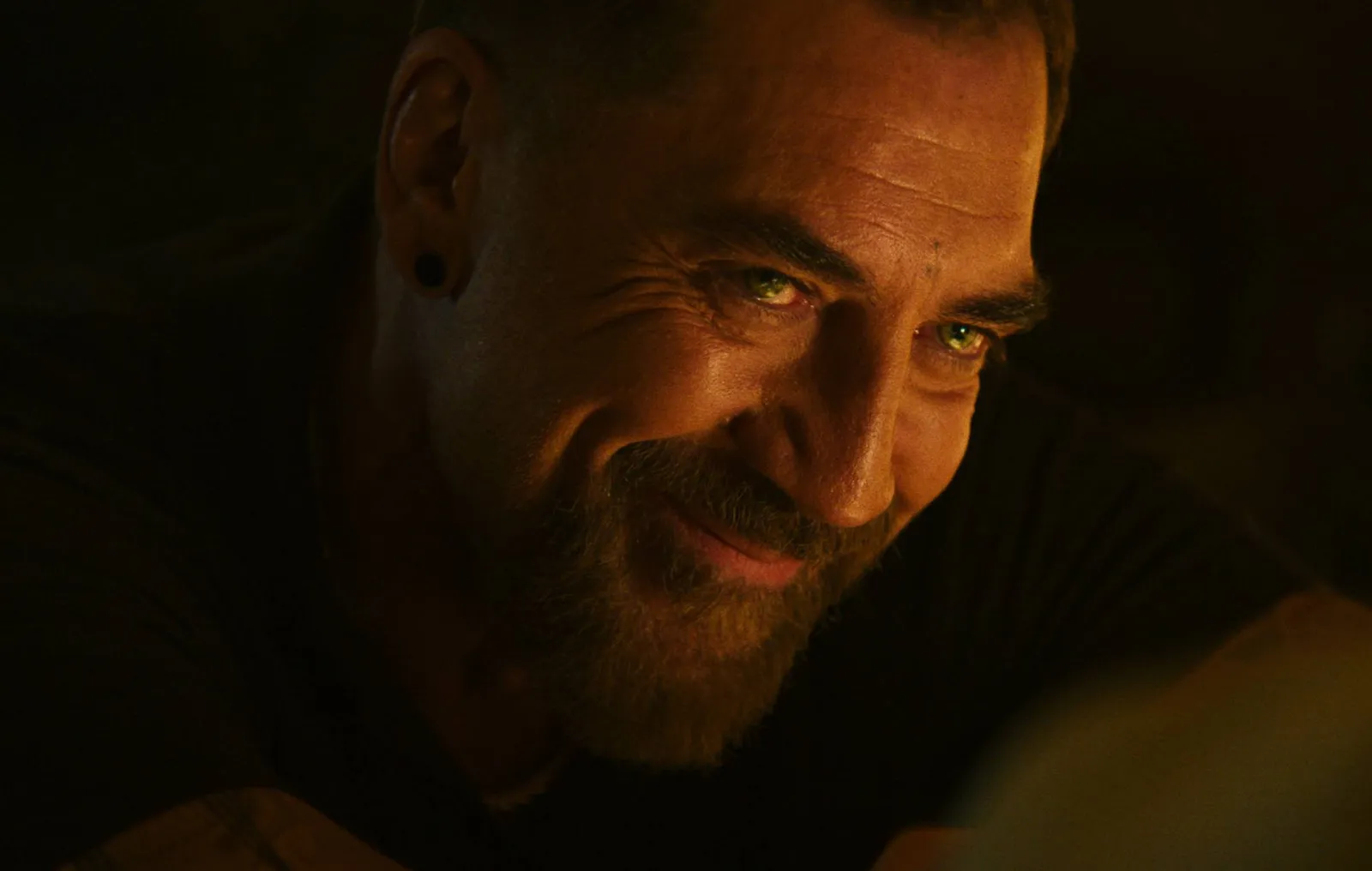
Stephen King weighed in on Apple TV’s Cape Fear, saying it was “more fucked up than Peter O’Toole on his birthday” and adding “I say that with love and admiration.” The response reignited a wider debate about how prestige TV adapts classic material and how writers defend taste in public.
Stephen King did not drop a polite thumbs-up on Apple TV’s Cape Fear. He delivered a verdict so specific it practically reads like a content moderation policy breach: the series is “more fucked up than Peter O’Toole on his birthday,” and King followed it up with the disclaimer, “I say that with love and admiration.”
That one-two punch matters because Cape Fear is not just another streaming title. It is the latest iteration of a classic story, itself based on John D. MacDonald’s 1957 novel The Executioners, now reimagined for TV and currently “in the middle of its run.” King is not reviewing “vibes” in the abstract either. The show follows Javier Bardem as sociopathic ex-con Max Cady, who sets out on a mission of revenge against the lawyer who defended him years earlier, with Amy Adams and Patrick Wilson also starring.
So why does this hit like a business story? Because in media, public taste disputes are a form of market signaling. King has a reputation for sharing opinions on TV, and when the author of Misery names a show as entertaining but “more fucked up,” that frames the audience expectation in real time. It also gives executives an external read on how the show’s tone is landing, which is especially valuable mid-run when engagement patterns are already forming.
The spark was not one-sided. The NME source points to fellow author Linwood Barclay as the trigger for the discussion. Barclay, who “wasn’t a fan,” wrote on X: “Cape Fear is undeniably entertaining, but it is the most sloppily and ridiculously plotted series I have ever watched.” King’s response was essentially an adoption of the “entertaining” part, but with a sharper emphasis on extremity: “It’s entertaining because it’s more fucked up than Peter O’Toole on his birthday.”
This is classic platform dynamics. The show is being discussed in public by creators who have their own followings. That means a disagreement about plotting and a joke about “Peter O’Toole on his birthday” are not just entertainment banter. They are discoverability engines. For decision-makers, that has second-order implications: when commentary clusters around a specific tonal hook (fucked up, intensely messy, revenge-forward), marketing teams can lean into that clarity even without changing a frame of the show. Meanwhile, content leads learn what viewers and readers latch onto, even if they would prefer the conversation stay in the realm of craft.
Cape Fear also carries adaptation gravity. The source reminds us the story has already been adapted into a 1962 film starring Gregory Peck, Robert Mitchum and Polly Bergen, and a 1991 remake featuring Robert De Niro, Nick Nolte and Jessica Lange. That lineage creates a repeating executive problem: every new version inherits expectations from earlier ones, and every new version has to decide how close it wants to stay to the source material and how aggressively it wants to reinterpret it for modern audiences.
King’s comment is interesting precisely because it is not about history. It is about the lived experience of the current series. He calls it entertaining while positioning it as unusually intense. That sits alongside NME’s own review framing in the source: in the three-star review, NME said “This take on Cape Fear sticks closely to the source material (John D. MacDonald’s 1957 novel The Executioners) but the melodramatic orchestral swells that underscore the more emotional moments strike a strange note.” That contrast is telling for executives: the same adaptation can be praised for being faithful in structure and criticized for landing the wrong emotional frequency.
Regulatory background is not the center of this particular story, but the business stakes still rhyme with how media platforms handle risk. Streaming services and broadcasters operate under evolving advertising, labeling, and content standards, plus the practical realities of how platforms moderate and surface material. While the source does not mention any regulator or policy specifically, the fact that the show is generating public language and attention underscores why editorial teams care about tone, audience segmentation, and compliance boundaries. When a prestige show becomes a quote-generating event, the platform and PR teams have to ensure the conversation does not spill into policy-adjacent trouble.
For peers with similar roles, the lesson is not “be more fucked up.” It is that mid-run discourse can become an informal dashboard. King’s “with love and admiration” softens the edge of his critique while still delivering a memorable positioning statement. Barclay’s critique goes after “sloppily and ridiculously plotted.” Together, they show two competing ways a creator community judges streaming work: tone intensity and narrative discipline. Executives tuning slate strategy, creative oversight, and audience acquisition should watch those signals, because they can shift how a show is talked about before it is fully digested by awards season or long-tail fandom.
This story's Key Insights and Take-aways are locked.
Create a free account to unlock Executive Actions for one credit.
Register to UnlockAlways free for Executives Club members. Join the Club
More in Entertainment

12TB Steam 'teraleak' goes beyond Valve: GTA 3, Mafia 2 prototypes exposed
A 12-terabyte dump of Steam data reveals prototypes and builds of third-party classics like GTA 3 and Mafia 2, plus unreleased Valve content, rewriting game history.

LinkedIn's romance problem: 1 in 4 workers say dating on it is fair game
A new survey shows a quarter of U.S. employees treat the professional network as fair game for romance, even as LinkedIn bans it and removes hundreds of thousands of offending posts.

Enhypen's first No. 1 album breaks K-pop's Billboard 200 streak
The K-pop group's 98,000-unit debut tops the chart while Dolly Parton's catalog reentry shows how death reshapes streaming.