

Steven Spielberg hailed Taylor Swift as “Singular” at Songwriters Hall of Fame
The director’s praise for Swift as the youngest-ever female inductee signals how pop songwriting is being reclassified as cultural power.
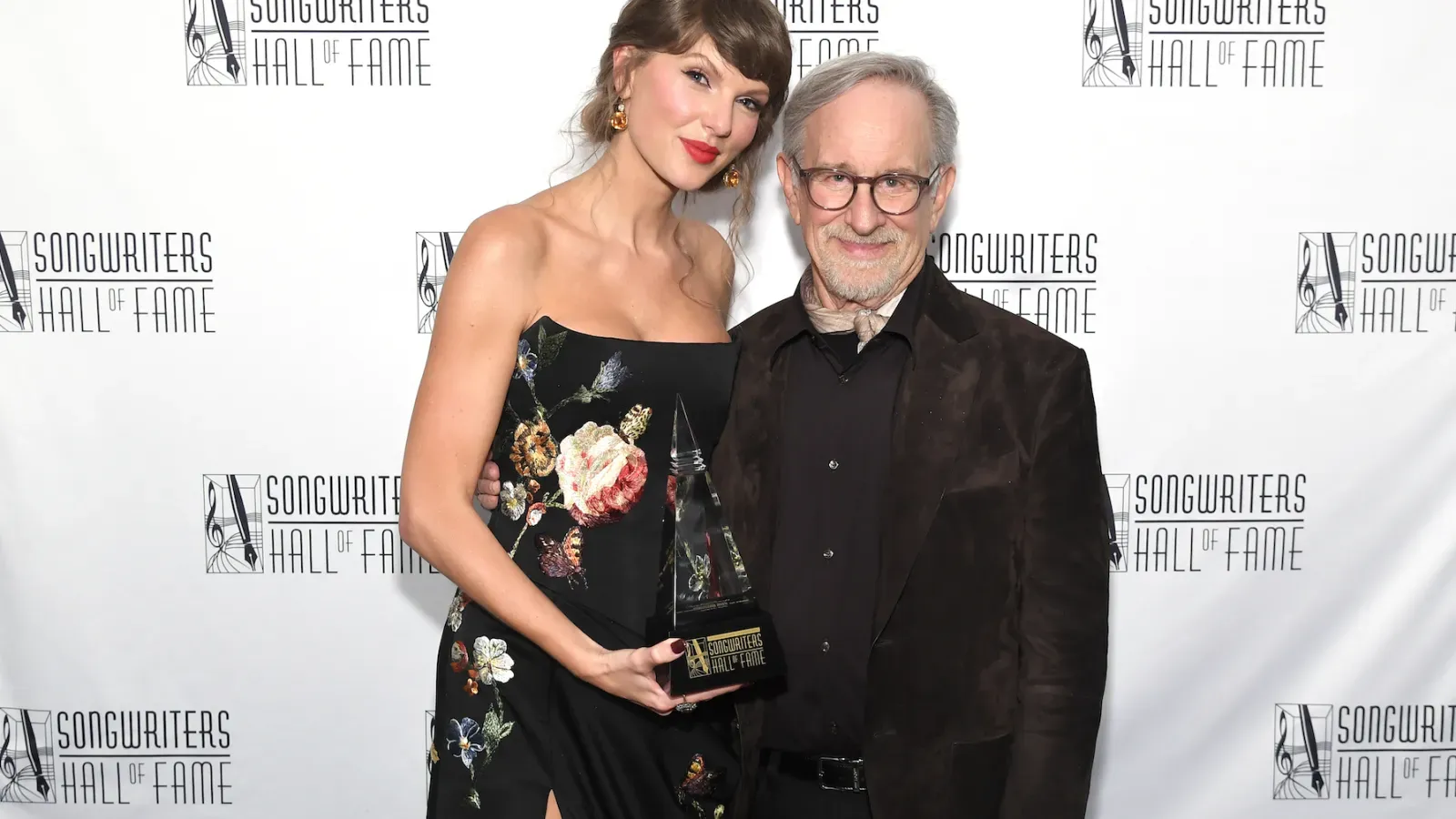
Rolling Stone reports that Steven Spielberg praised Taylor Swift, calling her “Singular,” in her Songwriters Hall of Fame introduction. The moment matters for executives because it shows elite gatekeepers increasingly treating songwriting influence like brand and board-level leverage.
Steven Spielberg did not just show up for Taylor Swift. According to Rolling Stone, he praised her as “Singular” during her Songwriters Hall of Fame introduction, framing her as “a woman who has no fear when it comes to shattering records as a writer, singer, and storyteller.” That description lands because it is not a generic compliment. It is a specific thesis about craft plus impact, and it is delivered in a room that historically functions like a cultural scoreboard for music creators.
The other key detail is her status as the youngest-ever female inductee, which Rolling Stone highlights. That matters because a hall-of-fame moment is usually slow, institution-heavy, and conservative by design. When the youngest-ever female inductee is a songwriter who has been in the public eye at record speed, the institution is effectively acknowledging that modern pop songwriting is not just charting. It is shaping the industry’s definition of legitimacy.
For executives, this is worth attention even if you never run a radio station or a label. Songwriting is the underlying asset class of music, and institutions like the Songwriters Hall of Fame help determine what the market values as “enduring.” In traditional terms, catalogs and publishing deals are long-duration plays. Recognition like this can influence how partners talk about writers in negotiations, how boards interpret strategic positioning around creative IP, and how executives decide who deserves the most favorable terms. If the industry is increasingly treating songwriting as a top-tier corporate asset, then awards and introductions become more than prestige. They become signals.
There is also a market-adjacent angle here: record-shattering, when it is tied to writing, usually forces the rest of the ecosystem to respond. Labels, publishers, managers, and streaming platforms all build strategies around creators who can drive sustained demand, not just short bursts. Rolling Stone’s framing of Swift as someone who shatters records “as a writer, singer, and storyteller” points to a triple-threat model. That model is hard to replicate quickly because it combines craft (writing), performance (singer), and narrative packaging (storyteller). Executives watching the market know that the bottleneck is rarely distribution anymore. The bottleneck is creative velocity plus audience retention.
This is also a reminder that cultural gatekeepers are evolving. Spielberg is a filmmaker, not a typical music-industry presenter, and his involvement underscores how mainstream media and music institutions are overlapping more than before. The second-order effect for boards and senior executives is simple: brand gravity matters across categories. When a director of his stature publicly validates a songwriter in a canonical setting, it raises the perceived “share of mind” for that creator. In practical business terms, that can ripple into licensing interest, collaboration appetite, and how quickly an audience follows a new project from the same artist ecosystem.
On the regulatory and governance side, the source does not add new details beyond the praise itself, but the backdrop is important. Publishing rights, songwriter royalties, and performance-measurement mechanics sit inside a broader policy environment that varies by territory. Even without new legal claims in this story, executive teams should treat high-profile songwriter recognition as a proxy for how competitive the rights market remains. When institutions elevate songwriters as record-breakers, it can intensify scrutiny on how revenue is allocated, how credits are handled, and how platforms and intermediaries document usage. That is not a headline-grabbing “regulation is changing this week” story. It is a steady incentive system where influence increases both value and visibility.
Strategically, peers should read this as a signal about what boards reward. The industry has spent years debating the shift from singles to catalogs, from ownership to access, and from “who can sell” to “who can monetize for years.” Rolling Stone’s inclusion of the “youngest-ever female inductee” detail and Spielberg’s “Singular” framing effectively says the measurement yardstick is expanding. It is no longer only about commercial velocity. It is also about whether an artist’s writing and storytelling can keep generating cultural and economic returns over time.
If you are an executive in music, entertainment, or any business that depends on creative IP, the takeaway is uncomfortable but useful: institutions may be moving faster than your internal narratives. Swift’s induction and Spielberg’s introduction show that songwriting is being positioned as strategic infrastructure, not background content. And when a cultural heavyweight like Spielberg calls a songwriter “Singular” and ties her acclaim to record-shattering writing, the message is that the next competitive advantage will come from creators who can turn songs into durable, system-wide influence.
This story's Key Insights and Take-aways are locked.
Create a free account to unlock Executive Actions for one credit.
Register to UnlockAlways free for Executives Club members. Join the Club
More in Entertainment

Christopher Nolan’s “The Odyssey” posts his biggest Tuesday haul, surpassing “The Dark Knight’s” record
The film’s Tuesday breakout reframes Nolan’s box-office ceiling and forces competitors to rethink timing, budgets, and release strategy.

Kacey Musgraves cancels Aug. 20, 29, Sept. 2 Middle of Nowhere shows
Ticketmaster emails are telling fans refunds are coming, while the tour still starts Aug. 21 in Chicago.

Billie Joe Armstrong launches Epiphone Les Paul Junior and Marshall 1959BJA signature gear
Two limited releases turn decades of Green Day’s tone into branded hardware, including Marshall’s first artist amp in 14 years.