

Study links ancient Egyptian princesses to weapon training, but experts say the bones prove little
Muscle-attachment scans suggest archery or dagger handling for royals in the Middle Kingdom, yet specialists flag missing comparisons.
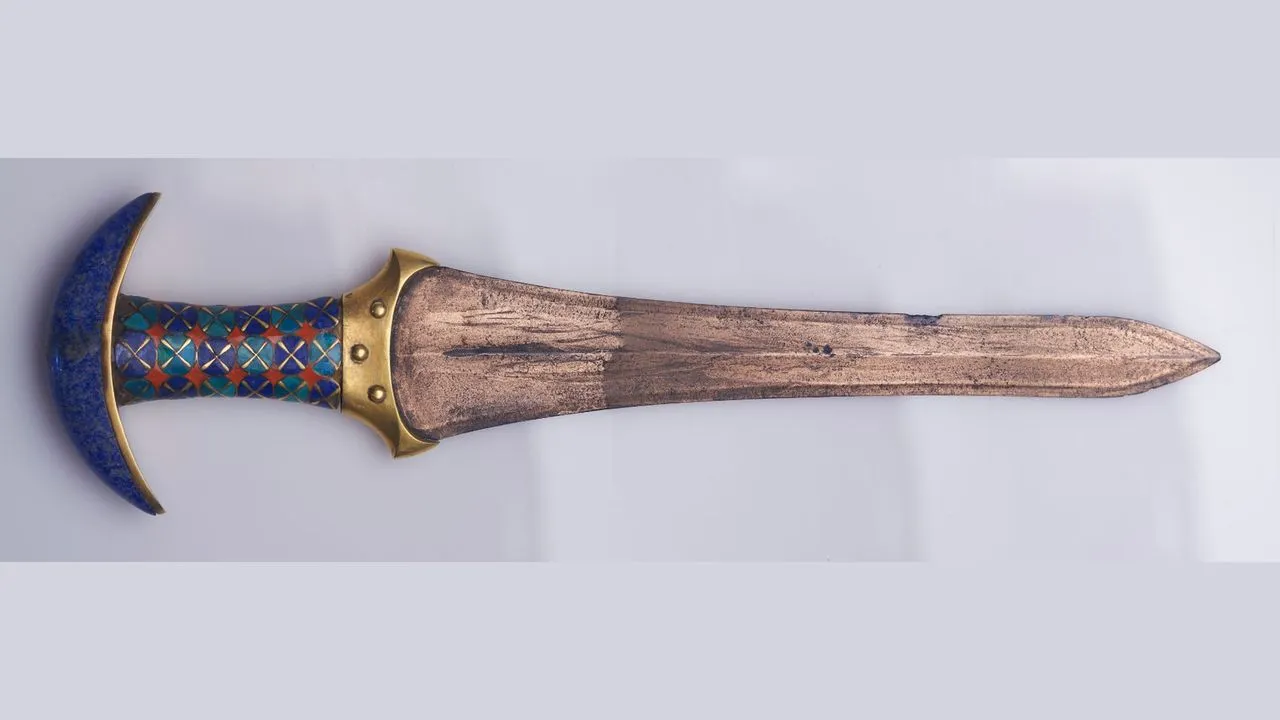
A study published July 17 in Frontiers in Environmental Archaeology examined six Middle Kingdom Egyptian royals and found muscle-attachment patterns that the authors link to archery and weapon handling. Bioarchaeologists not involved say the skeletal changes cannot reliably pinpoint a specific activity, especially without comparisons to other Egyptians from the same period.
A controversial new study claims several Middle Kingdom Egyptian royal women trained with weapons, not just posed with them in death. Researchers analyzed six royal individuals from nearly 4,000 years ago and argue that pronounced muscle-attachment sites may reflect repeated archery and weapon handling. The paper, published Friday (July 17) in the journal Frontiers in Environmental Archaeology, also challenges a long-running assumption that weapons placed in women’s tombs were largely ceremonial.
The strongest signals come from specific princesses. Princess Ita, who died between the ages of 28 and 34, showed pronounced attachment sites on parts of her right shoulder, arm and hand. The team suggests those changes could reflect repeated gripping and weapon handling, possibly involving the ornate dagger found in her tomb. Princess Noub-Hotep, who died in her early 40s, had strongly developed attachment sites in her forearms and right hand, and the researchers point to De Morgan’s 1896-era description of “arrows with their barbs in an astonishing state of preservation” in her tomb. Other royals in the sample, including Princess Itaweret, Princess Khenmet, and an unidentified woman who may have been Princess Sathathormeryt (also spelled Sithathoriunet), show robust attachment sites around areas tied by the authors to arm and torso use.
If you are wondering why this is such a big deal, it is because “weapons in tombs” is the kind of archaeological detail that can quietly rewrite whole narratives. In many societies, funerary artifacts can be symbolic, instructional, status signaling, or a record of real skills. This study pushes toward the real-skills interpretation for elite women, at least for some individuals. It may also provide “new information about the health and physical activities of royal women,” according to the study first author Zeinab Hashesh, an archaeologist at Beni-Suef University in Egypt. The authors frame royal women, “especially the women,” as active participants in skilled, physically demanding activities such as archery and hunting.
But the science is not as clean as the story headline suggests, and outside experts are careful for a reason. Bioarchaeologists not involved with the research told Live Science that skeletal changes cannot reliably indicate a specific activity. Age, body size, genetics, and other repetitive movements can produce similar patterns. In other words, enlarged or pronounced muscle-attachment sites are consistent with repeated use, but they are not a fingerprint for archery or for any one weapon-handling routine.
A major technical issue is that the study did not include a comparison group. One of the largest caveats, according to Sonia Zakrzewski, a bioarchaeologist at the University of Southampton in the U.K., is the absence of “comparison groups from the Nile Valley or elsewhere.” Without seeing how unusual these attachment patterns are relative to contemporaneous Egyptians, royal or not, it is hard to claim elite-specific training rather than general-life wear and tear, labor patterns, or developmental differences. Zakrzewski also flagged a separate reliability problem: the identities of the skeletal remains depend heavily on 19th-century labels. In her words, that “means that we cannot be certain how reliable they really are.” Some skulls were missing, and only around 22% to 58% of each skeleton survived, which matters because fewer remains mean fewer datapoints.
Other specialists raised biomechanical concerns. Scott Haddow, a bioarchaeologist at the University of Turin in Italy, noted that some of the skeletal changes were present on both sides of the remains. He emphasized that archery is “highly asymmetrical,” so finding generalized, bilateral robusticity (with only some asymmetry) does not make a particularly strong case for those individuals practicing archery. He also pointed out that age at death could explain differences: Khenmet was between 35 and 45 when she died, while Noub-Hotep was approximately 40 to 44, and muscle-attachment sites are influenced by aging as well as by body size and genetics.
Even if the authors’ hypothesis is directionally plausible, experts say the evidence for it is thin. Sébastien Villotte, an anthropologist at the French National Center for Scientific Research, said that while the presence of funerary artifacts like arrows and daggers “makes the princesses’ involvement in such activities plausible,” the study provides “limited biomechanical or biomedical evidence” to substantiate the claim. He argued that a more robust approach would compare these individuals to non-elite contemporaries from the same region and period to determine whether the changes were common in the general population or truly indicative of elite behaviors.
Zooming out, the bigger takeaway for leaders outside archaeology is how easy it is to overfit a narrative to incomplete signals. Here, the museum angle is a real-world reminder of hidden datasets waiting to be used: in 2020, museum workers rediscovered the bones during a curation project, after they had been forgotten for decades following excavations by French archaeologist Jacques de Morgan near the tombs of pharaohs Amenemhat II and Amenemhat III. De Morgan’s finds included King Hor, Princess Ita, Khenmet, Itaweret, and Noub-Hotep, plus an unidentified woman who may have been Princess Sathathormeryt. With better provenance and more systematic comparisons, the same technique could potentially turn a provocative claim into a durable conclusion.
For executives and board members in any field that relies on evidence interpretation, this is the strategic stake: when the dataset is small and the control group is missing, the risk is not just being wrong. It is building downstream narratives that other people will treat as settled. In this case, the bones may let researchers “sort of put flesh on the bones and understand more about their lives,” as Zakrzewski put it, but the key caution remains. Muscle use can be real without being specific, and funerary symbolism can coexist with training. The story is worth following, just not for the certainty the current claim implies.
This story's Key Insights and Take-aways are locked.
Create a free account to unlock Executive Actions for one credit.
Register to UnlockAlways free for Executives Club members. Join the Club
More in Science

Alaska's 1,580-foot tsunami had warning signs. Scientists just found them.
Rapid glacier retreat, heavy rainfall, and thousands of tiny tremors preceded Alaska's 1,580-foot tsunami, a warning for every coastal community in a warming world.

The rare mutation that lets high-risk brains dodge Alzheimer's
Scientists found a natural defense against protein buildup, opening a new path to preventive treatments.

3,000 steps a day may halve Alzheimer's decline, study finds
New research links a modest daily walk to less tau buildup and nearly half the cognitive and functional decline, even for those with early signs.