

Study says K-Pg impact dust delivered a lethal 17x human thermal dose
New evidence reframes the extinction timeline: less “winter” first, more planet-wide heat and firestorms within hours.
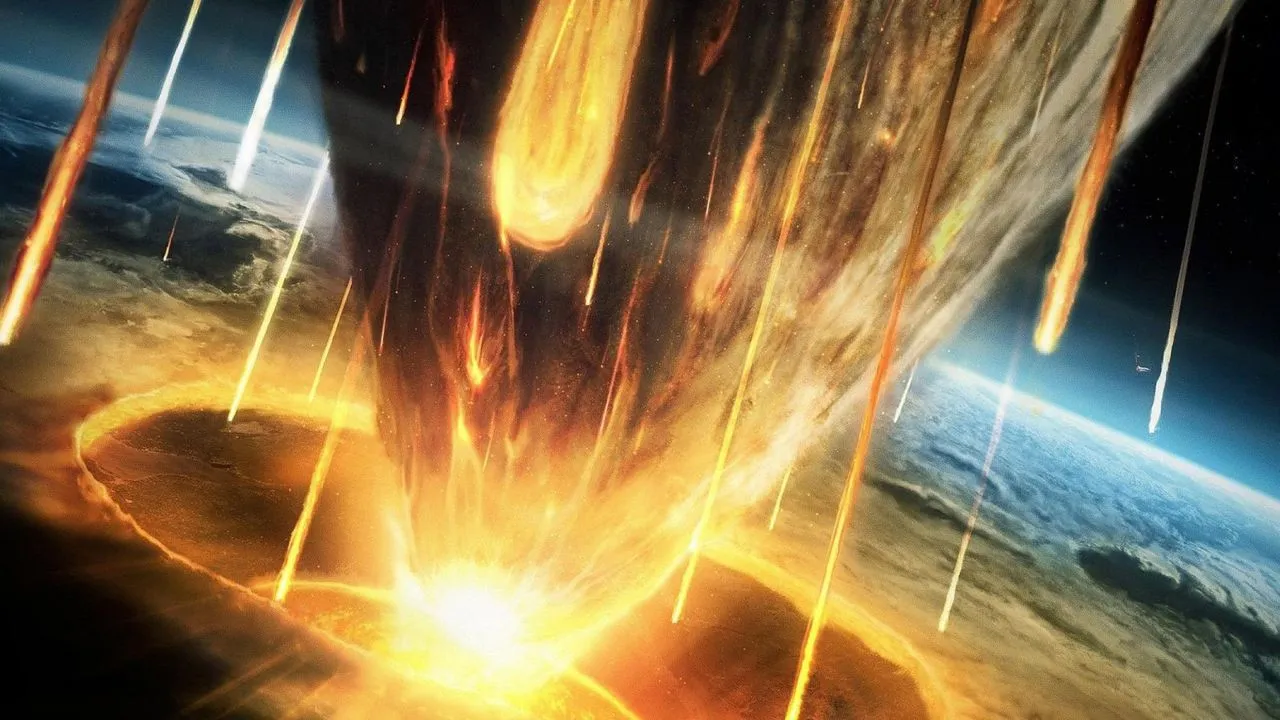
A new study published July 28 in JGR Biogeosciences, led by planetary scientist Brandon Johnson of Purdue University, argues that ultrafine impact dust after the 66 million-year-old Chicxulub impact acted like an insulating blanket. The consequence for decision-makers is a reminder that small, overlooked mechanisms can radically change system-wide risk models and “base case” narratives.
For years, the story of the dinosaurs’ end sounded like a slow burn, not a flash fire. Scientists once suspected a years-long winter after an asteroid impact 66 million years ago starved them. But new evidence points to something far more immediate: a blanket of ultrafine impact dust that could have supercharged firestorms within hours.
The study estimates that exposed terrestrial animals received about 17 times the thermal dose considered lethal to humans. That number lands like a data revision you cannot ignore. It also changes what you should imagine in the first hour or two after the asteroid struck Mexico’s Yucatán Peninsula, excavating the Chicxulub crater and vaporizing enormous quantities of rock.
Here’s the mechanism, and why it matters beyond paleontology. The impact produced tiny droplets called spherules from some of the vaporized rock. Those spherules spread around the planet and then fell back through Earth’s atmosphere at several miles per second. As they slowed, their kinetic energy turned into heat, creating a pulse of thermal radiation. Earlier models treated the planet like a worldwide broiler: potentially deadly to exposed, thin-skinned animals, but not powerful enough to ignite vegetation across the globe. In other words, the “winter killed them” storyline was paired with a “heat was bad but not that bad” assumption.
Brandon Johnson and coauthors argue those calculations missed a crucial ingredient: a thick layer of fine silicate dust formed from rock vapor that did not initially condense into spherules. Evidence for that dust emerged in 2023 from the Tanis fossil site in North Dakota, where researchers identified a layer of extremely fine, impact-derived material deposited above the spherules. A similar dust layer has since been documented at the K-Pg boundary, which divides the “age of reptiles” and the “age of mammals,” in Raton Basin across the Colorado-New Mexico border.
Think of the difference in material behavior as the whole plot twist. According to the study, the dust would have acted like an insulating blanket, preventing thermal radiation from escaping into space and redirecting more heat toward Earth’s surface. The researchers estimated the surface heat pulse could have been about 3.5 times more intense than models suggested when considering only the falling spherules. And that is where the “within hours” part stops being poetic and becomes operational. Johnson is quoted in a statement saying, “We’re in the realm where we might be essentially killing off everything within that first hour or two.”
The radiation may not have directly ignited thick pieces of wood, but it exceeded ignition thresholds for grass, lichen, and pine needles. That means smaller fuels could catch, then feed larger fires. The study also suggests risk was not evenly distributed. Animals sheltering underground or in water would have had a better chance of surviving the initial heat pulse, while exposed terrestrial animals faced much harsher thermal dosing.
After the immediate inferno, the dust may have shifted the storyline back toward longer-term consequences. The same insulating layer could have blocked sunlight for years, triggering the prolonged “impact winter” that is more commonly blamed for the extinction. So the updated narrative is not “either winter or fire.” It is both, with a faster opening act.
There is, however, a missing element that keeps this from becoming a closed case: wildfire evidence that supports a globally synchronized burn has only been found in North America so far. Alfio Alessandro Chiarenza, a paleontologist at University College London who was not involved in the study, is quoted saying, “It could be that we will eventually find the record of completely global wildfires. We just don’t have it so far.” The study was published on July 28 in the journal JGR Biogeosciences.
Why should a business-minded reader care about a dust layer 66 million years old? Because this is what good model revision looks like: a system that seemed bounded by one pathway (spherules alone) is reopened by an overlooked pathway (fine dust that traps and redirects energy). For executives, the second-order lesson is painfully familiar. If your risk model ignores a component because it is hard to detect, you can underestimate near-term severity even when your long-term story sounds right. That is not just trivia. It is how companies get blindsided, how boards get surprised, and how “known” scenarios fail when reality adds a missing mechanism.
This story's Key Insights and Take-aways are locked.
Create a free account to unlock Executive Actions for one credit.
Register to UnlockAlways free for Executives Club members. Join the Club
More in Science
Alaska's 1,580-foot tsunami had warning signs. Scientists just found them.
Rapid glacier retreat, heavy rainfall, and thousands of tiny tremors preceded Alaska's 1,580-foot tsunami, a warning for every coastal community in a warming world.

The rare mutation that lets high-risk brains dodge Alzheimer's
Scientists found a natural defense against protein buildup, opening a new path to preventive treatments.

3,000 steps a day may halve Alzheimer's decline, study finds
New research links a modest daily walk to less tau buildup and nearly half the cognitive and functional decline, even for those with early signs.