

Submarine captain locked-room death meets a cauldron in The Mermaid Mask
SFB Games' new point-and-click drops a tight locked-room murder, a colorful suspect boatload, and clever puzzle momentum.
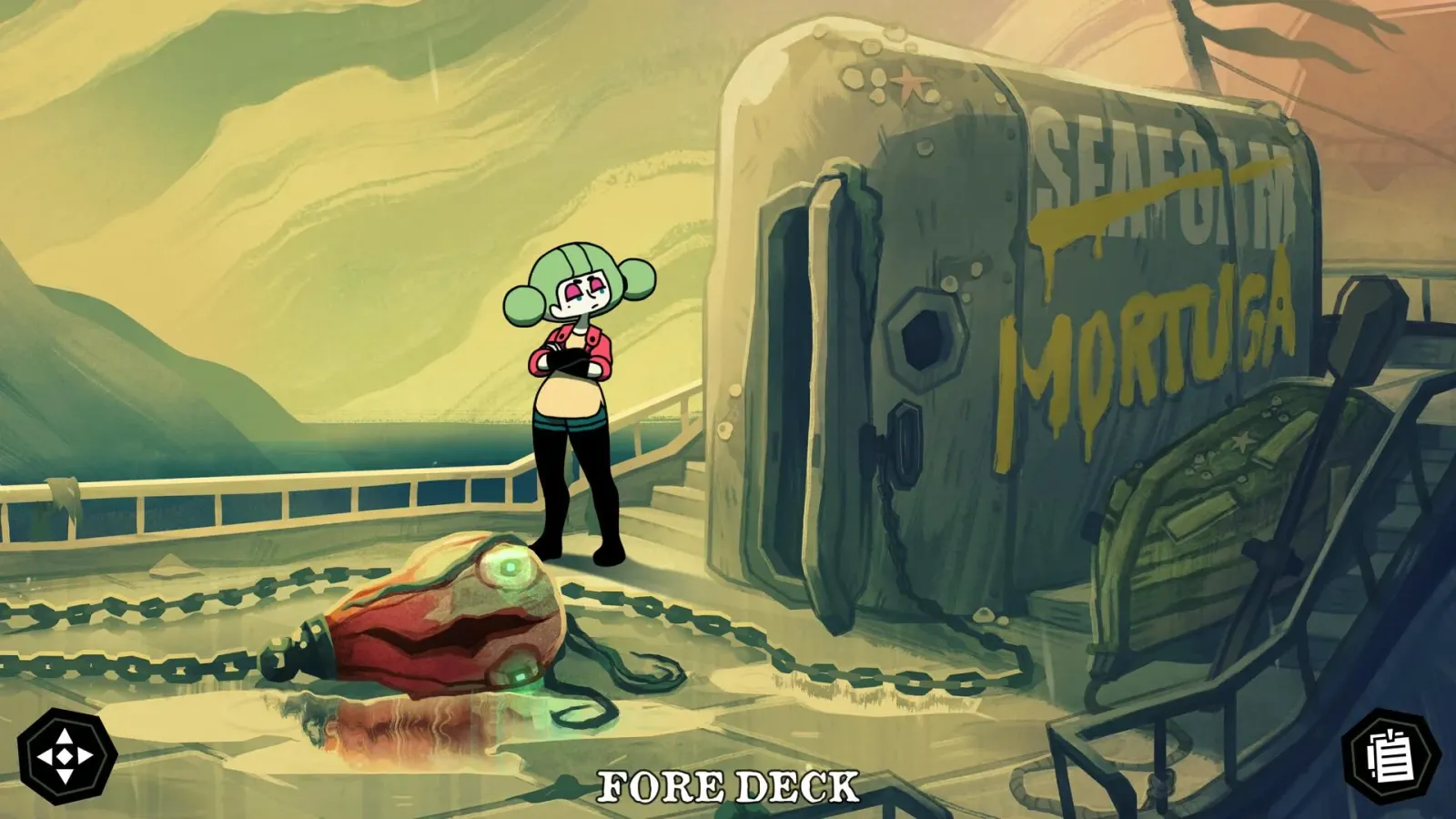
SFB Games, best known for Tangle Tower, is launching The Mermaid Mask, a point-and-click murder mystery built around a submarine locked-room death. For decision-makers watching interactive entertainment, it is a reminder that tight premise design and character-driven investigation still win.
The Mermaid Mask, the next point-and-click game from Tangle Tower developer SFB Games, opens with a locked-room murder that is instantly legible and weirdly cinematic. The captain of a submarine is found dead inside a locked room, his body positioned next to a mysterious cauldron, with blood trickling across the floor. It is the kind of setup that makes you lean in, because it promises two things at once: a mystery with physical constraints, and a scene that should not be solvable until you understand the rules.
The premise also gives players a clean investigative lane. A “locked room” death implies barriers, access, and timing. The cauldron with blood trickling across the floor implies motive, method, and maybe something supernatural or at least unexpected. From a design perspective, the brilliance is that each question leads to another, rather than scattering attention into side quests. You feel the game steering you toward contradiction: why is the captain dead where he is, why is the scene staged with a cauldron, and how do the clues connect once you start talking to the people who are trapped with you.
That “trapped with you” factor matters, because The Mermaid Mask is not just an environment puzzle. The game places a colorful cast of suspects aboard the submarine, and it leans into dialogue as the engine. The Verge highlights multiple suspect archetypes you can immediately picture: a grumpy author trying to draft a sequel to his hit novel, an actor playing the lead in a movie based on that novel, a young woman who puts on elaborate illusion performances, and even a man who studies dreams. Those are not random flavor choices. In murder mysteries, character obsession often drives plot mechanics. Authors chase narratives, actors chase performances, illusionists chase misdirection, and dream students chase symbols. That means the investigation can evolve from “what happened” to “what people believe happened,” which is where mysteries get juicy.
If you are tracking interactive entertainment from the business side, this is a familiar but still powerful formula. Point-and-click adventures typically rise and fall on two things: how quickly they get players to care, and how consistently they pay off that care with solvable questions. The Mermaid Mask’s setup is care-first. It drops you into a scenario that is emotionally and logically loaded. Then it appears to support that setup with a suspect roster designed for conversation-driven discovery. Even the submarine setting is a constraint system. Underwater and enclosed spaces tend to reduce the “where else could this have happened” escape hatch, forcing the game to make its mystery coherent.
There is also a secondary implication for studios and publishers: character and premise design are still a competitive moat. A lot of the industry conversation these days focuses on bigger production values, monetization mechanics, and platform reach. But a locked-room murder with a cauldron clue, plus suspects with distinct roles and psychology, is a cheaper kind of advantage that scales. You can localize personalities, reuse investigative logic across chapters, and build replayability through different interpretation angles. You do not need the biggest budget to deliver the feeling that the game is “thinking” with you.
Now, for executives, the strategic stake is not just “will people like it.” It is whether the studio can convert a strong genre hook into sustained engagement that supports a commercial release. The Mermaid Mask comes from SFB Games, the developer behind Tangle Tower, which signals they already understand how to pace a mystery, manage clues, and keep dialogue entertaining. When a new title retains genre DNA but varies the flavor with a submarine locked-room scenario and the cauldron centerpiece, it can attract both returning fans and newcomers who want classic mystery structure without needing deep genre fluency.
And if you zoom out to how companies think about the market, mystery games sit in an interesting regulatory and platform context mostly indirectly. Unlike regulated categories that require specific compliance regimes, narrative adventure games generally do not face the same direct content restrictions. Still, the “family of expectations” matters for storefront placement, age ratings, and marketing clarity. A murder mystery can be “safe enough” for broad audiences if it is handled with focus and restraint, but the title’s design still has to communicate content clearly. The Verge’s description emphasizes a compelling setup and delightfully talkable suspects, suggesting the game is leaning into atmosphere and investigation rather than relying on shock value alone. That is good news for reach.
Finally, the submarine is not just a backdrop. It is a promise of pressure and proximity, the exact environment where suspects become both allies and hazards. If the game delivers on its locked-room promise, it can reinforce a belief that point-and-click can still compete on modern player attention. For peers in this space, the second-order question is: does your next release have a premise that self-justifies the next hour of play? The Mermaid Mask appears to answer with a tight opening scene, a cauldron clue that demands interpretation, and a cast built to talk back.
This story's Key Insights and Take-aways are locked.
Create a free account to unlock Executive Actions for one credit.
Register to UnlockAlways free for Executives Club members. Join the Club
More in Entertainment

12TB Steam 'teraleak' goes beyond Valve: GTA 3, Mafia 2 prototypes exposed
A 12-terabyte dump of Steam data reveals prototypes and builds of third-party classics like GTA 3 and Mafia 2, plus unreleased Valve content, rewriting game history.

LinkedIn's romance problem: 1 in 4 workers say dating on it is fair game
A new survey shows a quarter of U.S. employees treat the professional network as fair game for romance, even as LinkedIn bans it and removes hundreds of thousands of offending posts.

Enhypen's first No. 1 album breaks K-pop's Billboard 200 streak
The K-pop group's 98,000-unit debut tops the chart while Dolly Parton's catalog reentry shows how death reshapes streaming.