

Super Mario Bros. PSA 9.6 sells for $3 million, resetting the video game record
Heritage Auctions confirms a newly discovered sealed copy tops $2 million, reshaping how boards think about “collectible” value.
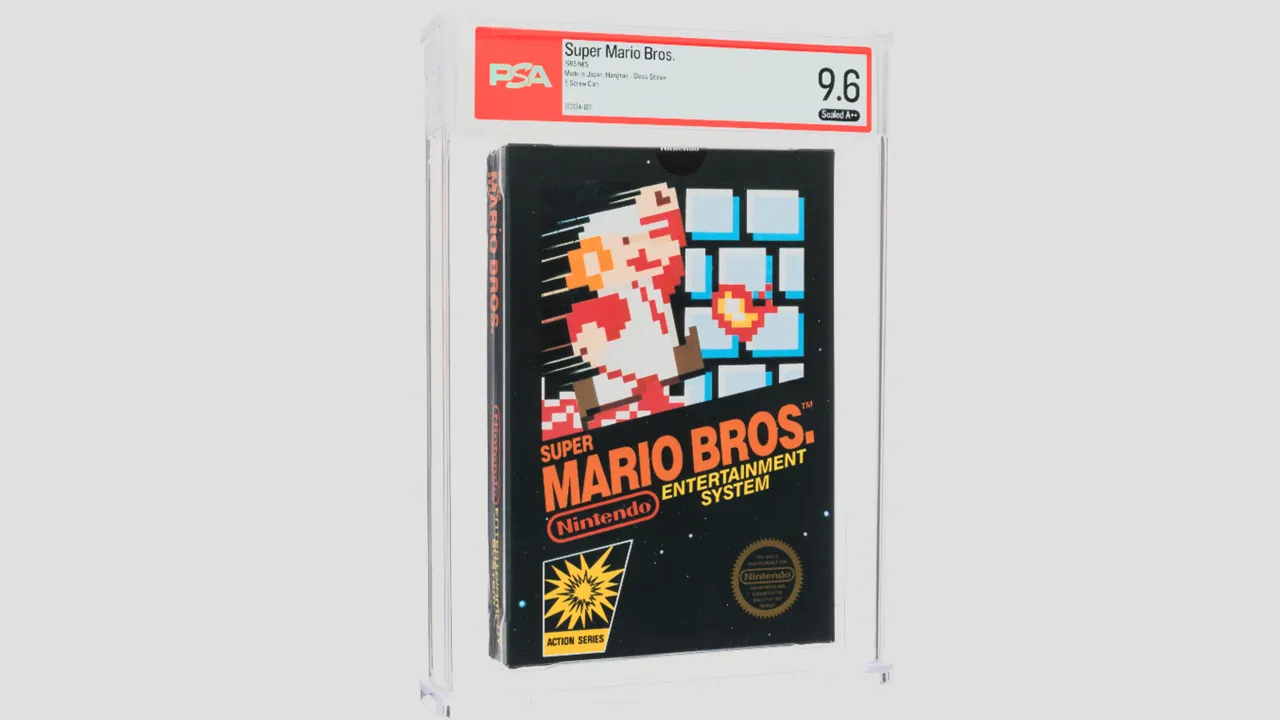
Heritage Auctions announced that a PSA 9.6 A++ sealed copy of the original Super Mario Bros. sold for $3 million. For decision-makers, the sale tightens the link between grading, provenance, and extreme price discovery in the collectibles market.
A sealed copy of the original Super Mario Bros. just sold for $3 million, and Heritage Auctions says it is the new record for video games at auction. The buyer paid for a very specific asset: a Professional Sports Authenticator (PSA) 9.6 A++ grade, for the Nintendo game that kicked off Mario's platforming adventures.
Heritage Auctions announced the sale Friday and also confirmed what makes the number matter. The $3 million price passed the previous $2 million record set in 2021, turning last year’s “maybe the market is weird” into “no, it is structurally real.” Heritage notes the result is nearly double what someone paid for a sealed Super Mario 64 copy in that same year. If you are an operator, investor, or board member watching alternative assets, this is the kind of proof point that changes how you model scarcity, verification, and where liquidity can actually show up.
So what exactly was sold, and why did it attract a headline price? Heritage describes it as the earliest confirmed sealed copy from Super Mario Bros.'s second production run, released in early 1986 and featuring a very specific gloss sticker. It is also a 40-year-old item in “great shape,” based on the grading details PSA recorded. Heritage says the copy was discovered a few months ago inside a brand-new Control Deck NES console bundle, meaning it had not been touched for nearly 40 years. That provenance piece is doing heavy lifting. In collectibles, condition matters, but “unbroken history” matters more, especially when a product is old enough that the supply of genuinely sealed items becomes less about normal purchasing and more about archaeology.
Heritage also tied the $3 million number to comparative scarcity inside the same production context. In its description, Heritage called the $3 million PSA 9.6 A++ copy “the holy grail of video game collecting.” It says the pristine condition recorded by PSA, combined with being in the best shape of three known sealed copies from the same run, is a big part of the valuation. The other two copies from that run received Video Game Authority (VGA) 80 and Wata 9.4 A++ grades. The presence of multiple grading systems is not a trivia detail. It signals how the market calibrates value: different third-party graders can produce different scores, and the highest or most defensible grade tends to attract the most speculative and the most conservative collectors at the same time.
One additional milestone makes this feel less like a private deal and more like a market signal. Heritage says it is the first sealed copy to appear in a public auction. That is important for decision-makers because public auctions tend to convert private enthusiasm into observable pricing. They also force a wider set of buyers, with different strategies and risk tolerances, into the same price discovery moment. Even Heritage’s “neat bonus” underlines the bundling logic: the buyer was also awarded a launch edition NES Control Deck console that came unopened with the Super Mario Bros. copy. Heritage notes it is not worth $3 million on its own, which is a reminder that the real asset is the game, graded and verified, and the console is the add-on that came attached to it.
For boards and investors, the second-order story is about infrastructure. PSA grading, Heritage’s consignment pipeline, and the existence of comparable records from 2021 all suggest the collectibles market is maturing into something closer to a regulated-adjacent asset class, even without formal regulation of the goods themselves. This is why these prices keep escalating: when third-party grading creates a shared language for condition and authenticity, it lowers friction and disagreement, which makes “extreme” transactions more likely. And when those transactions occur in public auctions, they pull future buyers toward the same reference points.
The broader collectibles environment is also showing up in IGN’s recap. The article references a Fortnite copy that sold for $42,500 a few months ago, plus a Superman comic book that sold for $6 million in 2024 and another that sold for $9 million in 2025. The pattern across categories matters: extreme prices are not isolated to one fandom or one asset type. They cluster where verification exists, provenance can be narrated, and grading or certification can create a believable bridge between subjective “condition” and measurable scarcity.
Strategically, this is the kind of data point that should land on the dashboards of people who allocate capital, underwrite alternative assets, or build consumer platforms tied to collectibles and entertainment. The market just proved that a decades-old sealed product can trade at a level that resets the reference price, and it did so because discovery, documentation, and grading aligned. The question for peers is not whether collectors can pay. It is whether the next record will come from the next “holy grail,” or from whatever happens when supply, grading standards, and auction transparency finally converge again.
This story's Key Insights and Take-aways are locked.
Create a free account to unlock Executive Actions for one credit.
Register to UnlockAlways free for Executives Club members. Join the Club
More in Entertainment

Russell Brand's accuser 'bewildered and confused' as he denies 7 sex charges
The criminal case against the comedian is a live test of how media companies manage talent risk when serious allegations go public.

'It's a Magic Trick': Ballet Experts Say Rosalía's SNL Pose Is Impossible
Three ballet experts tell Rolling Stone Rosalía's gravity-defying SNL stillness shouldn't be possible - and why the debate is now part of the show.

Activision CMO: GTA 6 Will Boost Call of Duty, Not Bury It
Activision's top marketer says Rockstar's blockbuster will drive players back to consoles and into Modern Warfare 4, even as the company admits its recent strategy failed.