
Super Mario Galaxy Movie tops $1B worldwide, yet the game-adaptation throne still belongs to its predecessor
The animated hit crosses $1 billion globally while it continues theatrical runs in some markets, but another film still owns the crown.
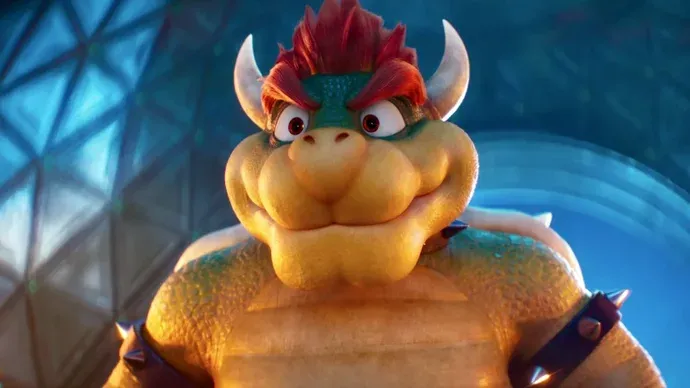
Eurogamer reports that The Super Mario Galaxy Movie has pushed its global box office haul past $1 billion. For executives, the split between digital VOD timing and continued cinema performance raises questions about how distribution strategy protects franchises and market dominance.
The Super Mario Galaxy Movie has finally cleared a major milestone: its global box office haul has crossed $1 billion worldwide. And it did not get there by retreating from theaters the moment digital options opened. Eurogamer notes that even after moving to video-on-demand on digital platforms last month, the film is still holding its theatrical position in cinemas in some locations.
That combination is the story underneath the headline. Last month, the movie made the jump to video-on-demand on digital platforms, which normally signals a shift in consumption from cinemas to home. But the film is still playing theatrically in some areas, which has kept revenue momentum alive long enough to pass $1 billion globally. For decision-makers watching entertainment economics, that is not just trivia. It is a real signal that distribution timing can be more flexible than the usual “theatrical window ends, then it is over” script.
To understand why this matters, it helps to zoom out on how video game adaptations are valued in the market. Eurogamer specifically frames this moment as part of a long-running competitive hierarchy: it says the Super Mario Galaxy Movie is now over $1 billion worldwide, but its predecessor still retains the video game adaptation crown. In other words, crossing a headline figure does not automatically dethrone the prior champion. It suggests the “crown” is measured by something more than a single global milestone, likely including total global performance, lasting cultural reach, and the way audiences respond to the franchise across multiple releases.
The distribution detail Eurogamer includes also intersects with how studios think about demand smoothing. If you release on VOD while still running in cinemas, you are essentially letting different audience segments choose their preferred consumption path. Some viewers want a theater experience and will still go, especially when showings remain available in their location. Others want convenience now, so VOD captures that demand earlier than a strict window might. The result can be revenue protection rather than revenue trading: you do not force everyone into one lane.
For boards and executives, this matters because it changes how you interpret performance. A $1 billion global crossing, paired with continued theatrical presence in some locations, implies that the film’s sales curve did not just spike and fade. It indicates durability and, importantly, execution. Studios and partners typically plan windowing decisions around a mix of expected box office, marketing spend, competitive releases, and platform strategy. When a film can keep theaters alive after VOD launches, it suggests management avoided an all-or-nothing approach and instead optimized the overlap.
There is also a strategic implication for anyone investing in or building content pipelines around gaming IP. Game adaptations carry special expectations because the original audience is vocal, and the mainstream audience is selective. The fact that Eurogamer calls out a “predecessor” still holding the adaptation crown shows that the market rewards not only spectacle, but consistency. You can have a sequel that hits huge numbers, but the prior film can remain the benchmark. That is a board-level lesson: franchise equity is not just about individual titles, it is about which release defines the category.
Then there is the simple investor logic: milestones are visible, but timing is what drives cash flow. VOD on digital platforms changes the revenue mix, and theaters change it again. When the Super Mario Galaxy Movie can straddle both modes, it is effectively extending the monetization runway. That extension is exactly what investors and financial planners care about, because it can affect how quickly returns land, how sustainable the hit feels, and how predictable the downstream pipeline becomes.
The strategic stakes are clear. If you are an executive in entertainment, distribution, or IP-focused production, you are not just tracking a $1 billion label. You are watching how a major franchise manages the transition from cinema to digital without conceding ground immediately. Meanwhile, the fact that the predecessor still holds the video game adaptation crown is the reminder that benchmarks are stubborn. Passing a major number is big, but dethroning the category leader is a different, harder objective.
This story's Key Insights and Take-aways are locked.
Create a free account to unlock Executive Actions for one credit.
Register to UnlockAlways free for Executives Club members. Join the Club
More in Entertainment

Entertainer Russell Brand denies 7 sex charges amid accuser's 'couldn't breathe' claim
The alleged victim's account sharpens the reputational and legal stakes for Brand, his platforms, and any business tied to a public figure under criminal scrutiny.

Russell Brand's accuser 'bewildered and confused' as he denies 7 sex charges
The criminal case against the comedian is a live test of how media companies manage talent risk when serious allegations go public.

'It's a Magic Trick': Ballet Experts Say Rosalía's SNL Pose Is Impossible
Three ballet experts tell Rolling Stone Rosalía's gravity-defying SNL stillness shouldn't be possible - and why the debate is now part of the show.