
Superworms cut skeletal cleaning time, with a 10-15g per gram sweet spot
A PLoS One study finds an optimal superworm larva ratio that minimizes cleaning time without bone damage.
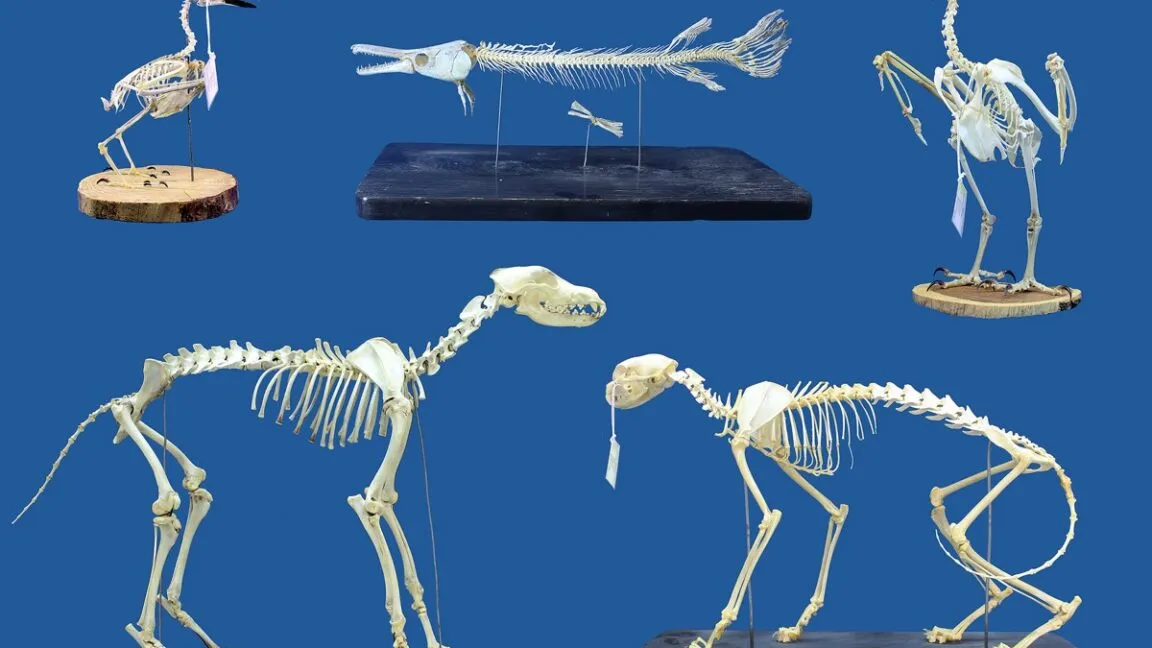
Fatemeh Rastekar of Ferdowsi University of Mashhad and co-authors report in PLoS One that Zophobas morio superworm larvae can clean skeletal specimens effectively. Their experiments identify an optimal ratio of 10-15 grams of larvae per gram of specimen that minimizes cleaning time while preserving bone integrity.
Preparing skeletal specimens for museums or forensic studies is one of those unglamorous tasks that still has high-stakes consequences. Bones need thorough cleaning to remove any remaining flesh or soft tissue, but the cleaning has to avoid damaging the bone itself. Get it wrong and you do not just ruin an artifact or sample. You lose a research-quality specimen.
In the new paper in PLoS One, Fatemeh Rastekar of Ferdowsi University of Mashhad and co-authors propose an alternative to the long-standard method: using dermestid beetles. Their results land on a practical target: an optimal ratio of 10-15 grams of superworm larvae (Zophobas morio) per gram of specimen minimized cleaning time with no bone damage. That is the “sweet spot” museum labs and forensic workflows can aim for, instead of guessing.
To understand why this matters, you have to look at how skeletal cleaning usually works and where it breaks. Existing options include burial, digestive enzymes, and chemical treatments. Each comes with real drawbacks. Some can damage bones, some take a long time to process, some carry expensive operational costs, and some involve environmentally hazardous substances.
Dermestid beetles have become the preferred method because they remove soft tissue efficiently without damaging bone. But beetles introduce their own operational headaches. Beetle colonies span all life stages, so they require complex containment. And if containment is not strict, beetles can escape, lay eggs, and hatch. That turns “efficient cleaning” into a potential infestation risk that threatens museum collections.
The authors’ central bet is that superworms could deliver the beetles’ advantages while reducing the infestation risk. Superworms, described in the paper as the larvae of so-called “superworms” (Zophobas morio), are a common pet food ingredient, but the research is about their controlled use in cleaning workflows. One practical difference is lifecycle. The larval stage lasts 10-12 weeks, while dermestid beetle processing is described as five to seven weeks. At first glance, that sounds like superworms might be slower. The point of the paper is that, with the correct larva-to-specimen ratio, cleaning time can be minimized. The 10-15 grams per gram ratio is the specific lever.
There is also an operational management difference related to reproduction and colony structure. The paper notes that superworm cleaning only requires the larval stage. That is less complex than running a beetle colony that spans all life stages. The authors also say the larvae do not pupate in crowded conditions, which makes colonies easier to manage while reducing the risk of escape. For a museum or forensic lab, that can translate into fewer containment burdens and fewer opportunities for an accidental escape scenario to turn into a collection-threatening infestation.
Of course, the question decision-makers will ask is the one hiding inside the headline: can superworms match cleaning efficiency without adding new risks? The study’s answer is targeted. It identifies the optimal ratio of 10-15 grams of larvae per gram of specimen and reports that this minimized cleaning time without causing bone damage. It also frames why the biology matters for containment. Larvae-stage-only handling and the lack of pupation in crowded conditions are meant to shrink the operational surface area where mistakes could become expensive or disruptive.
From a board-level or executive-operations view, this is not just a lab workflow update. It is about reliability, compliance, and cost control in environments that cannot afford “we’ll fix it later” decisions. Museum collections are irreplaceable, and forensic studies have consequences that extend beyond the facility walls. If superworms can reduce infestation risk compared with beetle colonies while hitting a proven time-minimizing ratio, institutions may gain a path to more predictable specimen preparation. And for labs evaluating procurement, training, facility constraints, and environmental compliance burdens, the paper offers a concrete starting point: 10-15 grams of Zophobas morio larvae per gram of specimen.
In the bigger ecosystem, this kind of incremental but measurable improvement is exactly how expensive operations get redesigned. Not with flashy tech, but with a better ratio, a simpler containment story, and fewer pathways to accidental collection damage. For executives and operators in museums, forensic services, and research curation, the strategic stake is straightforward: safer specimen cleaning that does not trade off speed, bone integrity, or operational safety.
This story's Key Insights and Take-aways are locked.
Create a free account to unlock Executive Actions for one credit.
Register to UnlockAlways free for Executives Club members. Join the Club
More in Science

Alaska's 1,580-foot tsunami had warning signs. Scientists just found them.
Rapid glacier retreat, heavy rainfall, and thousands of tiny tremors preceded Alaska's 1,580-foot tsunami, a warning for every coastal community in a warming world.

The rare mutation that lets high-risk brains dodge Alzheimer's
Scientists found a natural defense against protein buildup, opening a new path to preventive treatments.

3,000 steps a day may halve Alzheimer's decline, study finds
New research links a modest daily walk to less tau buildup and nearly half the cognitive and functional decline, even for those with early signs.