
Supreme Court shadow docket hits 63 secret orders, outpacing 56 merits rulings
ProPublica finds the court sped up consequential decisions with little explanation, just as Trump-era emergency filings surged.
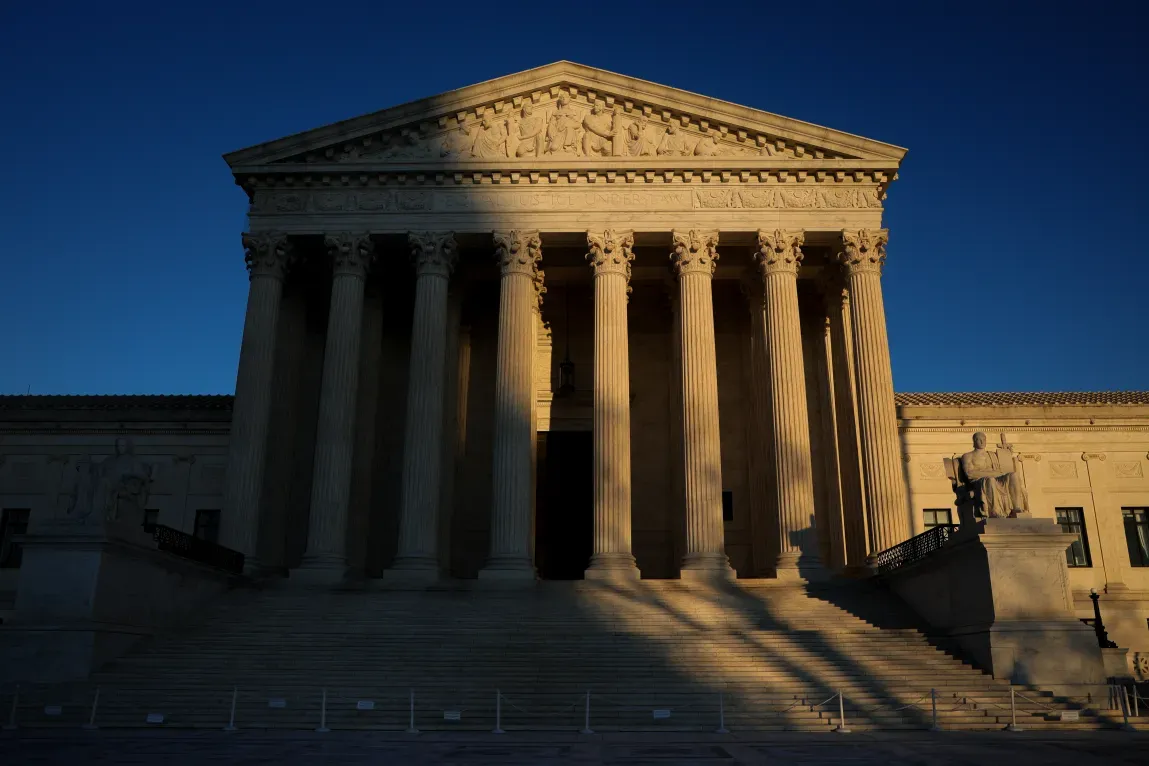
In the term that ended last October, the U.S. Supreme Court issued 63 unsigned “shadow docket” orders versus 56 signed “merits docket” opinions, according to ProPublica’s analysis. For decision-makers, the consequence is a faster, less-transparent path to nationwide legal and policy outcomes.
For the first time in modern history, the Supreme Court’s secretive “shadow docket” decisions outnumbered its traditional merits rulings in a single term. In the term that ended last October, justices issued 63 orders on the shadow docket, compared with 56 orders on the more traditional merits docket, where cases are argued in open court and accompanied by signed opinions.
This is the unsettling part: those shadow docket decisions are typically fast-track, unsigned, and thin on explanation. They are emergency-style actions that can freeze, block, or green-light government policies while full appeals play out. ProPublica’s analysis found that they rarely include the kind of legal reasoning people expect when the country’s highest court reshapes the rules. And they come at the exact time the court has shown an increased willingness to bypass its regular process in ways that have empowered President Donald Trump and upended lower-court procedures.
The mechanics matter. The Supreme Court offers two main paths to a ruling. One is the merits docket, which follows the normal appeals-to-argument route. Lawyers argue months in advance, and the justices issue signed opinions. The other is the emergency docket, where parties petition directly to ask the court to act quickly, often to freeze a lower-court ruling or government policy while the full case moves through the system.
The emergency docket itself has long contained many procedural requests, including stay requests in capital cases. But what remains, after removing those procedural items, is the shadow docket: cases that seek to “skip the usual order of things and ask for a quick ruling.” Scholars and court watchers were shocked by ProPublica’s finding, because the outcomes of these emergency actions can be consequential even when the court provides limited justification, rarely citing precedent, and infrequently explaining how particular justices voted.
ProPublica’s reporting links the court’s increased shadow docket activity to real-world legal and regulatory disruption. The article describes the Supreme Court using this process to limit federal courts’ ability to issue nationwide injunctions. It also says the court diminished Congress’ authority over federal agencies via these emergency decisions, and it allowed for the detention of American citizens by immigration agents. When the court issues rapid emergency rulings with little explanation, lower courts are forced to adjust their own processes under time pressure, and sometimes the emergency outcome can contradict longstanding legal precedent.
The trend also appears to be driven by filing behavior. ProPublica lays out how the Trump administration has escalated shadow docket requests relative to past administrations. The Obama and George W. Bush administrations together filed just eight petitions in 16 years. By contrast, ProPublica reports that the Trump administration filed 32 petitions in 2025 alone, based on an analysis by the Brennan Center for Justice. The court, in turn, increasingly agreed to take quick action on those appeals, which means the administrative and legal clock can move faster than the usual deliberative arc.
Public scrutiny sharpened after an abortion-related emergency decision in September 2021. The Court issued a one-paragraph, unsigned opinion refusing to block Texas’ Senate Bill 8, the “Heartbeat Act,” which banned abortion after an embryo’s cardiac activity is detectable, typically at six weeks of pregnancy. Protests erupted nationwide and the Senate held a hearing on the shadow docket. In a scathing dissent, Justice Elena Kagan referenced the shadow docket by name and accused the majority of green-lighting a “patently unconstitutional law” with only a cursory review in less than 72 hours, writing that the majority’s decision was emblematic of shadow docket decision-making that becomes “more unreasoned, inconsistent, and impossible to defend.”
ProPublica adds another transparency warning: on the shadow docket, justices do not have to make their votes known. In rare cases, votes are revealed in terse indications when they grant or deny applications, or even more rarely through an opinion. The analysis found that just 17% of votes cast had any kind of public record of a vote or opinion. Justice Samuel Alito defended the Court’s role by arguing, “We do not file these emergency applications. Parties file them.” And the debate continues, with Justice Ketanji Brown Jackson saying in an April speech at Yale Law School that the public cannot be expected to have faith if the court repeatedly green-lights harmful acts without clear explanation.
For executives, board members, and investors, the second-order effect is that regulatory and legal uncertainty can become less about “if” and more about “when.” When emergency filings spike and the Court’s shadow docket overtakes the merits docket in sheer volume, enterprises operating in heavily regulated areas face faster shifts in the enforceability of rules, tighter deadlines for compliance decisions, and more volatility in how quickly lower courts will adjust. The strategic stake is simple: if the Supreme Court is increasingly deciding the outcome before full briefing and fuller reasoning, then planning for policy risk becomes a race against time and opacity, not just a forecast of legal doctrine.
This story's Key Insights and Take-aways are locked.
Create a free account to unlock Executive Actions for one credit.
Register to UnlockAlways free for Executives Club members. Join the Club
More in Politics

Acantha Lang says soul music “works like magic” when people truly connect
The Grammy-nominated singer ties her New Orleans roots to an “honest” sound that builds human connection.

Kenya’s largest psychiatric hospital uses haircuts to pull men out of silence
At a Kenya mental health referral hospital, grooming sessions are part of recovery support to rebuild self-esteem.
Times/Siena finds Democrats are popular, but Senate pickup math still looks tough
Polling suggests a “just enough” national environment for Democrats, yet retaking the Senate remains a heavy lift.