
Sweden makes critical-mineral mining national security, speeding permits to break China reliance
The government will treat rare earths as strategic assets, using faster permitting to reduce dependence on China.
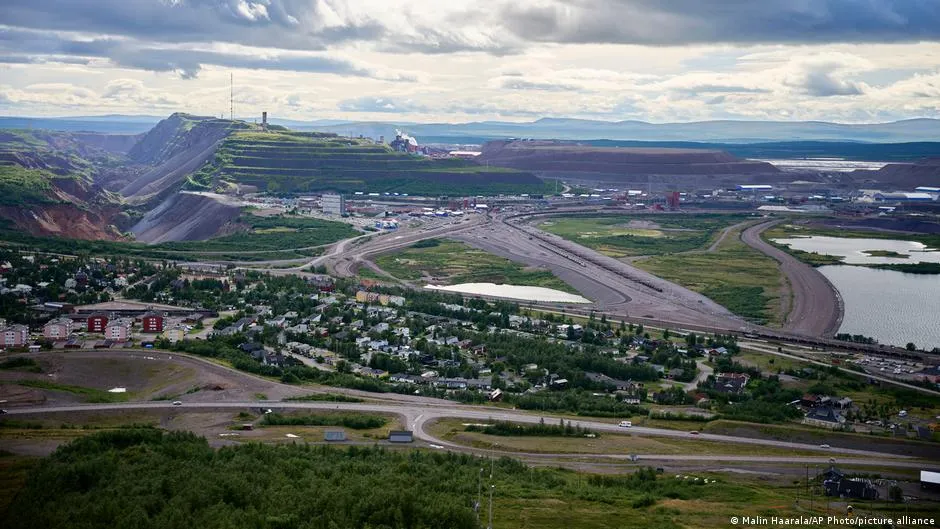
Sweden has declared the mining of critical minerals and rare earths a national security interest. The move is designed to ease and expedite the permit process, countering dependence on China.
Sweden just reclassified critical minerals and rare earths as a national security interest. That designation is meant to do something very practical: ease and expedite the mining permit process, so projects do not stall in regulatory limbo. It is also a direct response to a problem many boardrooms are already circling, China dependence.
The key decision is not a new deposit or a new technology. It is the policy framing. By treating mining as a national security interest, the Swedish government signals that permitting timelines are now strategic timelines. In plain terms: the government is trying to move faster on the inputs the modern economy uses, especially the rare earths that can be hard to source reliably.
Why does this matter beyond Sweden’s borders? Because critical minerals are rarely “just commodities.” They sit upstream of electric vehicles, wind power, advanced manufacturing, and defense supply chains. When a country leans heavily on a single geopolitical supplier for these materials, it inherits the supplier’s leverage. The supply chain becomes a political channel, not merely an economic one. So when Sweden says the step is needed to counter dependence on China, it is not making a vague comment. It is pointing to a specific kind of risk that investors and operators understand well: disruption risk tied to market power and international relations.
Under the hood, national security classifications tend to change how permitting works. The source does not spell out every procedural detail, but it is clear about the intent. Sweden declared mining of critical minerals and rare earths as national security interest to “ease and expedite” the permit process. That matters because permitting is often where projects lose time, incur additional costs, and face uncertainty. Even when mining resources are available, the time to approvals can stretch, which affects financing, engineering schedules, and feasibility. In executive terms, faster permitting can lower time-to-cash and reduce the risk that a project becomes stranded before it starts generating value.
This also changes the way governments talk to industry. When a ministry frames a sector as national security, the conversation shifts from “will this work economically” to “will this work strategically.” That shift can influence how agencies prioritize applications and how project developers plan their compliance pathways. It can also raise expectations among operators about regulatory responsiveness, because the state is signaling that these projects are not optional extras.
There is a second-order implication that boards should not ignore. When a government accelerates permitting for strategic minerals, it can intensify competition for permits and projects across the region. Other countries looking at Sweden’s move may reassess their own permitting bottlenecks, especially if they also aim to reduce China reliance. For companies operating in multiple jurisdictions, this can reshape the competitive landscape quickly. A timeline advantage can translate into a supply advantage, and supply advantages tend to attract capital, partnerships, and long-term offtake agreements.
Another knock-on effect is the narrative investors attach to these projects. If mining is positioned as a national security interest, it can become easier to justify funding, because the objective is broader than pure commodity economics. That can alter how CFOs evaluate risk-adjusted returns. Even so, speed has to be balanced with operational reality. Expediting permits may reduce some delays, but it does not remove the need for technical work, environmental planning, community engagement, and grid and logistics considerations. Executives should treat “faster permitting” as a timeline shift, not a guarantee of immediate production.
For peers in similar roles, the takeaway is uncomfortable in a good way. Policy is now moving with the same urgency as supply chains. Sweden’s decision highlights the growing belief that critical minerals are strategic assets, not background inputs. And if Sweden is easing permits to counter dependence on China, other governments likely see the same vulnerability in their own supply chains. The strategic stakes are clear: who controls access to critical minerals and rare earths controls leverage in the industries that increasingly define growth, energy transition, and defense readiness. Sweden is trying to shorten the path from resource to extraction. Markets and boards elsewhere will be watching how quickly that policy translates into real project momentum.
This story's Key Insights and Take-aways are locked.
Create a free account to unlock Executive Actions for one credit.
Register to UnlockAlways free for Executives Club members. Join the Club
More in Politics

Obama Defends Ilhan Omar After Agents Search Her Home in Trump Inquiry
The former president's intervention raises the stakes in a federal probe into immigration paperwork that has put a prominent progressive lawmaker in the crosshairs.

Blair-era minister: cut welfare to fund youth job support
Alan Milburn's call for welfare cuts to fund employment support opens a Labour fight over benefits and the Neet crisis.

Hot September CPI: energy costs surge, voters feel the squeeze before midterms
The latest inflation print lands as Trump campaigns for GOP control of Congress, putting cost-of-living worries at the center of the midterm fight.