

Switch 2 mouse mode still feels optional after 1 full year
Nintendo promised a better way to aim, but developers have not turned mouse controls into a must-have feature.
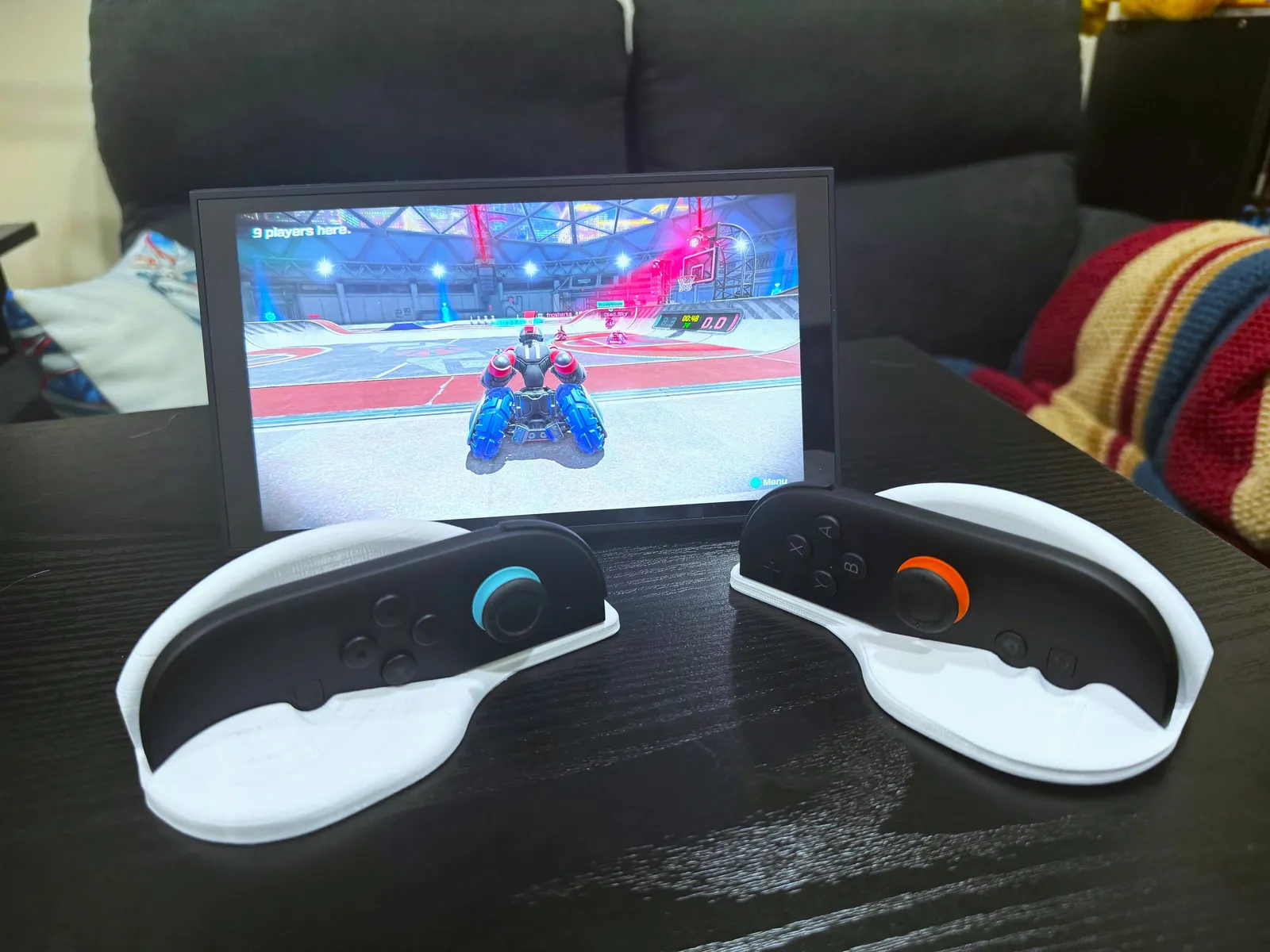
Nintendo positioned Switch 2 Joy-cons as mouse-like controllers, but a full year after release, mouse controls have not delivered a breakthrough. For decision-makers, the gap is a signal about whether platform-specific features will become real market demand or stay niche.
When Nintendo first announced that each Switch 2 Joy-con could function like a computer mouse, it sounded like a rare, practical upgrade. It also set an expectation that the control scheme would quickly spread beyond a small set of experimental uses. A year later, that promise has not really landed. Mouse controls have not had the kind of breakthrough that makes them feel necessary across the Switch 2 catalog.
That lack of momentum matters because the “mouse mode” was positioned as a major selling point. The core question for players and developers alike is simple: do people actually want it, or do they just try it once and move on? After one full year, the answer from the market is: mouse controls still have not impressed enough to become essential.
To understand why this is sticking, start with what Nintendo was trying to solve. The Nintendo Switch lineage has always leaned into playability and portability, sometimes at the expense of precision. Mouse controls, especially in genres like first-person shooters, are a shortcut to that precision. So the initial idea makes sense. But Nintendo also faces a familiar challenge: new control mechanics only become “real” when enough developers build around them in ways players feel immediately.
And according to Polygon’s perspective, the early skepticism was not irrational. The piece points out that Nintendo had previously struggled with a control feature on the original Switch: its rarely used IR sensors. That history is important because it shows how an innovative input concept can fail to become a standard even if it works on paper. If a feature does not become broadly supported, players stop expecting it. Developers stop designing around it. The whole ecosystem quietly reroutes toward what is already convenient and familiar.
So what happened with Switch 2 mouse controls? The expectation was that there would be a few games at launch that used mouse controls in clever ways, and then a broader wave of adoption would follow. Polygon frames the outcome as a different reality: while a few games might use the scheme up front, very few dared to experiment after that. In other words, the early proof-of-concept did not turn into ongoing investment, and the feature did not become the “default” way to play.
This is where incentives start to matter for executives. Developer teams do not just choose control schemes based on novelty. They choose based on how much engineering, testing, and design work it takes to make the experience good. A mouse-like interface also raises expectations. If aiming feels even slightly off, players notice fast, especially in precision-heavy games. That means the cost of doing mouse controls “right” is likely higher than the cost of supporting them “adequately.” If the market does not show demand, the risk rises.
There is also a platform-ecosystem effect. When a console brand introduces a new input mechanic, it is effectively asking developers to bet on future player behavior. If consumers do not reward the experiments with usage, developers do not see the ROI they need to keep investing. Then the platform’s feature stays in the category of “nice to have.” The longer it stays there, the harder it becomes to flip it into mainstream demand. One full year is enough time for the platform to show whether the loop is working.
Regulatory background may not be the obvious parallel here, but the broader governance of consumer electronics and platform standards often rewards clarity and discourages fragmentation. When control methods proliferate without clear, consistently supported benefits, consumers can end up with a confusing mix of options across games. Even without any specific regulator stepping in for this particular feature, the underlying principle is the same: ecosystems that reduce friction tend to win. Mouse controls may reduce friction for certain players in certain genres, but if adoption remains limited, the ecosystem never fully commits.
The second-order implication for decision-makers is that platform features can lose their momentum quickly if developers do not scale support. If Switch 2 mouse controls do not become necessary after a year, the lesson is broader than one console generation. Boards, investors, and platform strategists should watch for whether new hardware features become sticky through sustained software investment. Otherwise, the product pitch stays ahead of the library reality, and that gap becomes a chronic trust issue. In a crowded market, trust is not a soft metric. It directly affects how willing players and developers are to try what comes next.
This story's Key Insights and Take-aways are locked.
Create a free account to unlock Executive Actions for one credit.
Register to UnlockAlways free for Executives Club members. Join the Club
More in Entertainment

Christopher Nolan’s “The Odyssey” posts his biggest Tuesday haul, surpassing “The Dark Knight’s” record
The film’s Tuesday breakout reframes Nolan’s box-office ceiling and forces competitors to rethink timing, budgets, and release strategy.

Kacey Musgraves cancels Aug. 20, 29, Sept. 2 Middle of Nowhere shows
Ticketmaster emails are telling fans refunds are coming, while the tour still starts Aug. 21 in Chicago.

Billie Joe Armstrong launches Epiphone Les Paul Junior and Marshall 1959BJA signature gear
Two limited releases turn decades of Green Day’s tone into branded hardware, including Marshall’s first artist amp in 14 years.