
Syracuse prosecutors rushed Alice Sebold’s 1981 rape case, and exoneration followed 40 years later
A lineup failure, quick grand jury action, and stalled system protections left victims stranded long after Broadwater’s conviction.
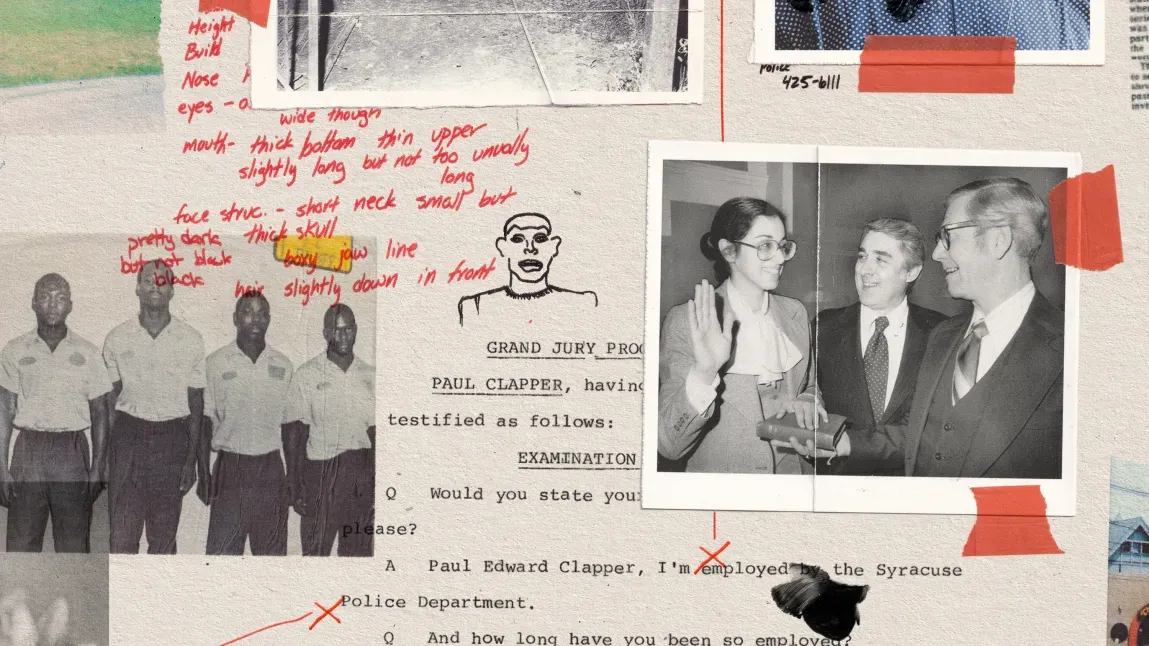
In ProPublica’s yearslong investigation, Alice Sebold’s 1981 rape case led to Anthony Broadwater’s conviction after a lineup misidentification and prosecutorial moves that kept going anyway. Forty years later, a court vacated Broadwater’s conviction after the Syracuse district attorney joined a motion to clear him.
There’s one brutally simple fact at the center of ProPublica’s investigation: Alice Sebold was raped in May 1981 after walking home through a park, and the system that followed could not be trusted to get it right. Anthony Broadwater was arrested months later and convicted, but his conviction was vacated about 40 years later after the Syracuse district attorney joined a motion to clear him and said in court that Broadwater should never have been prosecuted.
The real shock is not just that the conviction later unraveled. It is how quickly the case was built on what Sebold did not do in the lineup. At the lineup, Sebold did not identify Broadwater as her attacker; she selected a man standing to his left. Police had no other evidence linking Broadwater to the assault aside from a pubic hair sample he had volunteered for comparison to one found on Sebold, which could essentially tell investigators only that both men were Black in a world before DNA testing. And instead of ending the case and treating the failed identification as a stop sign, an assistant district attorney, Gail Uebelhoer, asked Sebold to draft an affidavit on the spot explaining what had happened, and then presented the case to a grand jury hours later.
This is the part that matters to anyone who thinks “the process” is an automated machine for justice. It is not. In Syracuse in the early 1980s, ProPublica reports that no part of the system could be depended on, from police to prosecutors to judges. Police brushed off rapes and consigned cases to inactive files. Prosecutors bungled confessions or were defeated at trial. Judges overlooked irregularities. Meanwhile, Syracuse University appeared to suppress media coverage of a rape epidemic: a former detective explained in a 2025 deposition that if a police report was labeled “NO PRESS,” it meant the university “put their foot down and said no press for any kind of rape, robbery, burglary that’s anywhere in the area of Syracuse University.” A university spokesperson said they were not in a position to speak to actions or decisions of prior administrations, and that the university is now equipped with “comprehensive policies, a steadfast commitment to preventing sexual and relationship violence and robust support structures to help every survivor that comes forward.”
ProPublica’s case reconstruction also shows how incentives can quietly break systems. When police arrest someone who looks like the broad description and has some kind of physical comparison, the next step is often to keep moving forward rather than to pause and ask the uncomfortable question: “What if this is wrong?” Broadwater repeatedly was denied parole because he refused to admit guilt, and after his release in 1998 he was required to register as a sex offender. That is an operational timeline you can feel: time served, procedural momentum, and then, years later, the reversal. In other words, the cost of a bad early decision does not stay in the courtroom. It compounds in the form of lost parole opportunities, registry burdens, and a long tail of harm for the people the case was supposed to protect.
The courtroom details read like an audit trail of missed safeguards. Broadwater and his lawyer hoped a bench trial would improve their chances, with a judge deciding instead of a jury. But ProPublica reports the judge seemed to have a soft spot for Sebold. In her memoir, Sebold recalls that the judge spoke privately to her during a break, expressing concern about how she was holding up and asking about her family. The investigation also describes how the judge allowed Uebelhoer, then visibly pregnant and no longer handling the case, to take the stand as a witness for the prosecution, where she appeared to imply that Broadwater was responsible for Sebold’s botched identification at the lineup. Immediately after closing arguments, the judge found Broadwater guilty without leaving the bench to deliberate.
And even then, the system’s failure did not end with one conviction. Only four months after the trial, a high schooler named Thomas Weakfall admitted raping five women, four within a mile of Thornden Park. There is no evidence Weakfall attacked Sebold, but ProPublica reports he matched key elements of the description Sebold gave: Black, 16 to 18 years of age, about 5’7” and 150 pounds. Weakfall was Black, 16 years old, 5’9” and 140 pounds, according to police reports, while Broadwater was 20, stood 5’6” and weighed about 175 pounds. Yet the rape case against Weakfall collapsed because his confession was deemed inadmissible. Officers had taken his statement without a defense attorney present, unaware that Weakfall already had counsel for an unrelated burglary charge. He ultimately pleaded guilty to second-degree burglary, got five years probation, and was released.
Second-order implications jump out here for decision-makers who manage risk and accountability in any organization. This case illustrates how “keep going” habits can overwrite signals that something is off. A failed lineup identification did not stop the engine; it became paperwork. A later confession did not translate into a conviction because of procedural missteps about counsel presence. And the broader ecosystem, including Syracuse University’s apparent “NO PRESS” approach at the time, shaped what information could reach the public and what pressure might force better investigation.
For executives, investors, and board members watching how systems behave under stress, the lesson is not that justice is fragile. It is that justice, like any complex operation, depends on whether people treat early discrepancies as urgent, not inconvenient. ProPublica’s investigation suggests that in Syracuse, the answer was too often the opposite. The result: one person’s conviction held for decades, victims stayed stuck with unanswered questions, and the process kept running even as the evidence pointed elsewhere. That is the kind of failure that should make any operator ask whether their own process catches the “failed identifier” moment before it turns into a long institutional scar.
This story's Key Insights and Take-aways are locked.
Create a free account to unlock Executive Actions for one credit.
Register to UnlockAlways free for Executives Club members. Join the Club
More in Science

Alaska's 1,580-foot tsunami had warning signs. Scientists just found them.
Rapid glacier retreat, heavy rainfall, and thousands of tiny tremors preceded Alaska's 1,580-foot tsunami, a warning for every coastal community in a warming world.

The rare mutation that lets high-risk brains dodge Alzheimer's
Scientists found a natural defense against protein buildup, opening a new path to preventive treatments.

3,000 steps a day may halve Alzheimer's decline, study finds
New research links a modest daily walk to less tau buildup and nearly half the cognitive and functional decline, even for those with early signs.