
T.I. and Tiny lose punitive bid, keeping MGA OMG Girlz damages capped at $18M
After four trials in six years, the federal jury refused to add punishment on top of the $18 million award.

T.I. and Tiny’s attorneys said a federal jury rejected their request for additional damages after the Harrises previously won $18 million against MGA in the OMG Girlz doll case. The outcome blocks punitive damages, reshaping litigation leverage and IP enforcement expectations in the toy-licensing ecosystem.
A federal jury has refused to tack on punitive damages in T.I. and Tiny Harris’ OMG Girlz doll fight, keeping the couple’s award capped at $18 million.
According to lawyers for T.I. and Tiny, the jury rejected the Harrises’ request to add additional damages onto the $18 million they previously won from toy company MGA, for copying their teen pop group OMG Girlz with a line of “O.M.G.” dolls. At this round, the couple argued the infringement was intentional and malicious, but the jury was not persuaded. In other words: MGA still lost money, but the Harrises could not convert that loss into a bigger punishment.
Why this matters to decision-makers is not just the headline number, it is the mechanism. Punitive damages are designed to punish conduct that goes beyond ordinary infringement, and the Harrises’ attempt to reframe MGA’s behavior as willful and malicious is exactly what did not land with this jury. The Harrises’ attorneys said in a statement to Billboard that they “appreciate the jury’s time and consideration but are disappointed in the verdict,” and argued that MGA’s policies were inadequate to prevent this type of IP infringement. They also criticized MGA’s document retention and collection procedures as “equally as suspect,” while saying, “We will continue to fight for our clients' rights and the rights of all creatives.” MGA did not immediately comment.
This is the fourth trial in six years over the O.M.G. dolls, and the case has already been through multiple procedural swings. T.I. and Tiny began alleging in 2020 that MGA’s dolls ripped off the name, outfits, and neon-colored hair associated with OMG Girlz, a trio founded by the Harrises in 2009 that includes their daughter Zonnique Pullins, alongside Bahja Rodriguez and Breaunna Womack. MGA has consistently denied any infringement.
The road to Wednesday’s verdict was not linear. An initial trial ended in a mistrial in 2023 because of improper testimony about racism. Then, at a second trial later in 2023, a jury cleared MGA of wrongdoing entirely. But that cleared verdict was wiped on appeal amid evolving Supreme Court precedent, which meant the fight resumed with a third trial in 2024.
That third trial was the turning point on liability and damages. A jury found that MGA intentionally copied the OMG Girlz and awarded $18 million in profits, plus $53 million in punitive damages, for a total of $71 million. But the punitive damages did not survive intact. Last summer, a judge wiped out the punitive damages after determining that the Harrises had not put forth “clear and convincing evidence of willful infringement or conscious disregard for the rights of others.” That legal standard is a key reminder for boards and in-house counsel: even when a jury finds intentional copying, punitive damages can still fall if the evidence does not meet the required threshold.
So the current mini-trial, which took place this month, was narrower. It focused only on the question of punitive damages, after the punitive portion was removed by the judge. The result was a jury-sided-with-MGA outcome on Wednesday. For the Harrises, the cap at $18 million means the financial consequence stays tied to profits rather than escalating into a broader punitive message.
For the broader IP and consumer-product world, the second-order implications are hard to ignore. Toy brands and licensing models live and die by speed, supply-chain realities, and the fine line between inspiration and infringement. When a case takes six years and multiple trials, it becomes expensive not only for the parties, but for how similarly situated licensors and rights holders calibrate their enforcement strategy. Do you push for punishment when liability is already established, or do you accept profits and avoid the evidentiary burden that punitive damages require? For studios, labels, and creator-led IP holders, punitive damages can be the difference between a one-time settlement and a deterrence effect that changes industry behavior.
And for MGA and its peers, a punitive damages cap can quietly shift risk calculus. If punitive damages are repeatedly vulnerable to legal standards like “clear and convincing evidence,” defendants may view intentional copying findings as financially bounded under certain evidentiary conditions. That does not erase liability, but it changes the pressure points in settlement talks and trial strategy.
Bottom line: T.I. and Tiny’s attorneys confirmed that the latest jury decision rejected a punitive damages add-on, leaving the Harrises with the $18 million award from the OMG Girlz doll copying case. The couple’s attorneys say they will keep fighting, but for now, the punishment lever is frozen. For executives and boards watching IP enforcement across toys, fashion, music branding, and fandom culture, this case is a reminder that outcomes can hinge less on whether copying happened, and more on whether evidence clears the exacting bar for punitive escalation.
This story's Key Insights and Take-aways are locked.
Create a free account to unlock Executive Actions for one credit.
Register to UnlockAlways free for Executives Club members. Join the Club
More in Business
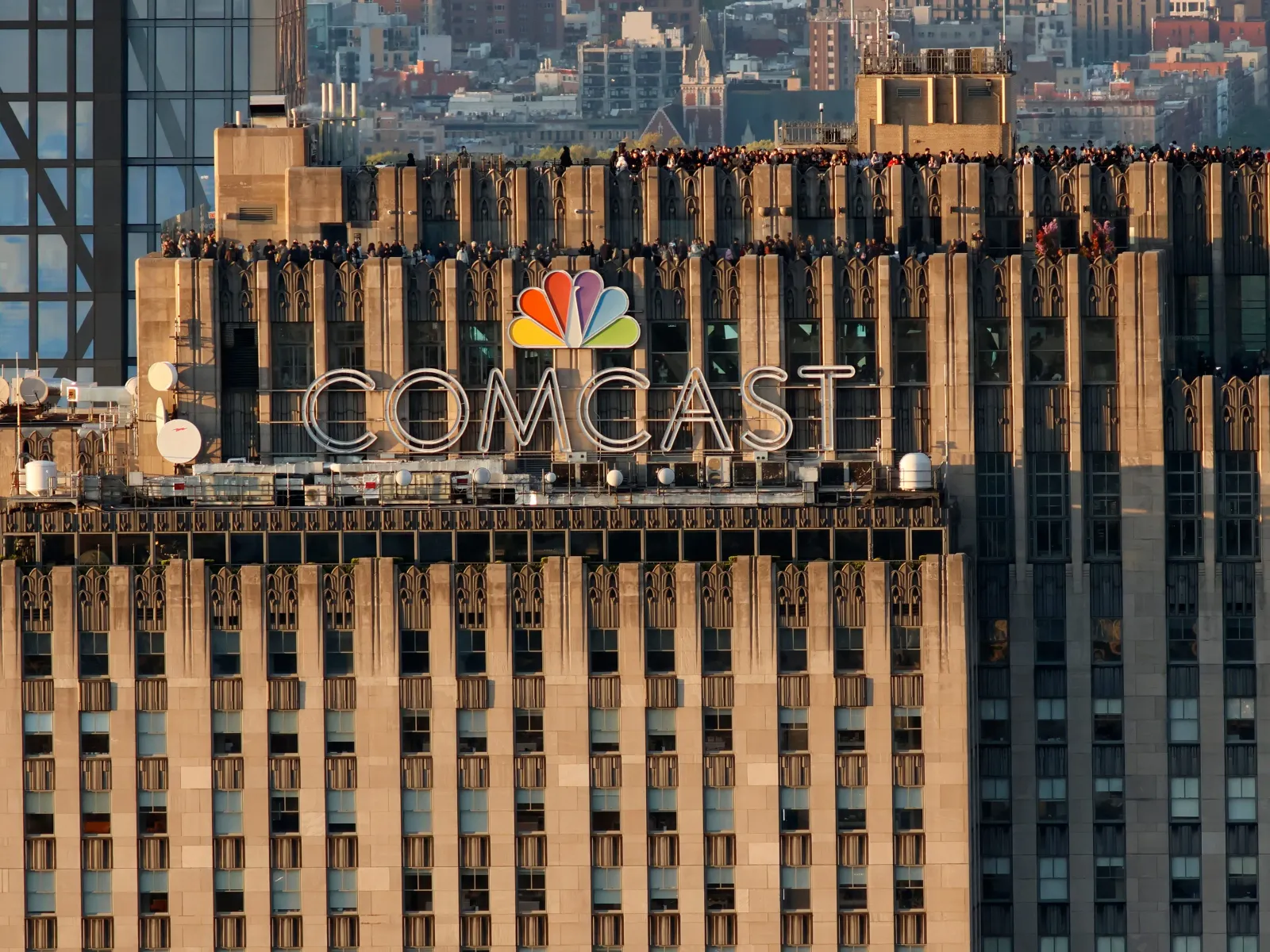
Comcast shares jump 25% as it plans to split NBCUniversal and Sky
The tax-free spin-off could reshape focus, funding, and competition across media and tech for years.

Bungie cuts most Destiny 2 staff as Sony says Marathon still matters
Herman Hulst confirms layoffs affecting most Destiny and some Marathon teams after Bungie admits Destiny fell short.

SK Hynix jumps 11% after seeking up to $29.4B in Nasdaq listing
The chip giant filed for a Nasdaq listing plan that could raise $29.4 billion, instantly reshaping investor expectations.