
T2 raises $30M for self-driving trucks, betting Japan’s logistics AI rules are coming
The venture secures fresh funding as autonomous trucking moves from pilots to deployable operations.

Japanese self-driving truck venture T2 has raised $30 million. The funding gives decision-makers a clearer read on how quickly autonomy investment is progressing in logistics, and what to expect from Japan's next regulatory and commercial milestones.
Japanese self-driving truck venture T2 just raised $30 million, a signal that autonomy investors are still willing to fund the hard part: getting self-driving trucks to work in the real world. For a sector that has spent years stuck in the “pilot forever” phase, a $30 million round is a vote of confidence that the market is moving toward something closer to deployment, not demos.
T2 is operating in a category where the money only makes sense if the bottlenecks are shrinking. In logistics, that means autonomy has to prove it can handle boring-but-deadly realities like complex routing, predictable driver-like behavior around trucks and obstacles, and reliability under commercial schedules. The headline stake here is simple: T2 raised $30 million, and that kind of capital typically exists to accelerate product readiness and operational learning, not to watch the calendar roll past another academic-style trial.
To understand why this matters to executives, zoom out to how autonomy usually gets funded. Investors do not write big checks for vague “future tech.” They fund teams that can show a path from engineering to operations. In self-driving trucking, the path depends on both technical performance and regulatory framing. Even when the vehicle technology is impressive, the business still needs permission and clarity to scale on public roads, plus a system for safety documentation, operational constraints, and incident response. Every time regulators and operators align those pieces, it creates a new kind of confidence for capital markets.
Japan is an important setting because it is not starting from zero. The country has been building momentum around automation across transportation and industry for years, and its logistics ecosystem is under pressure from aging labor forces and the need for cost control. That pressure matters because autonomy in trucking is not just about cool gadgets. It is about keeping supply chains moving while labor availability tightens and freight volumes remain operationally non-negotiable. When a venture can credibly position itself as “autonomous logistics infrastructure,” it can attract funding that looks more like strategic capability building than pure R&D.
The second reason T2’s $30 million matters is competition. Autonomy funding is global, but execution is local. Teams in one geography learn the rules of that market faster: which routes are feasible, how to collaborate with testing partners, how to handle service expectations, and how to document performance in ways regulators accept. Fresh capital can help T2 compress that learning cycle. It can also influence hiring, partnerships with logistics operators, fleet deployment strategy, and the hardware and sensing roadmap needed to reduce edge cases that derail commercialization.
For boards and CFOs, there is also a governance implication. Autonomous vehicles are expensive to develop, expensive to test, and expensive to insure, and the funding runway determines whether a company can survive the inevitable iteration churn. A $30 million raise does not guarantee success, but it can materially extend the time window to reach the next milestone that investors and customers care about. That milestone could be improved operational coverage, expanded test footprint, or the ability to run more complex use cases with fewer constraints. In ventures like this, the “next milestone” is where the valuation story either gets sharper or starts to unravel.
Second-order, T2’s raise can shift expectations across the investor landscape. When one player in a niche category lands a meaningful round, it tends to pull forward attention from other capital sources that were waiting for proof that autonomy investment can translate into measurable progress. That does not mean everyone will copy T2’s approach, but it can change the timing of due diligence and the intensity of competitive positioning. In practical terms, executives at logistics tech firms and autonomy suppliers should expect faster partner conversations, more benchmarking, and a higher bar for what counts as “scalable readiness.”
Strategically, the stake for decision-makers is that autonomous trucking is likely to keep moving from engineering outcomes to operational outcomes. T2 raising $30 million makes that transition feel more imminent. The next question for the market is whether autonomy can earn the right to operate at scale, consistently, and on schedules that logistics companies actually care about. If T2 can use this capital to clear the next operational and regulatory hurdles, it becomes more than a funding headline. It becomes a reference point that others will measure against.
This story's Key Insights and Take-aways are locked.
Create a free account to unlock Executive Actions for one credit.
Register to UnlockAlways free for Executives Club members. Join the Club
More in Business

Uber buys Delivery Hero for nearly $15B, vaulting to top food delivery outside China
The deal doubles Uber's dual-services footprint and pushes a ride-and-eats bundling play into 50 more markets.

Epic and Google drop settlement bid, forcing rival Android app stores by July 22
Google told the court it is ready to carry third-party app stores starting Wednesday, July 22.
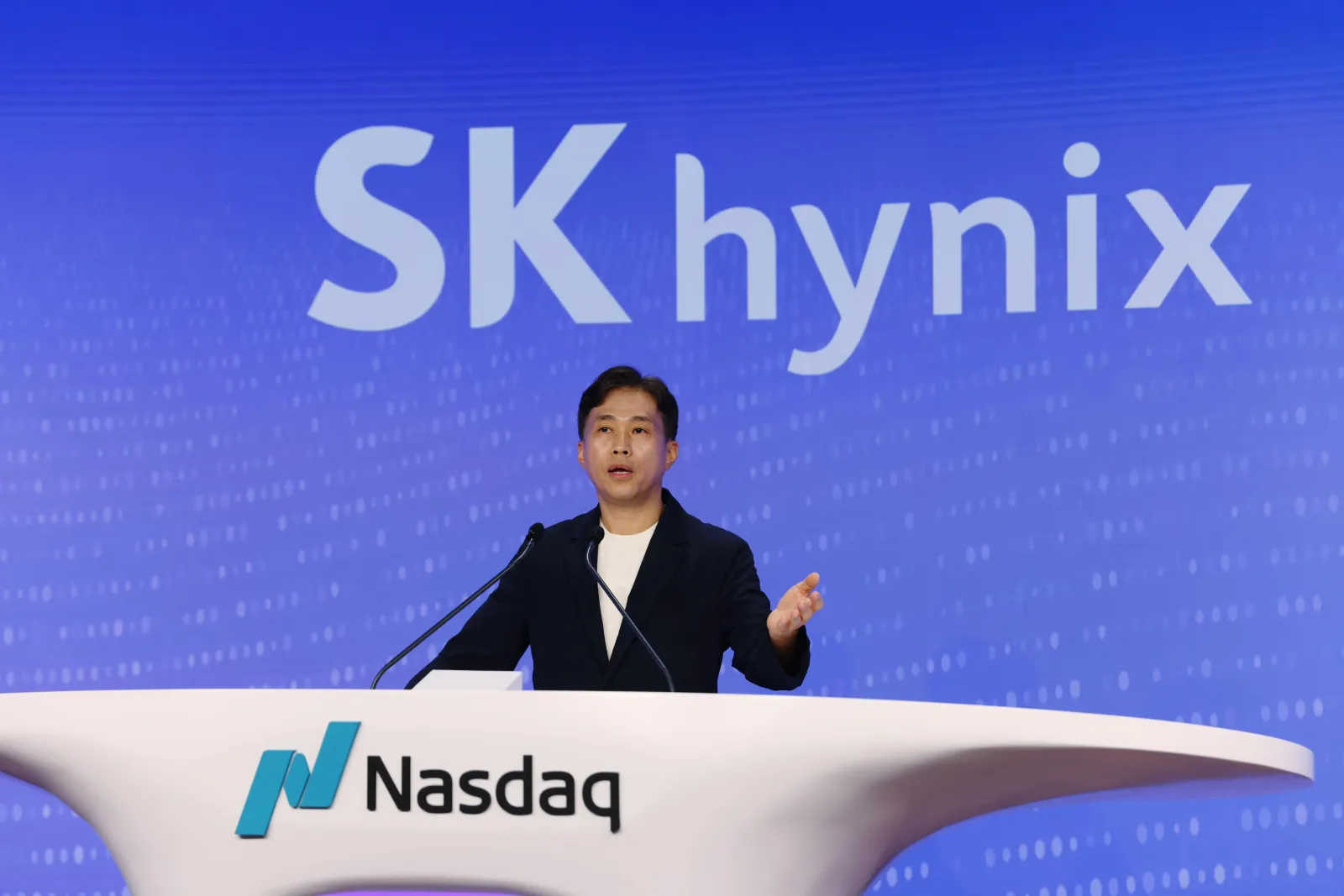
SK Hynix opens at $170, raises $26.5B, and tops foreign IPO records
In Friday's Wall Street debut, SK Hynix turns AI RAM demand into a $26.5B fundraising moment that rewrites comps.