

Taylor Swift debuts “I Knew It, I Knew You” live at Toy Story 5 premiere
At the June 10 Los Angeles event, Swift also duets “You’ve Got a Friend in Me” with Randy Newman.
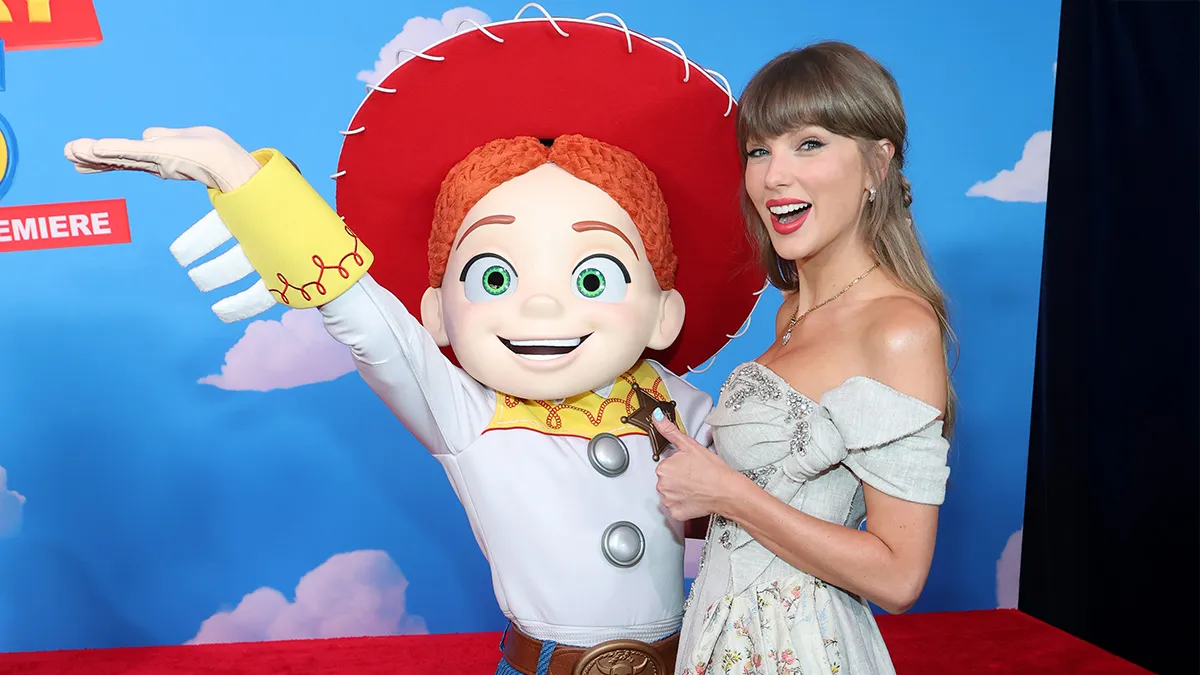
Taylor Swift appeared at the Toy Story 5 premiere in Los Angeles on Tuesday, June 10th. She debuted her original soundtrack song “I Knew It, I Knew You” live and performed a duet of “You’ve Got a Friend in Me” with Disney legend Randy Newman.
Taylor Swift showed up at the Toy Story 5 premiere in Los Angeles on Tuesday, June 10th and treated the crowd like it was opening night for two franchises at once. She gave the live debut of her original soundtrack song, “I Knew It, I Knew You.” Then she went one step further, performing a duet of Disney classic “You’ve Got a Friend in Me” with Disney legend Randy Newman.
That pairing matters because it is not just celebrity theater. Swift’s original track gets its first live “proof of life” in a high-visibility public moment, and the Newman duet ties her performance directly into the emotional DNA of Toy Story, not just the marketing calendar. In other words, the premiere did not just announce a movie. It staged a generational handoff, with Swift acting like a bridge and Newman acting like the source.
For executives, this is a reminder that entertainment deals increasingly behave like brand strategy, not only content distribution. A soundtrack contribution used to be a quiet credit line. Now it can be a headline moment engineered to generate repeat viewing, social clips, and word-of-mouth that performs like advertising without relying purely on paid media budgets. The event gives audiences an immediate reason to care beyond trailers. They hear something new, in a context they already trust, with the kind of recognizable cultural gravity that makes people pay attention.
There is also a practical incentive structure hiding under the glitter. Premiers are concentrated attention markets. When Swift performs both an original and a known classic, the attention is split across two “hooks”: novelty and familiarity. “I Knew It, I Knew You” becomes the novelty artifact, a first listen that fans can claim was “the debut.” “You’ve Got a Friend in Me” becomes the familiarity anchor, a song that carries built-in meaning for audiences who grew up with it. Executives know that attention has a shelf life. You want the moment to convert interest quickly, before the internet moves on.
Now zoom out one layer and think about why this kind of performance can influence second-order outcomes. When major artists and legacy creators share the stage, the perceived risk of the collaboration drops. Fans are not just reacting to a song. They are reacting to the implied relationship between the artist, the IP, and the original cultural ecosystem. That can make the surrounding rollout easier for studios and labels because the audience is already primed to interpret the collaboration as authentic.
From a governance and compliance standpoint, the source does not mention regulatory issues tied to this specific performance. Still, it fits the broader reality executives deal with: live events and broadcast moments typically involve rights management, licensing, and clearances across music publishing, performance permissions, and likeness. Even when the public sees only the performance itself, behind the scenes there are usually contractual details that determine what can be performed, where it can be shown, and how footage may be used. That matters because the value of a moment like this depends on distribution. If clips cannot legally travel, the reach shrinks.
For boards and senior leaders, there is a strategic takeaway in the simplicity of what happened. Swift did not just attend. She delivered. Her original soundtrack song got a live debut, and she performed alongside Randy Newman in a duet of “You’ve Got a Friend in Me.” This is the kind of integration that strengthens the entire go-to-market chain: the film gets cultural relevance, the music gets a stage, and the artists get a premium spotlight tied to a recognizable IP. Similar projects can read this as a blueprint for maximizing synergy without turning it into overcomplicated messaging.
If you are an executive watching this, the stake is straightforward: can you turn “content release” into “cultural event” with measurable distribution advantages? Premiers are already expensive and high effort. The difference is whether they create an artifact people want to replay and repost. Taylor Swift and Randy Newman delivering those specific songs on June 10 in Los Angeles is exactly the kind of replayable moment studios, labels, and brand partners chase because it can extend the campaign long after the lights go down.
This story's Key Insights and Take-aways are locked.
Create a free account to unlock Executive Actions for one credit.
Register to UnlockAlways free for Executives Club members. Join the Club
More in Entertainment

Entertainer Russell Brand denies 7 sex charges amid accuser's 'couldn't breathe' claim
The alleged victim's account sharpens the reputational and legal stakes for Brand, his platforms, and any business tied to a public figure under criminal scrutiny.

Russell Brand's accuser 'bewildered and confused' as he denies 7 sex charges
The criminal case against the comedian is a live test of how media companies manage talent risk when serious allegations go public.

'It's a Magic Trick': Ballet Experts Say Rosalía's SNL Pose Is Impossible
Three ballet experts tell Rolling Stone Rosalía's gravity-defying SNL stillness shouldn't be possible - and why the debate is now part of the show.