
Tencent tests WeChat’s AI assistant “Xiaowei” to tackle China’s AI race
A limited rollout inside WeChat connects AI help to mini-program tasks by text or voice, reshaping how users get work done.

Tencent is testing an AI assistant called Xiaowei inside WeChat, with a limited rollout. The move gives executives a concrete signal that WeChat is turning AI into a workflow layer, not just a standalone chatbot.
Tencent is testing an AI assistant inside WeChat, and it is specifically called Xiaowei. In the limited rollout, Xiaowei can help users complete tasks using either text or voice, working across WeChat's library of mini-programs.
That detail matters because it tells you what kind of AI Tencent is building. This is not positioned as a separate destination where users chat and then go back to their day. Instead, Xiaowei is being tested as an assistant embedded in WeChat, the app that already acts as a gateway to a huge range of services through mini-programs, meaning AI can drive outcomes inside the existing app ecosystem.
To understand why this is a big deal, you have to zoom out to how competition in AI usually plays out. In many markets, the race starts with models and copilots, then quickly turns into distribution and product surfaces. Whoever gets the assistant onto the most frequently used interface has a shot at becoming the default “doer” for everyday tasks. WeChat is one of those interfaces where distribution is not a marketing campaign, it is daily habit. So using WeChat to test Xiaowei is a way to compress the distance between an AI request and the underlying service completing the task.
We should also be clear about what “limited rollout” implies. It usually signals controlled testing: narrowing early access, measuring what users try, and iterating on reliability and safety before broadening. In practice, when an AI assistant is embedded inside a platform with real transactions and real user intents, the bar for performance and governance rises. The assistant has to handle ambiguous requests, follow through on tasks in mini-programs, and do it in a way that fits the platform’s product and compliance expectations.
This happens in the shadow of China’s intensifying AI race, where companies are racing both on capability and on integration. A standalone AI product can win attention. But integration is what turns attention into retention and revenue. By letting users complete tasks by text or voice across WeChat's mini-programs, Xiaowei is designed to sit closer to the “moment of need” than a generic chatbot. That is exactly the kind of product move that can change user behavior, because it reduces the number of steps between “I want to do X” and “X is done.”
Regulatory and oversight realities also shape how these launches unfold. While the source does not spell out specific rules for Xiaowei, the broader point for executives is that AI assistants operating inside large consumer apps typically face heightened scrutiny around content, user protection, and data handling. That makes controlled rollout a strategic necessity, not just a technical choice. It also affects partnerships. When an assistant is responsible for taking user intent and translating it into actions across mini-programs, governance needs to work across product teams, service providers, and operational controls.
Now for the second-order implications, the ones boards and leadership teams actually feel. If Tencent can successfully test Xiaowei as a task-completing assistant across mini-programs, it sets a new expectation for what an AI assistant should do. Users will start to compare not just the intelligence of the response, but the ability to move from request to completion. That shifts competitive pressure onto other platforms and AI providers that currently compete on chat or search. The new battleground becomes workflow coverage: how many real-life tasks the assistant can reliably trigger, and how smoothly it can connect to the services users already trust.
For decision-makers at companies with large user ecosystems, the message is uncomfortable in the best way. The AI race is not only about models. It is about where the assistant lives, how it speaks to users, and whether it can reliably navigate the web of in-app services. Tencent’s Xiaowei test inside WeChat signals that the integration strategy is now moving from idea to trial. If it works at scale, it can turn WeChat into an even tighter loop of demand and fulfillment, and it can make “AI assistant” synonymous with “service execution” in everyday consumer life.
This story's Key Insights and Take-aways are locked.
Create a free account to unlock Executive Actions for one credit.
Register to UnlockAlways free for Executives Club members. Join the Club
More in Business

A flaw in PHP just forced governments to pull their own sites offline
European agencies from Belgium to Germany took websites dark to patch a critical weakness in the language behind almost 70% of the web, and the blast radius extends far beyond government portals.

BioWare shuts down, Mass Effect 5 dead after $55B EA buyout
The legendary RPG studio's closure lands months after a $55 billion investment group buyout of EA, raising tough questions for gaming's biggest acquirers.
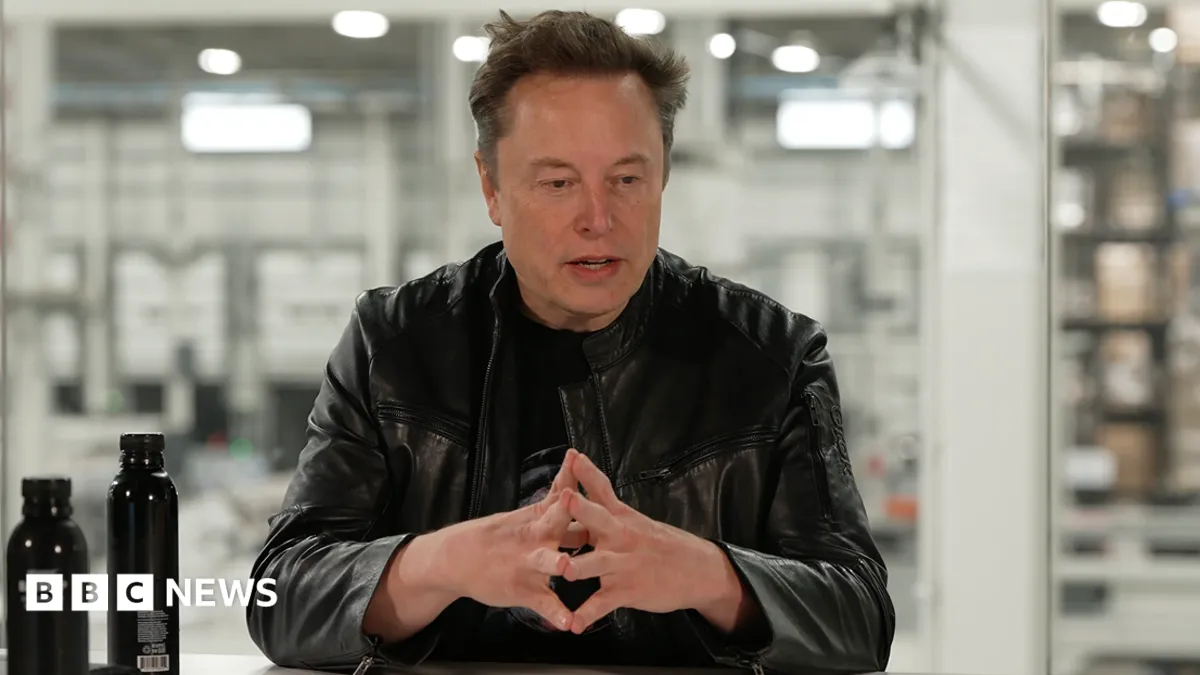
Musk weighs Tesla-SpaceX mega-merger as boards form review panels
Special committees at both companies will examine a tie-up that could fuse electric vehicles and space launch, forcing a fresh look at governance and valuation.