

Tesla Q2 deliveries hit 480,126 as stock tumbles, despite the surge
A delivery win for Elon Musk and Tesla hits 480,126 in Q2, yet investors punish the stock.
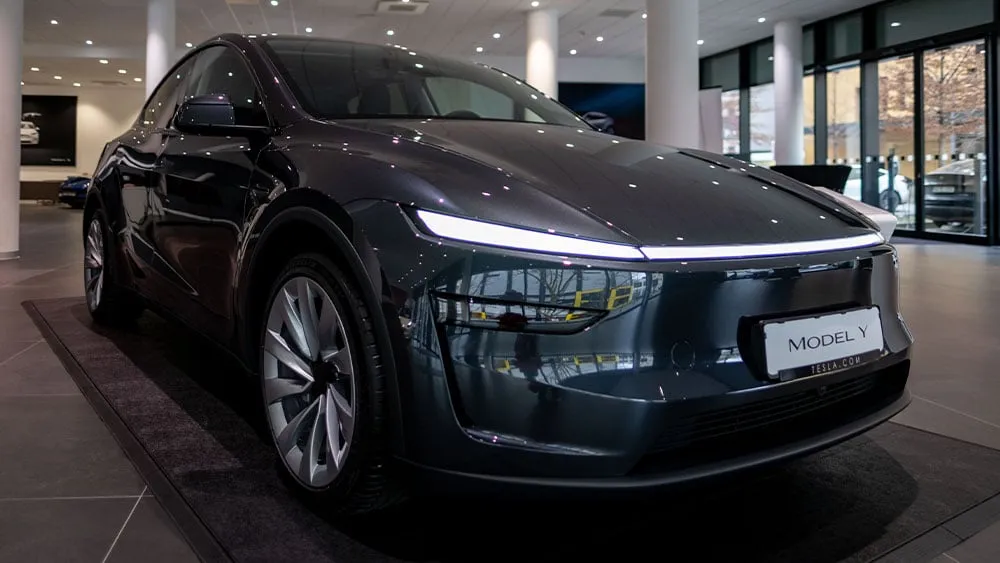
Tesla delivered 480,126 vehicles in Q2, according to Yahoo Finance coverage. The gap between delivery strength and a falling stock creates a live question for executives: what matters more now, volume or margin and forward guidance.
Tesla’s Q2 numbers look like a headline machine. Deliveries surged to 480,126 vehicles in the quarter. On paper, that is the kind of datapoint that typically signals momentum: more cars leaving factories, more revenue potential, and more proof that demand is still there.
But the “soar” does not translate into investor comfort. Yahoo Finance notes that the EV giant’s stock tumbled even as deliveries rose to that 480,126 level. That combination, deliveries up but shares down, is the central tension executives need to understand fast. It suggests that the market is not simply buying the story of higher shipment counts. Instead, it appears to be weighing what those deliveries mean for profitability, pricing pressure, and the next set of expectations investors are trying to underwrite.
To decode why this matters, zoom out to how EV markets usually price risk. Public markets tend to treat early-stage demand wins and production scaling as necessary, but not sufficient. Delivery growth can be “good” and still fail to satisfy the specific set of questions that move a stock: Are companies forced into discounting? Does mix improve or worsen? Do incentives rise? Are margins compressing even as volumes expand? When shares fall in the face of a big delivery print, it often implies investors are prioritizing the profitability trajectory and forward momentum more than the raw topline proxy.
There is also a mechanical reason the stock reaction can diverge from the delivery figure itself. Deliveries are a lagging indicator of vehicle movements that already happened, while stock prices are forward-looking. Investors can react to concerns that today’s volume is being built in a way that pressures future earnings. For example, if increased deliveries are linked to heavier promotions or pricing actions, the market may assume that the revenue per car is under stress. The coverage headline sets up that exact mismatch: 480,126 deliveries in Q2 paired with a “tumbles” stock move.
Regulatory and policy expectations add another layer to how this can play out. In the U.S. and other markets, EV adoption is influenced by subsidies, credit regimes, and rules that can change relative economics across time. When the regulatory backdrop favors EVs, investors often expect producers to capture share and scale. But when the market fears that incentives are being offset by pricing or that policy momentum could be less supportive than assumed, the same delivery headline can land differently. Even without getting into new specifics, the broader point holds: deliveries are a demand and operations metric, but investor confidence is often about how durable the economics are under evolving policy frameworks.
For executives, the second-order signal here is board-level discipline on what you optimize. A delivery surge can mask a weaker cash flow profile if vehicle pricing, cost structure, or working capital dynamics do not cooperate. The board question becomes: are you building a business that improves unit economics as volume grows, or one that requires constant fire-fighting to keep shipments rising? Stock declines alongside delivery strength are a reminder that markets can treat “production success” as table stakes while waiting for confirmation on profitability and sustainability.
For peers and competitors, Tesla’s pattern is not just a Tesla story. It is a benchmark for how the Street can react when EV growth headlines are countered by concerns about the next earnings bridge. If your strategy is volume-first, investors can still demand evidence that each incremental unit improves or at least protects margins. If your strategy is margin-first, you still have to show demand does not evaporate when prices do. The gap between 480,126 deliveries in Q2 and a tumbled stock underscores the market’s intolerance for ambiguity: executives need to make sure they can connect delivery growth to credible financial outcomes, not just operational output.
Ultimately, the Yahoo Finance framing captures a live corporate reality: the market will reward delivery acceleration, but it will punish uncertainty about what that acceleration costs. If you are running an EV business, building a board narrative that answers “what does this do to earnings power?” is not optional. The headline may start with vehicles delivered, but the stock is ultimately reacting to what those deliveries mean for the company’s future economics, and the market is signaling that the answer is not yet satisfying.
This story's Key Insights and Take-aways are locked.
Create a free account to unlock Executive Actions for one credit.
Register to UnlockAlways free for Executives Club members. Join the Club
More in Business

Comcast shares jump 25% as it plans to split NBCUniversal and Sky
The tax-free spin-off could reshape focus, funding, and competition across media and tech for years.

Bungie cuts most Destiny 2 staff as Sony says Marathon still matters
Herman Hulst confirms layoffs affecting most Destiny and some Marathon teams after Bungie admits Destiny fell short.

SK Hynix jumps 11% after seeking up to $29.4B in Nasdaq listing
The chip giant filed for a Nasdaq listing plan that could raise $29.4 billion, instantly reshaping investor expectations.