

Tesla recalls 3M cars in China over hidden door handles
China's safety regulators demand warning labels and OTA fixes, with a 2027 ban on hidden handles looming for all new models.
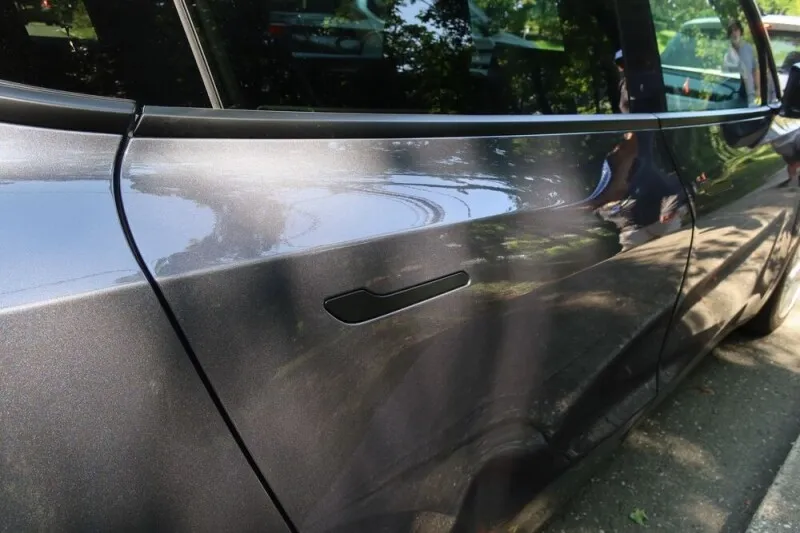
China's market regulator ordered Tesla to recall nearly 3 million vehicles over hidden door handles that could trap occupants in crashes. The move, alongside a recall of 400,000 Xiaomi SU7s, signals a regulatory crackdown that will force automakers to redesign door mechanisms by 2027.
China's State Administration for Market Regulation has ordered Tesla to recall nearly 3 million vehicles over its signature hidden door handles, which regulators say could become a death trap in a crash. The recall, announced this week, affects vehicles sold in China and requires Tesla to affix warning labels and push an over-the-air update that automatically lowers windows after a collision to aid escape. It's a massive logistical operation - roughly a third of Tesla's global fleet - and it lands as the company already faces slowing demand and price cuts in its second-largest market.
The problem is stark: the emergency mechanical door handles are painted the same color as the interior trim, making them nearly impossible to spot in a panic. In a severe crash that knocks out the low-voltage system, occupants might not be able to get out, and rescuers can't get in. That's not just a Tesla issue - Xiaomi is recalling 400,000 SU7 sedans for the same reason, and China has already banned hidden handles on all new models starting in 2027. The ban applies to both interior and exterior mechanical handles, a blunt regulatory signal that safety trumps style.
Hidden door handles have become a design fetish across the EV industry, from Tesla's flush-mounted pulls to button-activated releases on other luxury EVs. The appeal is aerodynamic and aesthetic - a sleek, unbroken body panel that screams futuristic. But regulators are increasingly worried that form is trumping function in the worst possible moment. China's decision to mandate mechanical handles from 2027 is a direct response to a growing body of evidence that hidden handles delay evacuation and rescue. The recall notice itself cites "extreme situations such as a severe collision" where the low-voltage system fails, leaving occupants trapped.
The fix Tesla is deploying is a two-part band-aid: warning labels on the handles (some vehicles already have them) and an OTA update that lowers windows after a crash to create an alternative escape route. It's clever, but it doesn't address the root cause - a handle that's hard to see is a handle that's hard to use. The 2027 ban means Tesla will have to redesign its door hardware entirely for new models, a costly engineering challenge that cuts against its minimalist design DNA. For a company that prides itself on clean lines and radical simplification, adding a visible mechanical handle is almost an admission that its aesthetic has a fatal flaw.
For the broader auto industry, this is a warning shot. Automakers from Mercedes to Lucid have embraced hidden handles, and many are now scrambling to redesign them ahead of the 2027 deadline. The Chinese market is too big to ignore - nearly every major brand sells there - and any manufacturer that wants to continue doing so will have to comply. That means rethinking not just the handle itself, but the entire emergency release system, and doing it without wrecking the sleek look that sells cars. Some are already exploring semi-hidden designs that pop out electronically but also have a clearly marked mechanical backup.
The regulatory logic is straightforward: in a crash, every second counts. A handle that requires a search-and-find mission is a liability. China's move could set a global precedent - other regulators, including in the EU and US, have been watching the hidden-handle trend with growing unease. If China's ban sticks, expect similar rules elsewhere. The recall also adds to Tesla's mounting legal and regulatory headaches: in 2025, the company was sued over allegations that a Model S design flaw prevented occupants from escaping after a crash, and Cybertruck owners have made similar claims about being trapped.
For executives across the auto and mobility sectors, the lesson is clear: when regulators start scrutinizing your design choices, it's only a matter of time before they demand changes. The OTA update is a clever workaround, but it doesn't fix the fundamental problem. Physical design flaws require physical solutions, and the 2027 deadline means every automaker selling in China must now treat door handles as a safety-critical component, not a styling flourish. The recall is a reminder that in the EV era, software can patch some problems, but it can't replace a handle that works when the power is out.
This story's Key Insights and Take-aways are locked.
Create a free account to unlock Executive Actions for one credit.
Register to UnlockAlways free for Executives Club members. Join the Club
More in Technology

doubleAI's Maxwell rewrites code while it runs, claims 38x speedups
The Tel Aviv startup's code execution model formally verifies optimizations, turning AI into an agent for the hardware itself.
Saudi military official paid to fly OpenAI bugging suspect's family out, prosecutors say
A court filing says a Saudi military official funded the family's exit and Riyadh offered bail, putting foreign-influence risk squarely on AI boards.
AI researcher's 26,000-word claim: Neural nets aren't tangled after all
Nick Cammarata's Goodfire post has the AI world split - if he's right, monitoring frontier models just got a lot easier.