
TESS finds two cotton-candy planets orbiting the same star
NASA’s TESS spots a matched pair of “super puffy” giants, raising new questions for exoplanet models.
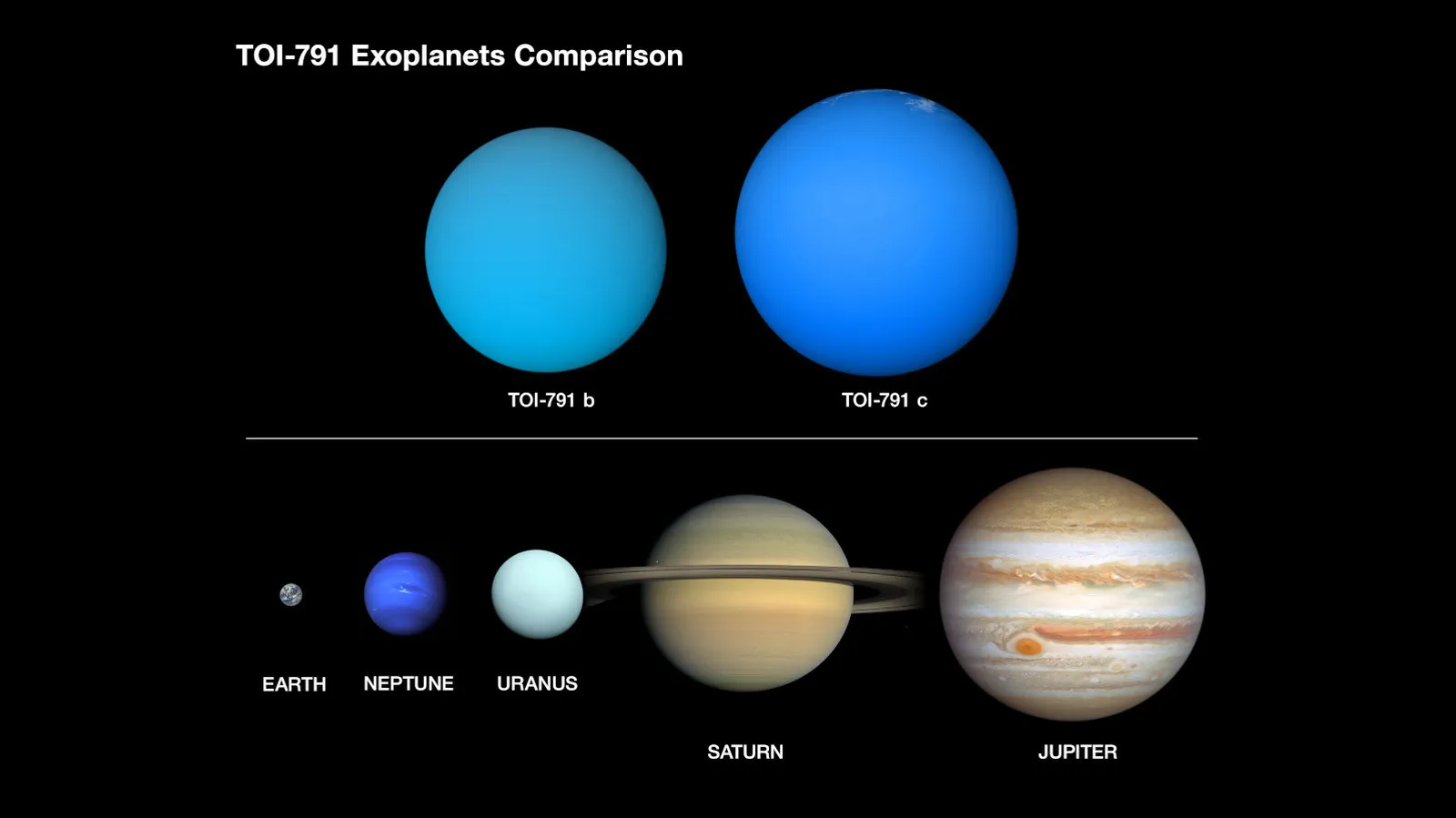
NASA’s TESS space telescope discovered two “super puffy” giant planets with densities NASA describes as “cotton candy.” For decision-makers watching space science and its downstream tech ecosystem, it is a reminder that exoplanet surprises keep changing the map.
NASA’s TESS space telescope has discovered two “super puffy” giant planets in the same system, and the key detail is how low their density is. In the Engadget write-up, NASA characterizes them as having the density of “cotton candy,” which is not just a catchy metaphor. It signals a real physical mismatch from the kinds of planet interiors many people expect when they hear “giant planet.”
This matters because TESS is doing something extremely specific and extremely hard: it is finding worlds by looking for tiny dips in starlight as planets pass in front of their stars. When NASA sees two planets with such extreme “super puffy” characteristics showing up in one system, it changes the questions researchers will have to answer next, not just the number of planets they have found. The discovery is immediately consequential for how scientists interpret planetary structure, atmospheric inflation, and the way heat moves through a planet’s body over time.
Zoom out to the broader market and strategy context. Space science is an ecosystem, not a single project. Telescopes like TESS produce data that shape years of follow-on observation plans, instrument roadmaps, and mission proposals. Even when a discovery is “only” about two distant planets, it can shift where research funding, time on expensive observing platforms, and future hardware investments go. In board terms, it is a signal that scientific returns can still be nonlinear. The space industry, including commercial sensing, earth observation, and deep-tech instrument makers, often rides on the credibility of scientific mission pipelines and the lessons learned from them.
There is also a governance and regulatory angle, even for something as far from Wall Street as exoplanets. NASA is a US government agency, and its discoveries feed into national and international scientific coordination. While the Engadget summary does not detail regulatory steps, it does reinforce a basic reality: space missions operate inside a structured environment. Missions must align with agency priorities, budget cycles, and data-sharing norms. When a mission like TESS yields high-interest results, it becomes easier for stakeholders to justify related activities, such as allocating observing time on ground-based telescopes and designing future missions aimed at similar targets.
So why do “super puffy” planets matter beyond the fun nickname? Because density is a fundamental constraint. A “cotton candy” density description implies planets that are unusually inflated for their size, meaning their atmospheres or thermal histories must be doing something dramatic. That becomes a stress test for planetary formation and evolution models. If a model cannot naturally explain why two planets in one system share those “super puffy” traits, then the model needs revision, or at least refinement, and the refinement dictates what the next observing campaigns should look for.
Second-order implications follow quickly. Exoplanet research is crowded. Many teams compete for the same limited resources: telescope time, computing and storage for light-curve analysis, and the attention of the broader scientific community. When a single system contains two “super puffy” planets, it creates a high-value target for follow-up work, because comparative analysis across planets in the same system can isolate which variables matter. Executives and operators in adjacent space and data sectors should take note: concentrated scientific targets often increase demand for faster data processing, better pipelines, and improved collaboration tools. Even if the original discovery does not directly spawn a product, it drives the environment where those products become useful.
Finally, there is the human side. Discoveries like this keep the public narrative of space fresh, but they also keep scientists honest. The universe does not care what a comforting model suggests. When TESS finds “super puffy” giants with the density of “cotton candy,” NASA is not just announcing two exoplanets. It is adding friction to the assumptions that researchers and, indirectly, the institutions that fund them have been relying on.
For decision-makers, peers, and anyone funding or building in the space-adjacent world, the strategic takeaway is simple: mission data continues to produce outcomes that force updates to models and priorities. Two planets in one system is not a minor footnote. It is a prompt for the next round of questions, the next observation targets, and the next set of decisions about where effort and money should go.
This story's Key Insights and Take-aways are locked.
Create a free account to unlock Executive Actions for one credit.
Register to UnlockAlways free for Executives Club members. Join the Club
More in Technology

Nvidia's $89B data center quarter: the 9 companies cashing in
The AI buildout is minting fortunes beyond GPUs, and memory, cloud, and cooling suppliers are riding the same wave.

Google quietly links your phone number to every Android account on your SIM
Adding a SIM now ties your phone number to all Google accounts - and future accounts inherit it. Here's the security and privacy stakes.

Hijacker AI 'Skynet mode' runs 100,000 attack steps against exposed models
Symantec caught a criminal AI agent that borrows other models, steals data, and mines crypto; the only relief is no confirmed victims yet.