

TESS found Gaia23bra b using microlensing ripples, far beyond its 150-light-year sweet spot
A super-Jupiter at nearly 40,000 light-years forced NASA to search differently in archived TESS data.
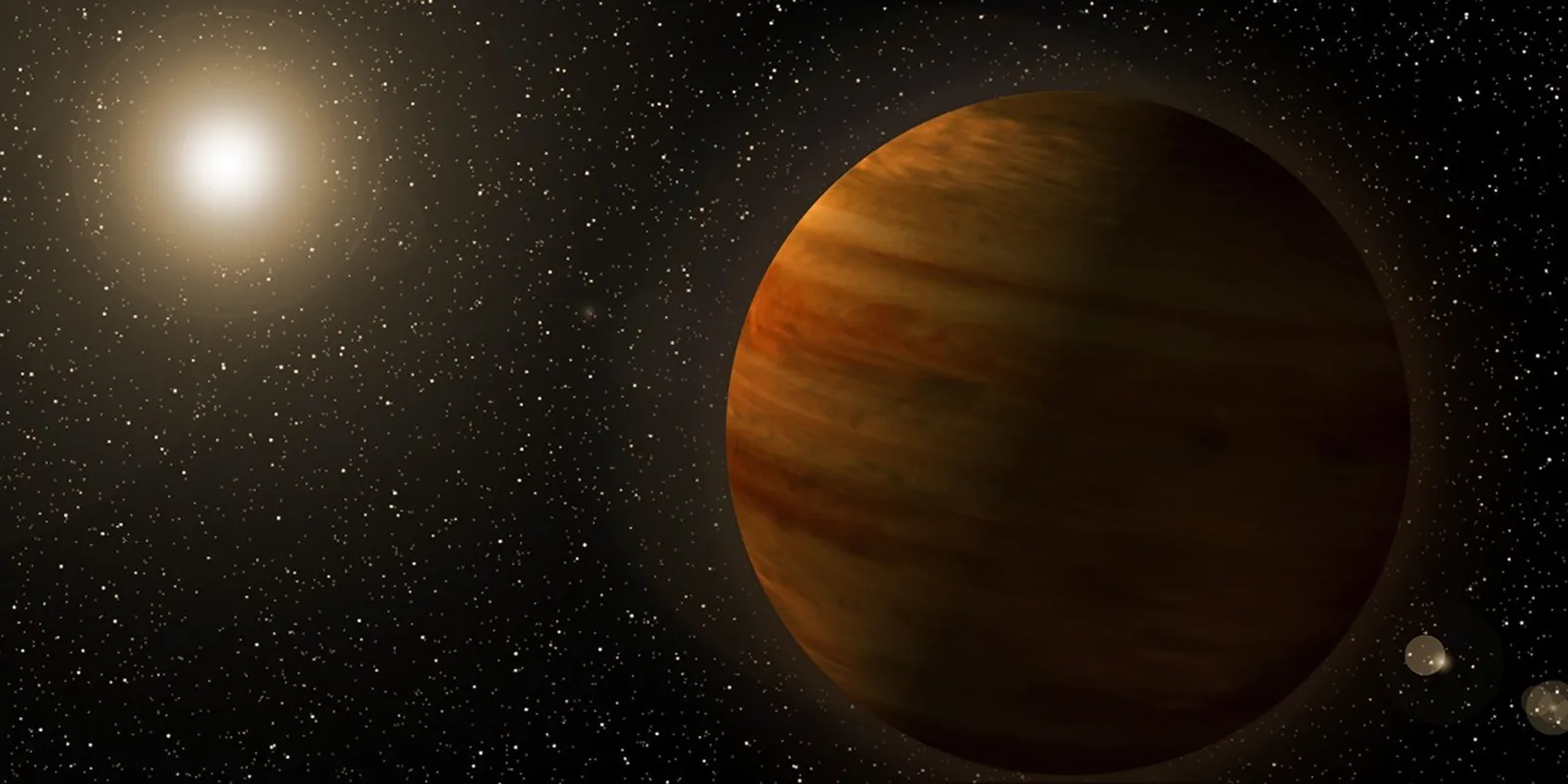
NASA’s TESS mission identified Gaia23bra b, a super-Jupiter, using gravitational microlensing signals rather than its usual transit method. For decision-makers funding or planning next-gen planet surveys, the finding is a reminder that “mission design” is only half the story, and archived data can still unlock new categories of discovery.
NASA’s TESS didn’t just add a new planet to the catalog. It found a planet, Gaia23bra b, in a way the mission was not primarily designed for, using gravitational microlensing “ripples” instead of the transits it’s famous for.
The consequence is immediate and kind of wild: Gaia23bra b is nearly 40,000 light-years away from Earth, far exceeding TESS’s usual search radius of about 150 light-years. And the discovery was only possible because a retired partner helped flag the moment. Astronomers first saw the event in 2023 with ESA’s now-retired Gaia space telescope, whose alert system spotted a star brightening due to gravitational microlensing, which happens when a foreground star passes in front of a more distant one and magnifies its light through warped space-time.
Here’s the punchline that pays the curiosity gap: once Gaia flagged the brightening, researchers went back and found that TESS was also watching the same patch of sky. In other words, a planet-hunting moment that started in one archive accidentally became visible in another. Mallory Harris, a Ph.D. candidate at the University of New Mexico who led the study, explained that Gaia’s observations were too sparse to detect the planet, but TESS’s denser time coverage picked up extra features in the light curve caused by a planet. That analysis, published July 1 in The Astrophysical Journal Letters, concluded that Gaia23bra b orbits an orange dwarf star about 80 percent of the Sun’s mass.
The planet itself is classified as a super-Jupiter with 1.6 times Jupiter’s mass and an orbital distance similar to Jupiter’s. And that’s a big deal because TESS is typically expected to detect “star-hugging” transiting planets, the kind where a planet crosses in front of its host star from our viewpoint and causes a periodic dimming. The TESS discovery stands out because, at that mass and distance, it would be extremely unlikely to find such a planet using the primary detection method TESS was designed for. Diana Dragomir, a professor at the University of New Mexico in Albuquerque and a co-author of the paper, said, “When TESS launched, no one expected it to ever be capable of finding this kind of planet.”
That sentence is more than trivia. It is an operational lesson for anyone managing mission data, budgets, and timelines: instrument capability is shaped by what you plan to look for, but reality rewards the flexible read. Dragomir also added that the discovery implies there are probably other microlensing planets hiding in TESS’s data that researchers hadn’t previously thought to look for. Translation: this is not just a one-off planet. It’s a nudge toward better searches inside existing datasets.
To understand why, you have to know what microlensing is doing to the light. When two stars align closely from our vantage point, light from the more distant star curves as it travels through the warped space-time caused by the nearer star’s mass. If the alignment is especially close, the nearer star acts like a cosmic lens, focusing and magnifying the background star. Planets orbiting the foreground star can also act as lenses, producing a short deviation in the brightness of the source. The result looks like a spike in brightness rather than a repeating dimming. Unlike transits, microlensing events happen once and they’re gone; they do not repeat. That time-limited nature makes detailed follow-up hard, which is exactly why the TESS “archived coverage” angle matters.
Microlensing has revealed less than 5% of known exoplanets, but it has a distinct superpower: it can find smaller planets farther from their stars, potentially even in habitable zones and beyond. The transit method tends to work best for large planets orbiting very close to their host stars because close-in planets are more likely to pass in front of the host star and block enough starlight. Microlensing is less suited to huge, close-in planets because their signals would blur together, but for the rest of the planetary zoo, the methods complement each other. Dragomir put it plainly: transits give size, and with other methods you can determine mass and density; microlensing gives masses and orbital distances for planets we’d otherwise never see.
This matters for where astronomy is going next, especially because TESS is not the endpoint. Co-author Michael Fausnaugh, a professor at Texas Tech University in Lubbock, framed it as a preview of what NASA’s Nancy Grace Roman Space Telescope will do. Roman is on track for launch on August 30, 2026. It will observe the center of the Milky Way galaxy for one of its core surveys, with an estimated 1,000 microlensing planets and around 100,000 transiting planets. Roman will specifically target the heart of the galaxy because stars are packed tightly there, increasing the odds of microlensing events. Crowding would blend stars together in TESS’s larger pixels, but Roman’s microlensing strategy leans into dense time coverage targeting the galactic bulge.
And TESS, importantly, looks nearly the whole sky, including regions in the galactic plane where stars are more spread out. That is how TESS can naturally find microlensing planets in other parts of the galaxy, as demonstrated by Gaia23bra b. Dragomir said this could help study planets in regions with different conditions. Second-order implications follow naturally. The galactic center has more frequent supernova explosions, which could sterilize planets, and crowded stellar environments can disrupt planetary systems. Meanwhile, TESS’s observations focus on a milder part of the galaxy, giving scientists a different slice of the “planet formation conditions” dataset.
For executives and program owners, the strategic stakes are simple: discoveries like this increase the value of existing data pipelines and cross-mission coordination. You do not only get breakthroughs from brand-new hardware. Sometimes you get them when someone asks a better question of the archive. And with Roman coming online, the winners will be the teams who can operationalize complementary detection methods fast, while translating those results into better target selection, faster follow-up, and more confident interpretation across vastly different parts of the galaxy.
This story's Key Insights and Take-aways are locked.
Create a free account to unlock Executive Actions for one credit.
Register to UnlockAlways free for Executives Club members. Join the Club
More in Science

Alaska's 1,580-foot tsunami had warning signs. Scientists just found them.
Rapid glacier retreat, heavy rainfall, and thousands of tiny tremors preceded Alaska's 1,580-foot tsunami, a warning for every coastal community in a warming world.

The rare mutation that lets high-risk brains dodge Alzheimer's
Scientists found a natural defense against protein buildup, opening a new path to preventive treatments.

3,000 steps a day may halve Alzheimer's decline, study finds
New research links a modest daily walk to less tau buildup and nearly half the cognitive and functional decline, even for those with early signs.