

The AI chip moat is cracking as billions flood in to challenge Nvidia
Nvidia’s lead looks unshakable, but rivals are spending big to build alternatives that could reshape AI hardware power.

Nvidia dominates the AI chip market, but other companies are investing billions to build alternative AI hardware. For decision-makers, the key risk is betting on one supplier too long while a second ecosystem catches up.
Nvidia dominates the AI chip market, but the real story is what that dominance is now failing to stop: rivals are investing billions to build alternatives and compete for the future of AI hardware.
In other words, the “only moat left in AI” may be less about a permanent wall and more about a moving target. When a single company is already leading, competitors do not typically throw billions at the problem unless they believe the fundamentals can shift. That is the strategic tension Quartz is pointing at, and it matters because AI chips are not just another product category. They are the infrastructure layer that shapes performance, cost, and, increasingly, the bargaining power between model builders, data center operators, and chip suppliers.
To understand why this fight is so consequential, zoom out to how AI hardware markets actually behave. Training and inference at scale depend on chips, networking, power delivery, and the software stack that makes all of it usable. Nvidia’s strength has come from its position across that stack, and from the fact that the ecosystem around its hardware makes it hard to “switch” without real pain. But that is exactly why big challengers can justify huge spending: they are not trying to match everything on day one. They are trying to create enough differentiation that customers feel confident switching over time, even if the incumbent keeps improving.
The other side of this is incentives. If Nvidia is the default path to state of the art AI compute, then every upstream and downstream player has a reason to reduce dependency risk. Enterprises want supply assurance. Cloud providers want leverage in pricing and allocation. Model developers want predictable performance and procurement terms. Even if they continue to buy from Nvidia, the option to diversify can be strategically valuable, especially when demand spikes or when performance requirements evolve faster than budgets.
Regulatory and policy gravity are also relevant, even without naming a specific new rule in the source. Governments have been increasingly attentive to semiconductor capacity, industrial competitiveness, and supply chain resilience. In practice, that attention can translate into funding, export controls, procurement preferences, and scrutiny of market concentration. For boards and executives, the second-order impact is that “pure market forces” are often not the whole story in chips. Capital spending programs by competitors can be accelerated by policy tailwinds, and procurement strategies can be influenced by regulatory expectations about domestic capacity or resilience.
Now connect this to the “moat” idea Quartz is invoking. Moats are usually thought of as something that permanently protects profit. But in fast-moving infrastructure categories like AI compute, moats can behave more like advantages that must be repeatedly defended. If rivals are investing billions, they are effectively running a long-term campaign to erode the incumbent’s lock-in. Over time, that can change how customers evaluate hardware roadmaps. It can also change how partners build software abstractions, because software that supports multiple hardware paths reduces the cost of switching.
This is why the stakes for decision-makers are not theoretical. Nvidia’s dominance means the baseline assumption in many AI plans is still “buy Nvidia.” But the existence of heavy rival investment signals that at least some players believe the baseline assumption will not hold forever. If you are a CFO or CTO, that should raise the question of how much of your AI budget is tied to a single hardware ecosystem, even if you are satisfied with performance today. If you are on a board, it should push you to demand clarity on supply diversification plans and on the operational risk of a concentrated procurement strategy.
Ultimately, Quartz’s core message is that Nvidia’s lead is real, but the category is also in motion. The competitive move is not subtle: others are spending billions to build alternatives and compete for the future of AI hardware. For anyone leading AI deployments, that means the “only moat left” story is not about ignoring Nvidia. It is about preparing for the possibility that dominance is becoming less durable, and that the next phase of the AI stack may be built by more than one champion.
This story's Key Insights and Take-aways are locked.
Create a free account to unlock Executive Actions for one credit.
Register to UnlockAlways free for Executives Club members. Join the Club
More in Technology

Netflix weighs always-on channels for specific shows, targeting ad-subscribers and cheaper friction
The Wall Street Journal says Netflix is exploring always-on streaming and bundles, testing how far it can push ads and pricing.

Lyzr used its own AI agent to land a $100M raise
The enterprise agent startup turned its product into the fundraising pitch, making “does it work?” a test investors passed.
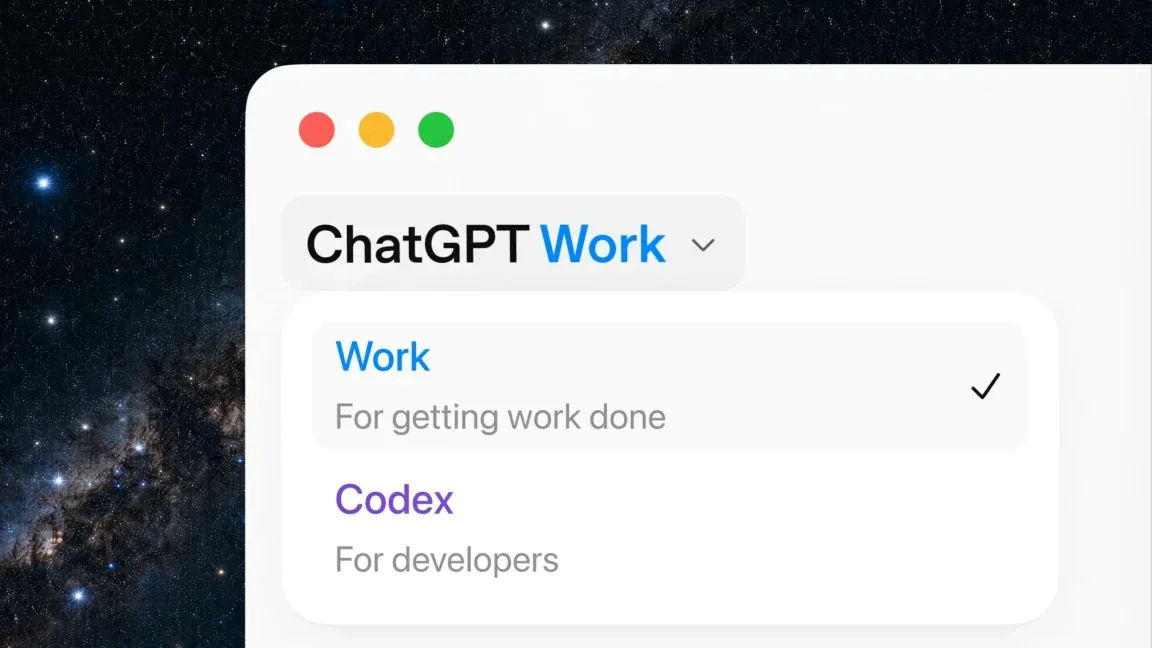
ChatGPT Work promises hours-long “independent workflows” that still pause for your approval
OpenAI pitches a new tool that runs tasks for hours, plus Scheduled Tasks, but requires sign-off on important actions.