
The Beatles own 39 combined No. 1s, while Taylor Swift hits 30 and Drake 29
Billboard’s combined Billboard 200 and Hot 100 leaders set the scoreboard for mainstream dominance, through July 18, 2026.
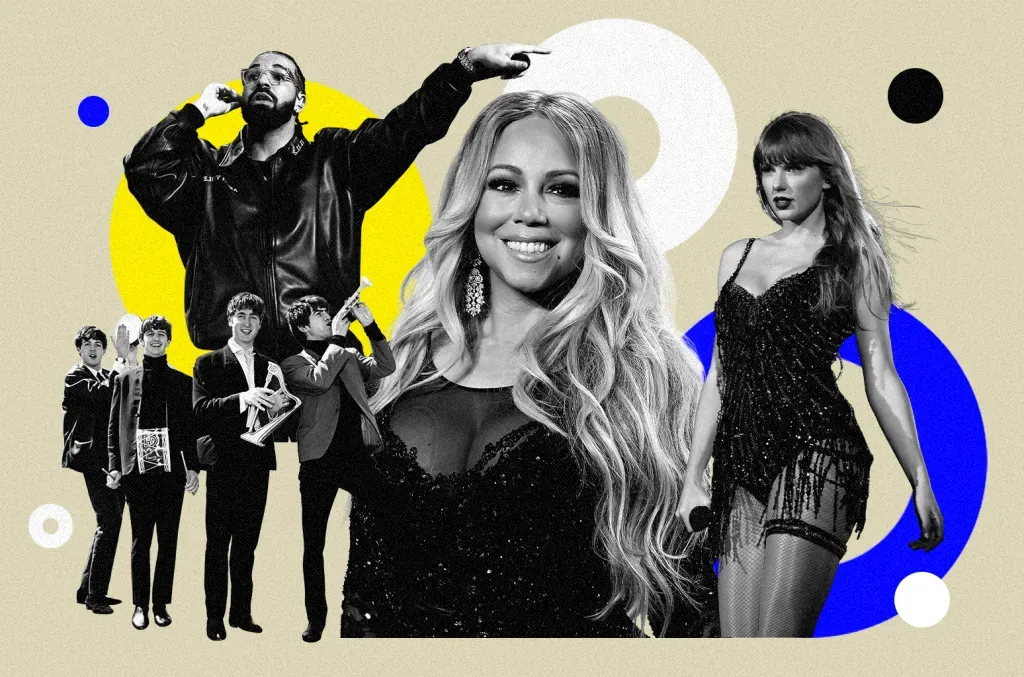
Billboard counts the most combined Billboard 200 album No. 1s and Hot 100 song No. 1s through charts dated July 18, 2026, led by The Beatles with 39. For decision-makers, the data reframes “global appeal” as a repeatable cross-format scoring system, not just a hit streak.
A chart run that spans decades has a new scoreboard date: through charts dated July 18, 2026, The Beatles claim the most combined No. 1s on both charts with 39 total. Billboard breaks that 39 into 20 Billboard Hot 100 No. 1s and 19 Billboard 200 No. 1s, making the Fab Four the top combined act on the lists.
And the reason this matters is painfully simple: topping the Billboard 200 and topping the Billboard Hot 100 measure two different muscles. Albums capture sustained consumption across a catalog. Singles test whether your reach turns into immediate, mass pull. Billboard’s tally suggests The Beatles did both, starting their No. 1 run in February 1964 with “I Want To Hold Your Hand” and the parent album Meet the Beatles. The Beatles’ Billboard 200 No. 1 run also stretches through its retrospective 1 in 2000-01.
Once you see it this way, the rest of the chart leaders stop feeling like trivia and start looking like a blueprint for mainstream dominance. Billboard’s list highlights that Taylor Swift leads among soloists with 30 combined No. 1s. She has 15 No. 1s each on the Billboard 200 and the Hot 100, and Billboard notes her most recent additions at the time of the survey: The Life of a Showgirl and “I Knew It, I Knew You” on the respective rankings. Swift is also called out as the only woman in the group, and the article adds that she, along with The Beatles and Drake, are the only acts overall with double-digit No. 1s on both rankings. Translation: she is not merely converting listeners to albums. She repeatedly converts attention into chart-topping singles as well.
Drake follows with 29 combined No. 1s, with 15 on the Billboard 200 and 14 on the Hot 100. Billboard credits his most recent leaders to what it describes as “historic coronations” for ICEMAN and “Janice STFU.” But the bigger story for operators is the shape of the split. At 15 and 14, he is essentially running balanced performance, not one chart riding while the other lags. When both formats stay elevated, labels and distributors tend to face fewer volatility shocks, because success is not pinned to a single channel of revenue or a single kind of release.
Marrying that cross-format idea to another solo titan, Mariah Carey has posted 25 combined No. 1s on the charts. Billboard reports 19 leaders on the Hot 100, the most among soloists, and six on the Billboard 200. Carey’s profile, as described, is heavier on songs than albums. That is still a winning model, but it implies different operational priorities when planning releases: if your strength is Hot 100 conversion, your album strategy needs to reinforce that attention, rather than assume album sales will automatically follow.
Then there is Madonna, rounding out the top five with 22 combined No. 1s: 12 on the Hot 100 and 10 on the Billboard 200. Billboard adds a detail that matters for reading chart history: Confessions II marks her latest Billboard 200 leader, and it is the title that made her just the fourth artist with 10 or more No. 1s on each chart. In other words, the top tier is not just about “having hits.” It is about meeting a high bar across both measurement systems, enough times that it becomes a category-defining trait.
If you want the industry’s version of an outlier that explains everything, Billboard points to Paul McCartney. It notes he accounts for a whopping 56 combined Billboard 200 and Hot 100 No. 1s, with The Beatles’ 39 augmented by 17 more by McCartney solo, including his output with Wings. That framing is a reminder that leadership can be cumulative across eras, and the “combined No. 1s” metric rewards artists who can keep building new waves instead of resting on old ones.
For decision-makers in adjacent media businesses, the practical implication is that chart dominance can be treated like a portfolio performance indicator. Billboard’s survey itself is time-bounded, beginning with the Billboard 200 dated March 24, 1956, and the Hot 100 premiering with the edition dated Aug. 4, 1958, then updating through the charts dated July 18, 2026. That long baseline matters because it filters out one-off flashes. If you want to compete for the kind of long-run visibility that translates into licensing, touring demand, and platform attention, you are essentially chasing a system where album and single breakthroughs reinforce each other. The strategic stakes are clear: in a market where attention can be fickle, the artists at the top of Billboard’s combined list show what happens when conversion works across both formats, repeatedly.
This story's Key Insights and Take-aways are locked.
Create a free account to unlock Executive Actions for one credit.
Register to UnlockAlways free for Executives Club members. Join the Club
More in Entertainment

12TB Steam 'teraleak' goes beyond Valve: GTA 3, Mafia 2 prototypes exposed
A 12-terabyte dump of Steam data reveals prototypes and builds of third-party classics like GTA 3 and Mafia 2, plus unreleased Valve content, rewriting game history.

LinkedIn's romance problem: 1 in 4 workers say dating on it is fair game
A new survey shows a quarter of U.S. employees treat the professional network as fair game for romance, even as LinkedIn bans it and removes hundreds of thousands of offending posts.

Enhypen's first No. 1 album breaks K-pop's Billboard 200 streak
The K-pop group's 98,000-unit debut tops the chart while Dolly Parton's catalog reentry shows how death reshapes streaming.