

The Cure drops Primavera Sound 2026 live rarities, including rare cuts from decades past
After a long gap, The Cure’s first Barcelona set since Troxy becomes a live deep-dive moment, not a greatest-hits loop.
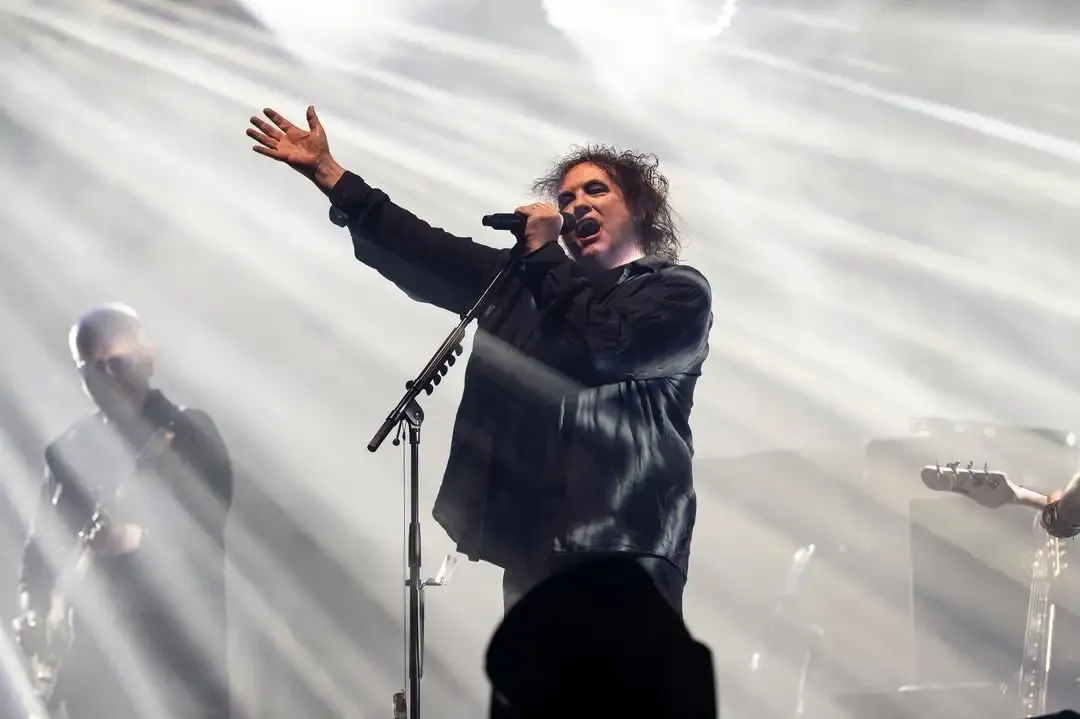
The Cure headlined Primavera Sound 2026 at Barcelona's Parc Del Forum last night, their first performance since an intimate November 2024 show at London's Troxy celebrating Songs Of A Lost World. The set mixed only two tracks from the album with a multi-decade slate of classics, including songs the band hadn't performed in several years, underscoring how live programming can turn even a “major” event into a real differentiator.
Last night, The Cure headlined Primavera Sound 2026 at Barcelona's Parc Del Forum, and the interesting part is not that they played. It’s that they played like a band hunting specificity, not safety. This was their first performance since their intimate November 2024 show at London's Troxy celebrating the release of Songs Of A Lost World, an album that was widely treated as one of the best of the year, and which marked the Cure's first UK #1 in 32 years and earned them their first Grammys. In other words: the Cure arrived at Primavera with major momentum, but the set did not cash in purely with the new material.
On the Estrella Damm Stage, the Cure played only two tracks from Songs Of A Lost World. Everything else in the setlist spanned nearly five decades of classics, including cuts they hadn't performed in several years. That programming choice matters because it signals a deliberate audience strategy: satisfy the current headline moment while also rewarding long-time fans with scarcity. For the reader tracking how major acts translate cultural relevance into repeatable fan value, this is the difference between “a big show” and “a must-remember show.”
Zoom out for a second, because this is where the business gets interesting. Primavera Sound is not a small club date. It is the kind of platform where an artist's live plan can influence brand perception, ticket demand, and future partnerships. When an act has a breakthrough cycle, like Songs Of A Lost World generating a UK #1 after 32 years and first Grammys, the easy move would be to overweight the era that just proved it can dominate charts and awards.
Instead, the Cure leaned into breadth. The set included only two tracks from the new album, while the rest covered nearly five decades of classics, plus live rarities they had not played in several years. That tells you something about the band's internal priorities and the production logic of a curated festival slot. Festival stages compress attention. You have to win quickly. The Cure did that with new-era credibility, then extended the runway by swapping in material fans have been waiting to hear again. It’s effectively a two-part pitch: legitimacy now, payoff later.
If you are sitting in an executive seat, the second-order implication is about how you design “value density” in public moments. Streaming flattens catalogs. Radio rotation narrows them. Live, you can re-inflate depth. The Cure’s decision to include songs not performed in several years is a reminder that differentiation can be built into the playlist itself, without changing the artist brand. That matters across music and adjacent industries because audiences are increasingly trained to expect personalization and novelty. Even when you cannot reinvent the product, you can change what the customer experiences at the exact moment they show up.
And there is a subtler dynamic for boards and operators managing large-scale cultural events: marquee headline artists are also governance of trust. When the Cure returns to a festival headlining slot, fans are not just buying “tickets,” they are buying certainty that the act will deliver something more specific than a routine greatest-hits sweep. The Cure’s set structure at Parc Del Forum, rooted in a near five-decade arc and punctuated by rarities, reinforces that trust. It also helps festivals compete on memory, not just lineups.
So what does this mean for decision-makers watching similar ecosystems? In a world where artists can control narratives through singles, tours, and social clips, the setlist becomes a strategic document. The Cure used Primavera Sound 2026 not just to announce their current era, but to stage a live continuity test across decades. That is exactly how you keep a band culturally central: you bring in the new proof points, then you remind everyone that the catalog still has unplayed corners.
Ultimately, last night’s performance gives a clean takeaway: Primavera Sound 2026 was a high-profile platform, and The Cure used it to balance two forces. They honored Songs Of A Lost World with only two live tracks, while the rest of the show chased nearly five decades of classics, including rarities they hadn’t performed in several years. If you are leading a festival, an artist management team, or a label partner, the lesson is that curation beats repetition. You can treat a headline slot like a showcase of scarcity, and the crowd still gets the reason to care.
This story's Key Insights and Take-aways are locked.
Create a free account to unlock Executive Actions for one credit.
Register to UnlockAlways free for Executives Club members. Join the Club
More in Entertainment

Christopher Nolan’s “The Odyssey” posts his biggest Tuesday haul, surpassing “The Dark Knight’s” record
The film’s Tuesday breakout reframes Nolan’s box-office ceiling and forces competitors to rethink timing, budgets, and release strategy.

Kacey Musgraves cancels Aug. 20, 29, Sept. 2 Middle of Nowhere shows
Ticketmaster emails are telling fans refunds are coming, while the tour still starts Aug. 21 in Chicago.

Billie Joe Armstrong launches Epiphone Les Paul Junior and Marshall 1959BJA signature gear
Two limited releases turn decades of Green Day’s tone into branded hardware, including Marshall’s first artist amp in 14 years.