

The Incident at Galley House hits 97% positive on Steam in 2 days
A fast Steam start for Evil Trout's detective follow-up, built from a browser-mystery pipeline that worked once.

Evil Trout released The Incident at Galley House on Tuesday, and after just 2 days it has logged more than 600 Steam reviews with 97% labeled “overwhelmingly positive.” For decision-makers, the data point is a reminder that Steam momentum can validate a web-to-paid remake strategy fast, before bigger funding cycles even notice.
If you like detective games, this is the kind of Steam number you screenshot for later. The Incident at Galley House, Evil Trout’s follow-up to last year’s standout mystery wave, launched on Tuesday and reached more than 600 Steam reviews after just 2 days. Even better for anyone watching market signals, 97% of those reviews are “overwhelmingly positive,” with players giving it a thumbs up.
That speed matters because it compresses the usual hype-to-proof timeline. Developers and publishers rarely get “trust” validated this quickly at scale. In practical terms, Steam review velocity acts like an early quality filter, and in this case the filter is already saying the game clears. The question for operators, investors, and studios is not “is it good?” It is “what in the product and build process is driving this kind of fast, compounding reception?”
The answer starts earlier than Steam. The Incident at Galley House is not a wholly brand-new concept launched from scratch. PC Gamer describes it as coming from the same browser-first DNA as The Roottrees are Dead, another detective puzzle hit that released near the beginning of last year. Those games were initially visually simplistic browser projects on Itch.io, which is a low-cost, creator-friendly distribution lane for experimentation. Then, when something resonates, the concept gets upgraded into a fuller, paid experience.
That model is exactly what happened with The Roottrees are Dead. Developer Evil Trout has been collaborating on its own follow-up in a way that mirrors the earlier success path. The PC Gamer piece explains that both Roottrees and Galley House started as Itch.io browser games, and both used interfaces that turn the player into a detective in a dense mystery. That design pattern is not unique, but the outcome is: it proved strong enough to spawn imitators, which is often the industry’s way of saying a winning mechanic has become legible.
There is also a specific collaboration thread that helps explain why this second title might be landing well. PC Gamer cites a message from Roottrees designer Jeremy Johnston on Itch, where he described how Evil Trout reached out through Discord. Johnston wrote that Evil Trout suggested it should become a full, paid project, with Johnston doing design work and writing extra content, and Evil Trout handling coding and building the game. Johnston also said they collaborated again because they had “so much fun” and that a new free mystery game arriving on Itch, titled Type Help, became part of the next phase of inspiration.
Type Help is the third leg of the detective remake triangle. The PC Gamer article notes it as a purely text-based mystery from developer William Rous, and PC Gamer contributor Abbie Stone previously listed it as one of the nine games that proved 2025 was the best year ever for the detective genre. Stone’s December framing emphasized the deliberately frustrating interface and the payoff of deductions, plus the gripping story potential. In other words: the product strategy here is not just “make it bigger.” It is “take the friction and deduction loop that worked in a smaller format, then translate it into a new presentation layer that can hold attention in a full release.”
And that translation is what players are reacting to on Steam. According to PC Gamer, The Incident at Galley House is no longer a straightforward text game. It uses a visual novel-style presentation with 2D illustrations, a “mysterious 3D interface for navigating memories,” and voice acting. Those choices are consistent with how remakes can create a fresh hook while keeping the core detective mechanic intact. For a studio team, this is the kind of balance that protects brand-new player interest while still satisfying the fans who loved the minimalist original feeling.
If you zoom out, the second-order implication is bigger than one detective game. Itch.io-to-Steam remakes suggest an efficient product pipeline: prototype cheaply, observe resonance, then scale into paid distribution with momentum already partly earned. The fast 2-day Steam reception gives boards and investors an unusually early signal on demand quality, not just marketing lift. It also shows how Steam discovery and review dynamics can turn a niche gameplay loop into mainstream traction quickly, which is a big deal for titles competing for attention in crowded seasonal release cycles.
Finally, there is the commercial detail that matters for anyone thinking like an operator. The Incident at Galley House is $20 (£17.75) on Steam, with a 10% launch discount running until July 21, 2026. In a market where launch week economics shape the rest of a game’s shelf life, pairing a price point with real early reception is a powerful combination. If you are a publisher deciding where to allocate next budgets, or a studio deciding whether to commit to a remake path, this is a live case study: the Steam crowd is voting early, and they are voting hard.
This story's Key Insights and Take-aways are locked.
Create a free account to unlock Executive Actions for one credit.
Register to UnlockAlways free for Executives Club members. Join the Club
More in Business

Uber buys Delivery Hero for nearly $15B, vaulting to top food delivery outside China
The deal doubles Uber's dual-services footprint and pushes a ride-and-eats bundling play into 50 more markets.

Epic and Google drop settlement bid, forcing rival Android app stores by July 22
Google told the court it is ready to carry third-party app stores starting Wednesday, July 22.
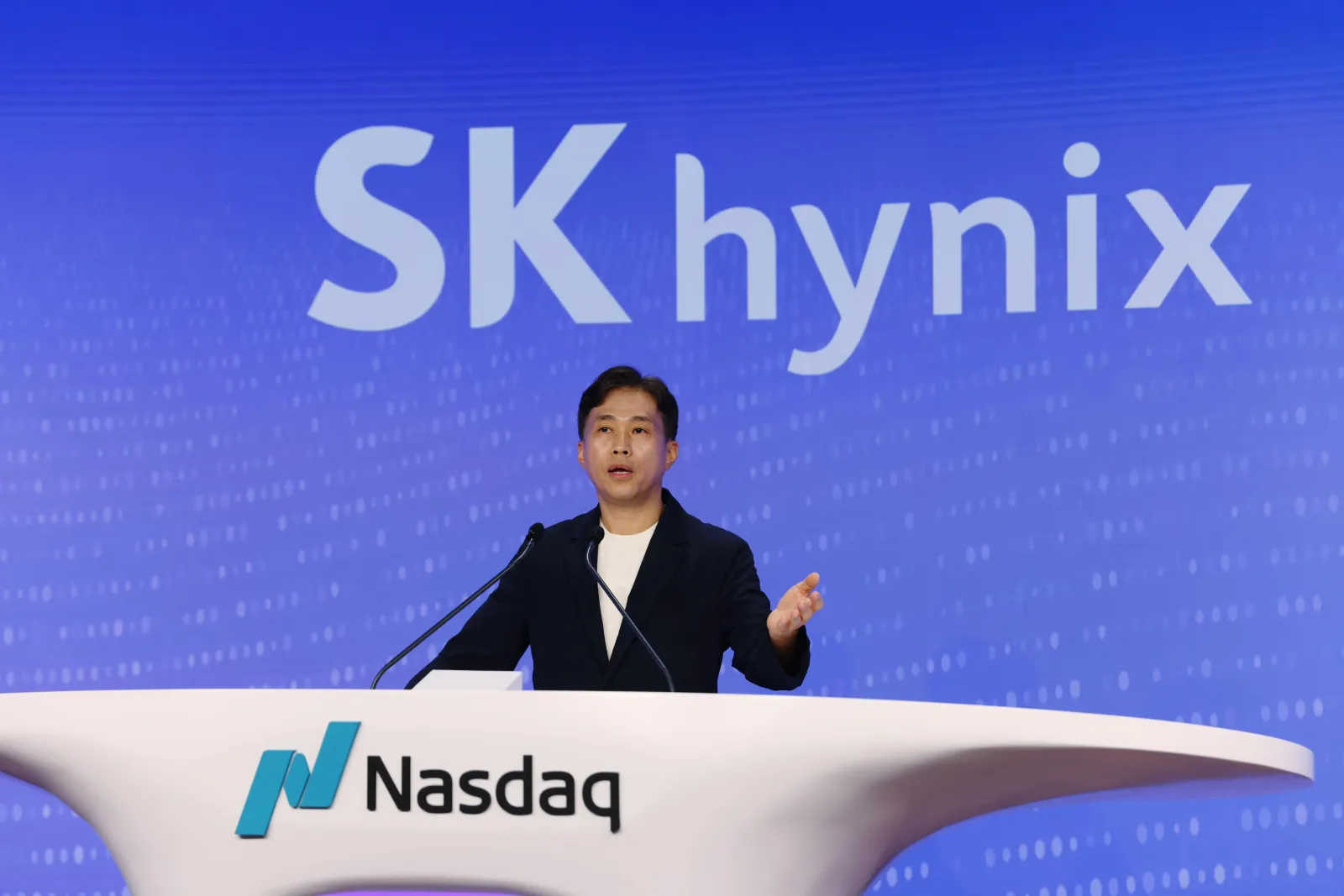
SK Hynix opens at $170, raises $26.5B, and tops foreign IPO records
In Friday's Wall Street debut, SK Hynix turns AI RAM demand into a $26.5B fundraising moment that rewrites comps.